

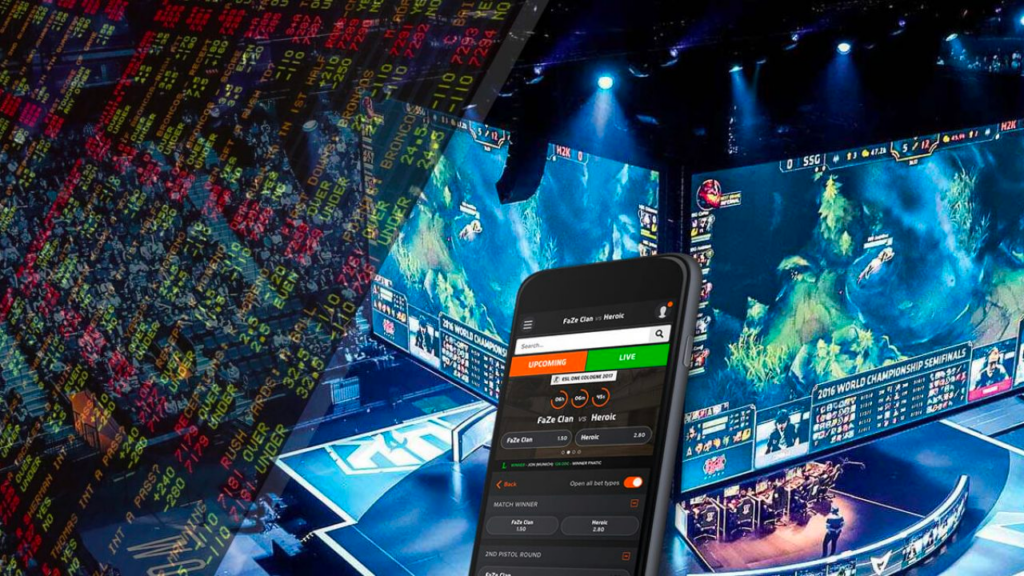
Not all mobile apps are built under the same conditions. Some tolerate delays. Others fail the moment performance slips.
Esports betting apps belong to the second category. They operate in real time, process constant data streams, and support user decisions that cannot be delayed or reversed. A single freeze, lag, or synchronization error breaks trust instantly.
Because of these demands, esports betting platforms have evolved into some of the most technically demanding consumer mobile applications available today. They quietly set standards for responsiveness, stability, and real-time interaction that many other app categories now attempt to match.
This article explains why esports betting apps function as a benchmark for modern mobile development and what technology professionals can learn from how these platforms are built and optimized.
How Esports Betting Apps Push Mobile Technology to Its Limits
Esports betting apps sit at the intersection of live entertainment, financial transactions, and real-time analytics. Each of these domains alone is demanding. Combined, they create extreme technical pressure.
Unlike traditional sports betting, esports events occur continuously, often with multiple matches running in parallel. Odds update rapidly. Match states change within seconds. Users expect instant reflection of these changes on their screens.
Platforms such as those described through the parimatch betting app demonstrate how esports betting environments are structured around live matches, dynamic odds, and rapid market updates. The essence lies in synchronized data flow. Match feeds, odds engines, and user interfaces operate in near real time, ensuring users see accurate information and can act without delay.
This environment forces mobile apps to excel in areas where most consumer apps can compromise.
Key technical pressures include:
- Constant real-time data refresh without UI lag
- High concurrency during popular esports events
- Secure handling of frequent micro-transactions
Failure in any of these areas leads to immediate user abandonment.
Real-Time Data Handling as a Core Competency
Most mobile apps fetch data periodically. Esports betting apps stream it.
Odds engines push updates continuously. Match states update instantly. Any delay creates discrepancies between displayed information and actual outcomes. That mismatch damages credibility.
To manage this, esports betting apps rely on event-driven architectures rather than simple request-response models. WebSockets, efficient polling strategies, and local caching are common tools. The app must update quickly while preserving battery life and device performance.
This balance is difficult. It requires careful prioritization of what data updates immediately and what can wait.
The result is a mobile experience optimized for responsiveness rather than decoration.
UX Design Under Time Pressure
Design in esports betting apps serves a different purpose than in content or lifestyle apps. It must reduce decision friction.
Users make fast choices based on changing information. Interfaces prioritize clarity, hierarchy, and visibility over aesthetic complexity. Buttons are large. States are obvious. Errors are minimized.
The UI does not invite exploration. It enables action.
This design philosophy aligns closely with principles now spreading across other high-performance app categories, such as trading platforms, live dashboards, and collaborative tools.
What Tech Professionals Can Learn from Esports Betting App Design
Esports betting apps reveal what happens when performance becomes non-negotiable.
For developers and product leaders, these platforms offer transferable lessons that apply far beyond betting.
One critical lesson is restraint. Features that do not serve speed or clarity are removed. This discipline improves reliability.
Another lesson is predictability. Users trust systems that behave consistently under pressure. Esports betting apps invest heavily in testing peak-load scenarios, not just average usage.
A practical framework drawn from these platforms includes:
- Optimize for worst-case traffic, not typical sessions
- Prioritize data accuracy over visual complexity
- Design interfaces for decision speed, not exploration
These principles directly improve user retention in any app where timing matters.
Security Without Friction
Esports betting apps manage money, yet users rarely feel slowed down by security layers. This balance is intentional.
Authentication, transaction verification, and session management are embedded into the flow rather than added as interruptions. Background validation replaces visible friction wherever possible.
This approach is increasingly relevant for fintech, productivity, and enterprise apps where users expect both safety and speed.
Security succeeds when it is invisible but dependable.
Scalability as a Daily Requirement
Many apps scale occasionally. Esports betting apps scale constantly.
Tournament schedules, regional popularity, and sudden upsets cause unpredictable traffic spikes. Platforms must absorb these surges without degrading performance.
This requires elastic infrastructure, load balancing, and aggressive monitoring. Apps that fail under pressure do not get second chances. Users move on immediately.
For technology leaders, this reality reframes scalability from a future concern into a present-day necessity.
Why Esports Betting Apps Influence Broader Tech Trends
Technologies proven under extreme conditions often spread elsewhere. What works for esports betting tends to work for other real-time applications.
Features such as live updates, instant notifications, and synchronized multi-device experiences are now standard expectations across industries. Esports betting apps helped normalize them.
They also demonstrate that user patience is lower than many product teams assume. Performance tolerance shrinks when stakes feel real.
This insight applies to any app that competes for attention in a crowded market.
Implications for Mobile App Strategy
For decision-makers, esports betting apps serve as stress tests for mobile strategy.
If an architecture supports esports betting reliably, it likely supports other demanding use cases. Studying these platforms reveals where shortcuts fail and where investment pays off.
The lesson is not to copy features blindly. It is to adopt the mindset: speed, clarity, and reliability first.
Conclusion
Esports betting apps operate where performance expectations are unforgiving. Real-time data, rapid decisions, and financial consequences leave no margin for error.
Because of this, they have become informal benchmarks for what modern mobile apps should achieve. Their emphasis on responsiveness, clarity, and stability offers valuable lessons for developers and product leaders across industries.
As mobile users continue to demand faster, more reliable experiences, the standards set by esports betting platforms will increasingly define what “good” looks like in mobile technology.
