

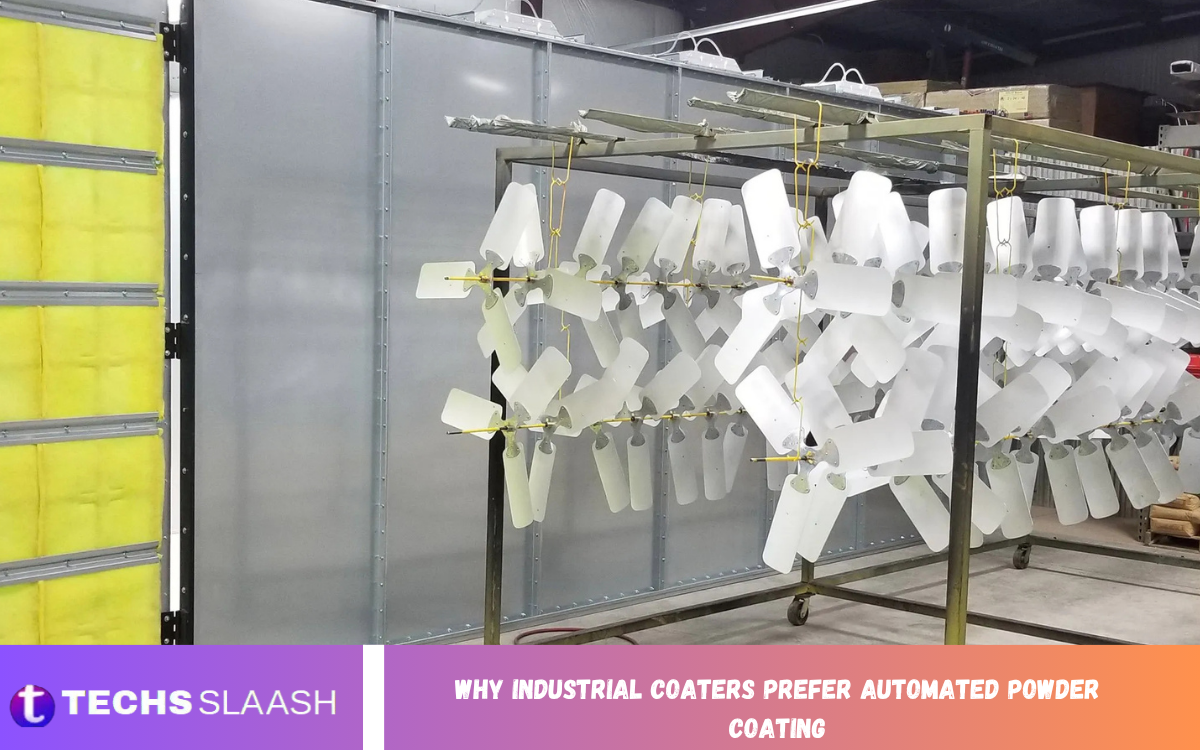
Industrial coating operations require speed, consistency, durability, and efficient material use. As manufacturers continue to improve production processes, automated powder coating has become an increasingly preferred solution for high-volume finishing applications.
Why Industrial Coaters Prefer Automated Powder Coating is closely connected to the technology’s ability to deliver uniform finishes while reducing waste, labor requirements, and production delays. Automated systems combine advanced application equipment, controlled powder delivery, and precise movement to create reliable coating results.
What Is Automated Powder Coating?
Automated powder coating is a finishing process that uses mechanical equipment, robotic systems, or automated spray guns to apply dry powder to metal surfaces. The powder is electrostatically charged, attracted to grounded components, and then cured in an oven.
Unlike manual application, automated systems maintain consistent spray patterns, gun distances, powder flow, and application speeds. This level of control helps manufacturers achieve repeatable finishes across large production volumes.
Consistent Coating Quality
One of the biggest reasons industrial coaters choose automation is consistency. Automated powder coating equipment can maintain controlled application settings throughout an entire production run, reducing variations between individual parts.
Consistent coating thickness improves appearance and performance while helping manufacturers meet strict quality standards. Automated systems can also reduce common problems such as uneven coverage, excessive powder buildup, and missed areas.
Higher Production Efficiency
Industrial facilities often need to coat hundreds or thousands of components within limited production schedules. Automated powder coating allows equipment to operate continuously while maintaining predictable application speeds.
This increased throughput can help manufacturers reduce production bottlenecks and complete large orders more efficiently. Automation also allows workers to focus on inspection, equipment monitoring, maintenance, and other important production tasks.
Reduced Labor Requirements
Manual powder coating requires operators to control spray equipment and maintain consistent movement throughout the coating process. Repetitive spraying can become physically demanding, particularly during long production shifts.
Automated systems handle much of this repetitive work, reducing the amount of manual spraying required. Industrial coaters can use their workforce more effectively while maintaining stable production output.
Better Powder Utilization
Powder coating is already recognized for its efficient material usage, but automation can improve that efficiency further. Controlled powder delivery helps ensure that the correct amount of coating material reaches the target surface.
Overspray can often be collected and reused when the coating system is designed for recovery. Better powder utilization reduces material waste and can contribute to lower operating costs over time.
Improved Coating Thickness Control
Uniform coating thickness is essential for both appearance and product protection. Too little coating may reduce corrosion resistance, while excessive coating can increase costs and create appearance problems.
Automated powder coating equipment provides greater control over spray parameters and application patterns. This makes it easier for manufacturers to maintain coating thickness within established specifications.
Greater Worker Safety
Industrial coating environments involve equipment, moving components, airborne powder, and repetitive tasks. Automation can reduce the amount of time employees spend directly operating spray guns in demanding production environments.
Modern powder coating systems can also be integrated with controlled booths, ventilation equipment, and safety systems. These features help create a more organized coating environment when properly installed and maintained.
Faster Production Cycles
Speed is another important factor behind the growing use of automated powder coating. Automated spray equipment can maintain consistent movement and application rates without the fatigue that can affect manual operations.
Faster application can contribute to shorter production cycles, especially when automation is combined with efficient conveyor systems and properly sized curing ovens. This helps manufacturers increase output without sacrificing finish quality.
Better Coverage on Complex Parts
Industrial components can have corners, edges, recesses, and irregular shapes that require careful coating techniques. Automated systems can be programmed to follow repeatable spray paths and application sequences.
Advanced equipment can provide more predictable coverage across different part designs. Proper gun positioning, part movement, and system settings are especially important when coating complex components.
Reduced Overspray and Cleanup
Overspray can create unnecessary material waste and increase the amount of cleaning required around a coating booth. Automated systems can improve spray control by maintaining consistent gun positioning and powder delivery.
Less overspray can make the coating area easier to maintain and reduce interruptions caused by excessive buildup. Cleaner equipment and controlled application conditions can also support more reliable production.
Improved Product Durability
Powder coating provides a durable finish that can protect metal surfaces from scratches, corrosion, moisture, chemicals, and general wear. The quality of the final result depends heavily on proper surface preparation, application, and curing.
Automated application helps create a controlled coating layer that supports consistent performance. When the complete process is properly managed, manufacturers can produce durable finishes suitable for demanding industrial environments.
Easier Production Monitoring
Automation provides manufacturers with greater control over important production parameters. Depending on the equipment, operators can monitor powder flow, conveyor speed, spray settings, booth conditions, and other process variables.
This information can make it easier to identify inconsistencies before they affect a large batch of products. Better monitoring also supports preventive maintenance and process optimization.
Repeatable Results Across Large Orders
Large manufacturing contracts often require thousands of components to have the same color, thickness, texture, and overall appearance. Manual application can make maintaining identical results more challenging over extended production periods.
Automated powder coating provides repeatable application conditions from one production cycle to another. This consistency is particularly valuable for manufacturers producing standardized components for customers with strict specifications.
Lower Long-Term Operating Costs
Automation requires an initial investment in equipment, installation, programming, and maintenance. However, industrial coaters often evaluate the technology based on its long-term production benefits rather than its initial purchase price alone.
Reduced labor requirements, improved powder utilization, higher throughput, fewer coating defects, and better process control can contribute to long-term savings. The exact return on investment depends on production volume and system design.
Greater Flexibility for Industrial Applications
Modern automated powder coating systems can be configured for different production requirements. Manufacturers may use automatic spray guns, reciprocators, robotic equipment, conveyor systems, curing ovens, and powder recovery technology.
This flexibility allows coating operations to adapt to different component sizes, production volumes, colors, and finishing requirements. Proper system configuration is essential for achieving the best performance.
Automation Supports Quality Control
Quality control is critical in industries where coated components must meet demanding specifications. Automated processes can reduce human variation and establish repeatable operating conditions.
Manufacturers can combine automation with inspection procedures, coating thickness measurements, color checks, and curing verification. This creates a stronger quality management process from preparation through final inspection.
Read Also: Doxfore5 Dying: Why
Environmental Advantages of Powder Coating
Powder coating can provide environmental benefits because it uses dry coating material without the same solvent-based application approach associated with many liquid coatings. Powder overspray may also be recovered in suitable systems.
Automated application can improve material efficiency by controlling powder delivery and reducing unnecessary overspray. Better efficiency can help manufacturers reduce waste while maintaining productive finishing operations.
Why Automation Is Valuable for High-Volume Production?
High-volume manufacturers need coating systems that maintain output without frequent interruptions. Automated powder coating is designed to provide continuous and repeatable operation for demanding production environments.
When conveyors, spray equipment, recovery systems, and curing ovens work together, manufacturers can create a streamlined finishing line. This integrated approach can improve productivity and reduce unnecessary handling between production stages.
Choosing the Right Automated Powder Coating System
Selecting an automated system requires careful consideration of production volume, part dimensions, coating specifications, available floor space, and required finish quality. The system should match the manufacturer’s actual production requirements.
Equipment reliability, maintenance requirements, powder recovery, control technology, and future production needs should also be evaluated. A properly designed system can provide greater efficiency without creating unnecessary complexity.
The Future of Automated Powder Coating
Powder coating technology continues to develop as manufacturers look for better productivity, precision, and process control. Advanced automation, robotics, sensors, and digital monitoring are becoming increasingly important in modern finishing operations.
Future systems are likely to provide even greater control over application parameters and production data. As industrial manufacturers continue to prioritize efficiency, automated powder coating will remain an important part of modern finishing operations.
Frequently Asked Questions
What is automated powder coating?
Automated powder coating uses mechanical or robotic equipment to apply powder coating to components. The system controls application movements and coating parameters for consistent results.
Why do industrial coaters prefer automated powder coating?
Industrial coaters prefer automated powder coating because it can improve consistency, production speed, material efficiency, and coating quality while reducing repetitive manual labor.
Is automated powder coating more efficient than manual coating?
For high-volume production, automated powder coating is generally more efficient because equipment can maintain consistent application speeds and settings throughout long production runs.
Does automation reduce powder waste?
Automation can reduce powder waste by providing more controlled powder delivery and consistent spray patterns. Powder recovery systems can further improve material utilization.
Can automated powder coating improve finish quality?
Yes. Automated systems can provide consistent gun positioning, spray patterns, and powder flow, helping manufacturers achieve more uniform coating thickness and appearance.
Is automated powder coating suitable for small parts?
Automated powder coating can be suitable for small parts when the system is properly configured. Conveyor design, part arrangement, spray equipment, and application settings all affect performance.
Does automated powder coating require skilled workers?
Automated systems still require trained personnel for setup, monitoring, maintenance, quality control, and troubleshooting. Automation reduces repetitive spraying but does not eliminate the need for skilled workers.
Can automated powder coating handle different colors?
Yes. Automated powder coating lines can be designed to handle multiple colors. The changeover process depends on the equipment, powder recovery configuration, and production requirements.
What industries use automated powder coating?
Automated powder coating is used across many manufacturing sectors, including automotive components, appliances, metal furniture, construction products, machinery, electrical equipment, and industrial parts.
Is automated powder coating worth the investment?
For manufacturers with sufficient production volume, automation can provide significant benefits through improved throughput, consistent quality, reduced waste, and lower long-term operating costs.
Conclusion
Why Industrial Coaters Prefer Automated Powder Coating ultimately comes down to efficiency, consistency, quality, and long-term production value. Automated systems provide controlled application while reducing repetitive labor and improving material utilization.
For manufacturers handling high production volumes, automated powder coating can create a more reliable and streamlined finishing process.
