

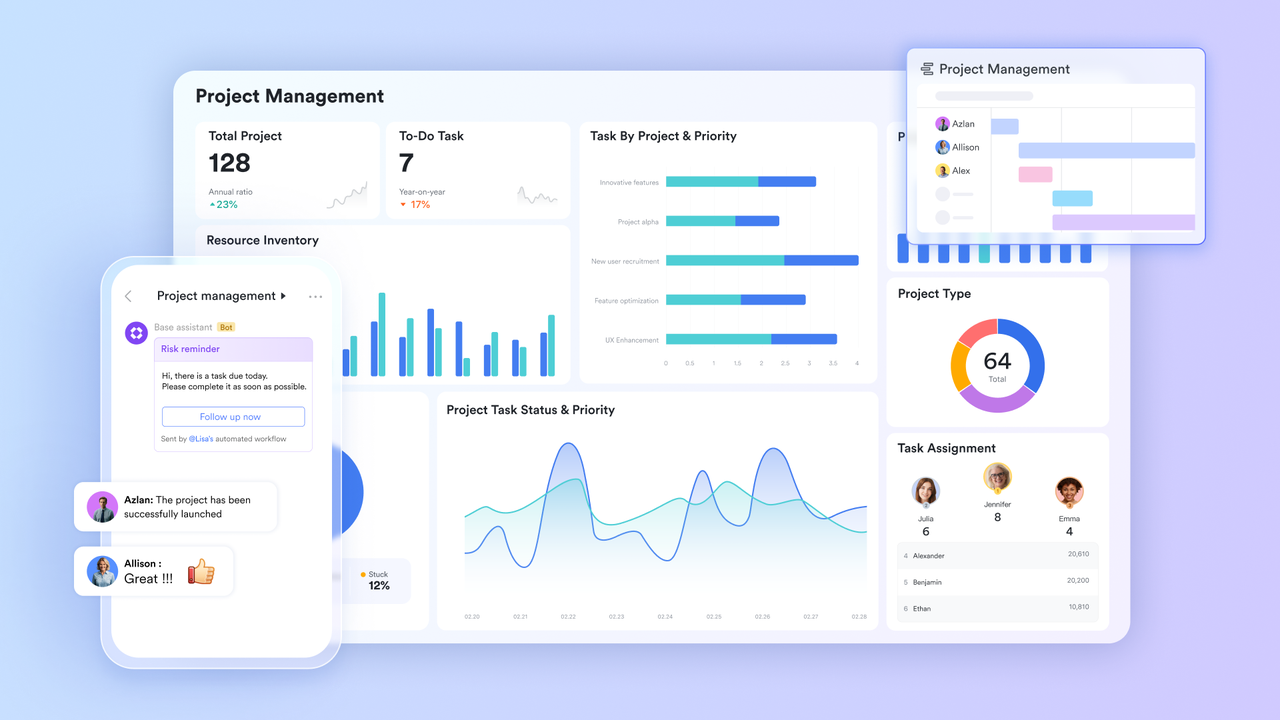
The dream of the “perfect niche app” has turned into an administrative nightmare. Most IT departments are currently babysitting a dozen different platforms that don’t speak the same language. It’s a mess of disparate security protocols, isolated billing cycles, and endless API patches that eventually break. When your infrastructure is a “Franken-stack” of disconnected tools, you aren’t just losing productivity; you’re increasing your security risk and your overhead.
The shift we’re seeing is toward a “platform-first” mentality. IT leaders are moving away from surface-level fixes and toward a robust project management tool that serves as a unified backbone for the entire organization. It’s about realizing that the best tool isn’t the one with the most bells and whistles; it’s the one that integrates seamlessly into the daily flow of the business. Moving to a unified hub isn’t just a win for the employees; it’s a strategic move for the IT team to regain control and actually focus on innovation instead of troubleshooting logins.
Bridging the external gap with Lark Mail
Email is usually the first silo that causes trouble. Most organizations treat it as a totally separate entity from their internal chat, which leads to information getting lost in transit. Lark Mail changes the game by pulling that external communication directly into the workspace. It turns your inbox into a collaborative tool rather than a private silo.
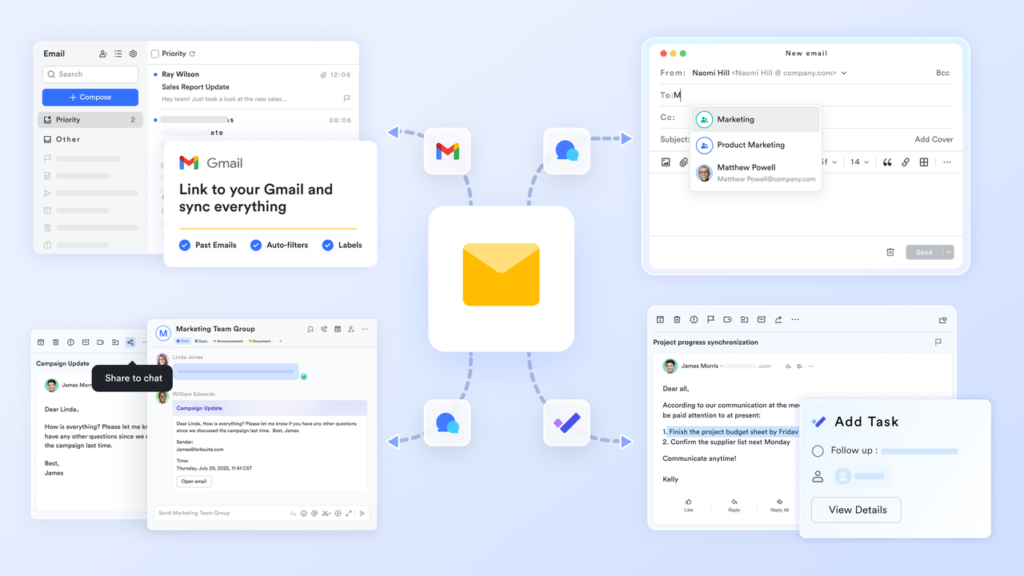
If a vendor sends a critical update, you don’t have to forward it or copy-paste the text into a different app. You share that email directly into a messenger thread. You solve the problem with the team right there and then. When you’re looking at project management tools, the value of this native connection is huge. It stops the “double-handling” of information and ensures that external feedback is acted upon immediately, not buried in an inbox.
Capturing institutional memory with Lark Minutes
One of the biggest drains on any technical team is the “re-explaining” tax. You have a meeting, you decide on a technical path, and a week later, half the team is asking for clarification. Lark Minutes kills this cycle. It turns every video call into a permanent, searchable, and interactive transcript that lives exactly where the work happens.
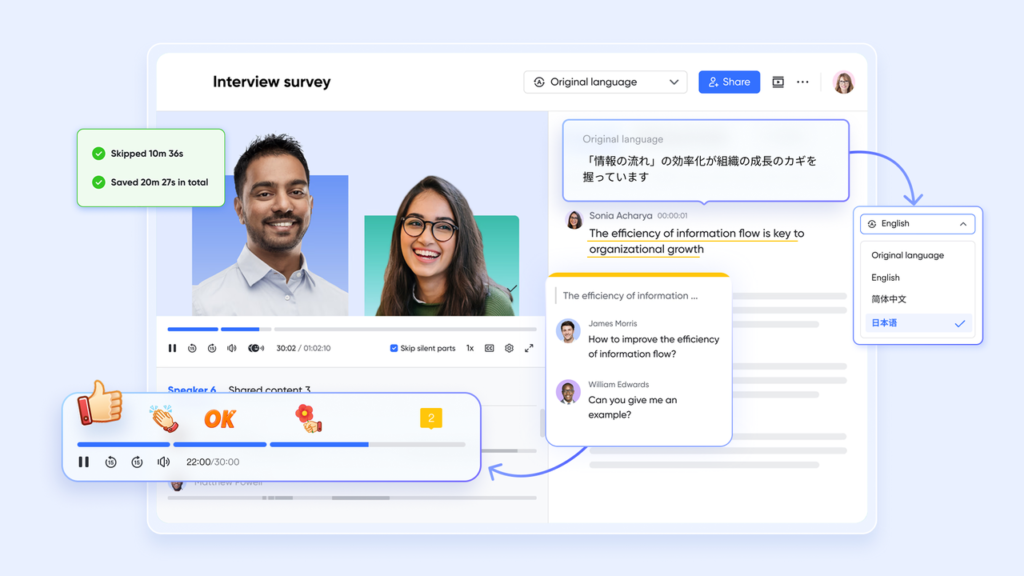
It isn’t just a video file sitting in a folder. It’s an intelligent record. A developer who missed a call can search the transcript for a specific technical term and jump to that exact moment in the video. When you compare this to the overhead of Google Workspace pricing, you start to see that having this built in saves hours of redundant follow-ups. It treats meeting data as a functional asset rather than a byproduct, which is essential for staying agile.
Centralizing the technical library with Lark Wiki
Knowledge silos are a company’s biggest vulnerability. If your system architecture or security protocols are stored in someone’s personal folder, you’re one resignation away from a crisis. Lark Wiki provides a structured, searchable home for all that critical information. It’s not just a place to dump files; it’s a living library of your company’s intelligence.
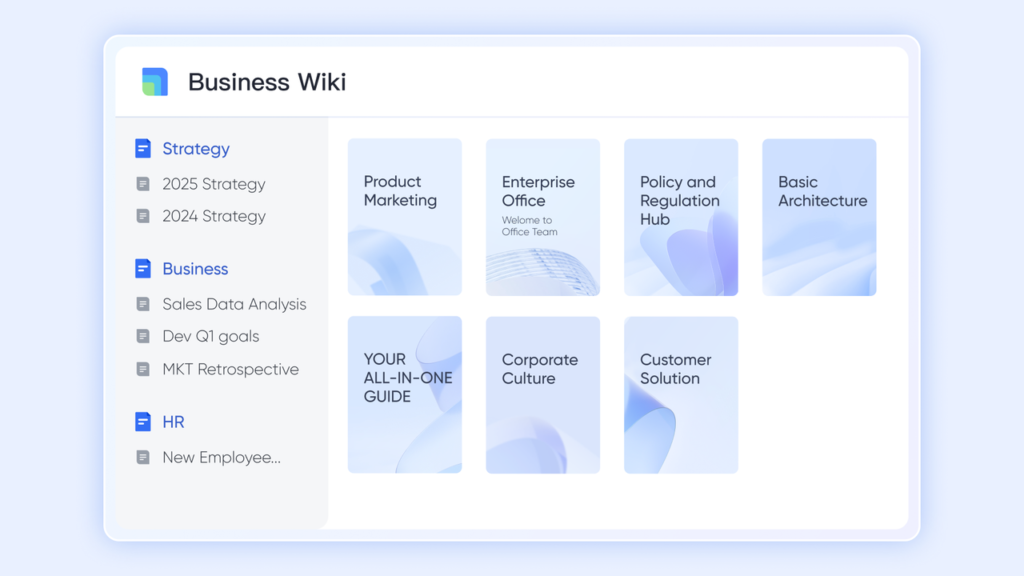
Because the Wiki is accessible directly from the sidebar, it becomes the first place people look for answers. It encourages a “self-service” culture where new hires can find technical “how-tos” or onboarding guides without pestering the senior staff. It’s one of those productivity tools that actually builds long-term value for the company. It ensures that the collective brain of the team stays with the company, no matter who moves on.
Strategic alignment with Lark OKR
Managing a technical team often feels like you’re herding cats. Everyone is busy, but are they moving toward the same goal? Lark OKR brings that missing visibility. It takes the company’s high-level strategy and weaves it into the daily interface. It isn’t a separate dashboard that people forget to check; it’s part of the workspace.
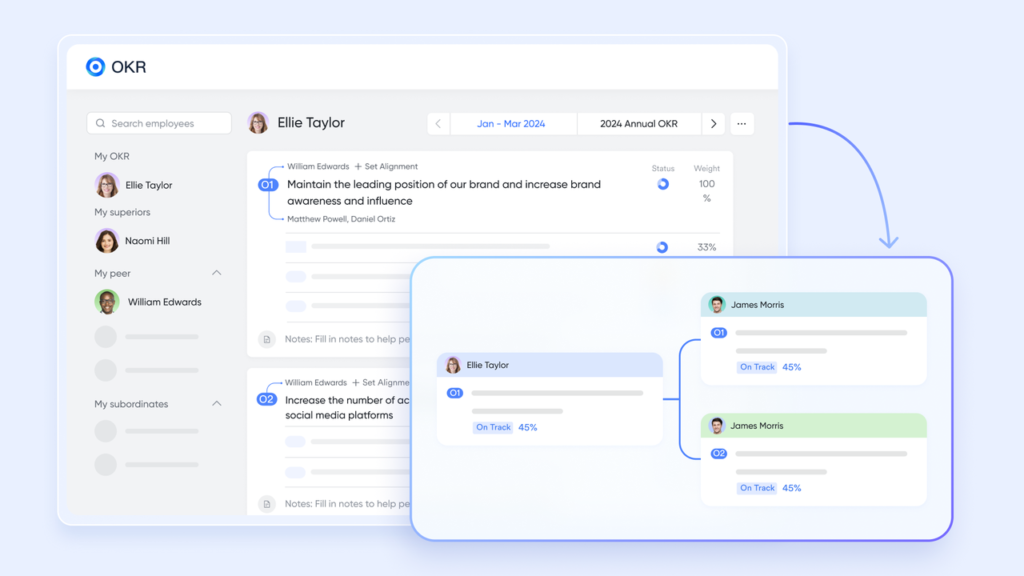
The beauty of this is transparency. Every engineer can see how their specific sprint contributes to the quarterly objective. It replaces the “check-in” meeting with real-time data. If a key result is falling behind, the manager can see it instantly and course-correct before it impacts the launch. It turns “management” into “facilitation,” which is exactly where a modern leader needs to be.
Accelerating sign-offs with Lark Approval
Administrative bottlenecks are the silent killer of technical momentum. Whether it’s a request for new hardware or a security sign-off, waiting for an email reply is a waste of time. Lark Approval brings these requests into the messenger flow. It’s an actionable notification that a manager can resolve in two seconds.
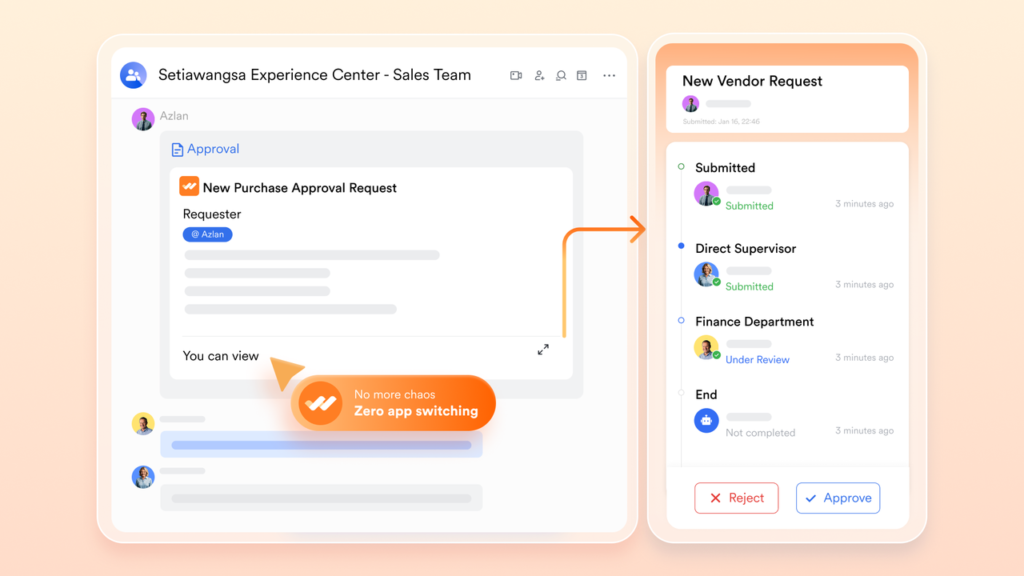
It keeps the audit trail clean without manual effort. Every approval is logged, tracked, and visible to the right people. It removes the “did you see my request?” Pings that clutter up everyone’s day. For an IT director, this means fewer bottlenecks and more time for actual engineering. It’s about building a system where the “paperwork” doesn’t slow down the progress.
Live-coding documentation with Lark Docs
The days of the “read-only” technical brief are over. They’re too hard to update, and they get ignored. Lark Docs are dynamic environments where you can embed live code blocks, video explainers, and even functional database views. It turns a document into a command center for the project.
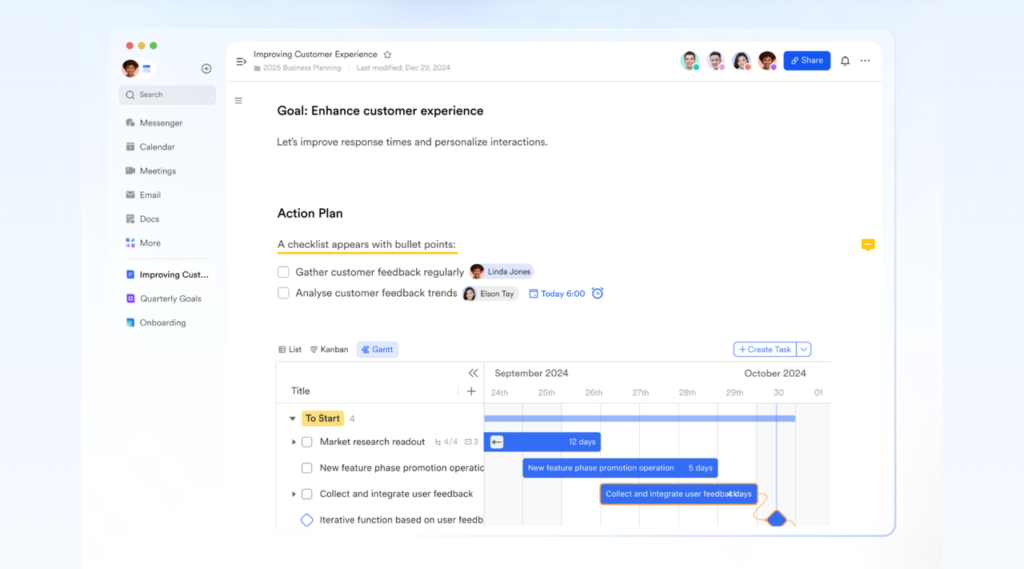
In these docs, collaboration is the default. You can tag a teammate in a line of text, and they can jump in and edit with you in real-time. The feedback loop is almost instantaneous. It eliminates the “version control” nightmare that comes with static files and ensures that the technical documentation is always as current as the code itself. It makes the “shared brain” of the team a reality.
Bonus: Reducing the “administrative overhead” of modern infrastructure
For a technical lead, the most frustrating drain on the day isn’t a complex server migration; it’s the constant, low-level maintenance of a fragmented software environment. When your team is hopping between Slack, Zoom, Trello, and Notion, you aren’t just paying for features—you’re paying for the “integration tax.” Every time an API breaks or a permission sync fails, your most expensive engineering talent is pulled away from building products just to troubleshoot a login.
Most organizations start their budget audit by looking at Google Workspace pricing to get a handle on their base operational costs, but the real complexity arrives when you realize that a basic suite requires you to bolt on five other “best-of-breed” apps just to get a functional workflow. You end up with a collection of high-cost islands that require constant manual bridges just to stay in sync.
Lark offers a path toward a cleaner, more sustainable architecture. By housing the messenger, the database, the video conferencing, and the approvals on a single, unified engine, you eliminate the need for third-party connectors and overlapping subscriptions. It allows the IT team to stop being a “support desk for broken integrations” and start being an engine for innovation. By choosing a high-velocity environment, you stop managing the tools and start leading a team that is always in sync.
Final thoughts
The companies that move the fastest aren’t the ones with the most tools. They’re the ones with the least friction. Every time you force an employee to switch context or hunt for a login, you slow down your business.
A unified hub isn’t just a convenience; it’s an operational necessity. By integrating the mail, the goals, the documentation, and the approvals into one place, you’re giving your team the space to do their best work. Utilizing a consolidated set of productivity tools ensures you are closing the gaps where information used to fall through. It’s time to move past the fragmented “Franken-stack” and start working in a system that was actually built for the modern era.
