

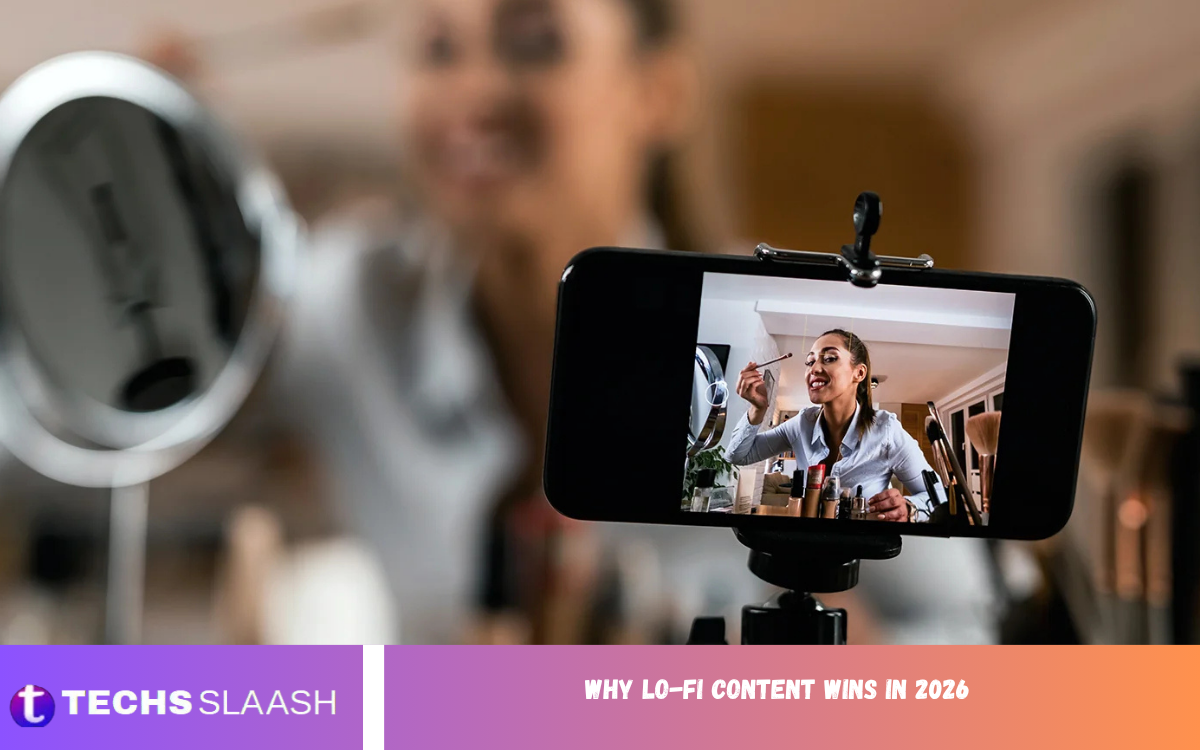
Lo-fi content refers to simple, natural, and less polished digital content that prioritizes authenticity over production quality. It can include smartphone videos, behind-the-scenes clips, casual tutorials, unedited conversations, quick product demonstrations, and everyday social media posts.
The growing popularity of lo-fi content does not mean audiences dislike professional production. Instead, people increasingly appreciate content that feels genuine and relatable. In 2026, creators and brands are using simple content to communicate faster, appear more approachable, and build stronger relationships with their audiences.
Why Lo-Fi Content Wins in 2026?
One of the biggest reasons Why Lo-Fi Content Wins in 2026 is that audiences are surrounded by highly polished digital content. Professional advertisements often look similar, making it difficult for viewers to distinguish one brand from another. Lo-fi videos can break through that pattern by feeling spontaneous and personal.
Lo-fi content also reduces the distance between creators and viewers. A smartphone recording, natural voice, simple background, and honest explanation can make a person or business feel more accessible. This sense of authenticity can encourage viewers to stop scrolling and pay attention.
Authenticity Builds Stronger Connections
Modern audiences are becoming more selective about the content they trust. Perfect lighting, professional editing, and carefully written scripts can sometimes feel distant when viewers are looking for real experiences. Lo-fi content provides an opportunity to show personality without excessive production.
Authenticity can be especially valuable for small businesses, influencers, and independent creators. Showing real processes, mistakes, opinions, customer experiences, and daily activities gives audiences a better understanding of what exists behind a brand or personal profile.
Lo-Fi Content Feels More Human
People naturally connect with other people rather than corporate-looking messages. Lo-fi content often captures natural speech, ordinary environments, spontaneous reactions, and imperfect moments. These elements can make digital communication feel more like a conversation.
In 2026, human-centered communication is becoming increasingly important across social platforms. A creator speaking directly into a phone camera may create a stronger emotional connection than an expensive advertisement because viewers can easily imagine having the same conversation with a friend.
Social Media Rewards Attention and Retention
Social media platforms continue to compete for user attention. Content that immediately communicates an idea can perform well because viewers have limited patience for slow introductions and unnecessary production elements. Lo-fi content often gets to the point quickly.
Short videos, casual demonstrations, quick opinions, and direct explanations can capture attention within the first few seconds. While no content style guarantees strong performance, lo-fi formats make it easier for creators to experiment with different hooks and ideas without spending significant time on production.
Lower Production Costs Encourage Creativity
Producing high-quality commercial content can require cameras, lighting equipment, editing software, locations, designers, and production teams. These resources can be valuable, but they can also make content creation expensive and slow.
Lo-fi content lowers the barrier to publishing. A creator can record an idea with a smartphone and publish it within minutes. Businesses can respond to trends, answer questions, demonstrate products, or share updates without having to organize a complete production process.
Faster Content Creation Matters in 2026
Speed has become an important advantage in digital marketing. Trends can appear and disappear quickly, while audience interests can change within days. A lengthy production process may cause brands to miss opportunities.
Lo-fi content allows teams to react quickly. When a customer asks a common question, a company can record a short answer instead of producing a full commercial. When a creator discovers an interesting topic, they can publish their thoughts while the subject is still relevant.
Lo-Fi Content Supports Consistent Publishing
Consistency is often more practical when content does not require extensive preparation. Creators who attempt to produce highly polished videos for every post may struggle to maintain a regular publishing schedule.
With lo-fi content, creators can share frequent updates without treating every post as a major production. This creates more opportunities to test subjects, formats, hooks, and storytelling approaches while learning what audiences respond to most effectively.
Behind-the-Scenes Content Builds Trust
Behind-the-scenes content is one of the strongest examples of the lo-fi approach. Instead of only presenting the finished product, businesses can show how products are created, packaged, tested, delivered, or improved.
This transparency gives audiences a closer look at the people and processes behind a business. Even simple footage of a team preparing an order or solving a problem can make a company feel more trustworthy and approachable.
User-Generated Content Strengthens Social Proof
Lo-fi content also works well with user-generated content. Customers naturally create videos, reviews, demonstrations, and reactions using their own phones. These materials often feel more authentic than traditional advertisements.
When customers share genuine experiences, potential buyers can see how products or services appear in real situations. Brands can encourage this type of content by creating useful experiences and making it easy for customers to share their opinions.
Lo-Fi Does Not Mean Low Quality
A common misconception is that lo-fi content is careless. Authenticity should not be confused with poor communication. Successful lo-fi content can still have clear audio, useful information, good framing, and a strong message.
The difference is that production quality supports the message instead of becoming the message. A simple video can be effective when it provides value, tells a compelling story, or answers a question. The goal is not to make content look bad but to make it feel natural.
Storytelling Becomes More Important
Lo-fi content places greater emphasis on storytelling because there are fewer visual distractions. Without expensive effects or cinematic scenes, the idea itself has to hold the audience’s attention.
Creators can use personal experiences, customer stories, lessons, mistakes, challenges, and discoveries to create engaging content. A simple story told honestly can sometimes be more memorable than a highly produced advertisement with a complicated message.
Read Also: Behind-the-Scenes Social Media Ideas
Lo-Fi Content Helps Small Brands Compete
Large companies often have substantial marketing budgets, while small businesses may not have the same resources. Lo-fi content creates a more accessible way for smaller brands to participate in digital conversations.
A small company can compete through personality, expertise, responsiveness, and authenticity. Instead of trying to imitate the production quality of major corporations, businesses can highlight what makes them different and communicate directly with their communities.
Authentic Personal Branding Is Growing
Personal branding has become increasingly important for professionals, entrepreneurs, consultants, creators, and business owners. Audiences often want to know the person behind the expertise.
Lo-fi content makes personal branding easier because individuals can share opinions, lessons, routines, industry observations, and experiences without having to build a formal studio. Regular communication can gradually create familiarity and credibility.
Lo-Fi Content Encourages Experimentation
Another reason why Lo-Fi Content Wins in 2026 is experimentation. When a video takes hours or days to produce, creators may hesitate to try unusual ideas. Simple production removes much of that pressure.
Creators can test different openings, topics, storytelling styles, lengths, and formats. The strongest ideas can later be developed into more polished content. In this way, lo-fi publishing can serve as a practical testing platform for broader content strategies.
The Best Lo-Fi Content Provides Value
Authenticity alone is not enough. Audiences still need a reason to watch, save, share, or discuss content. Successful lo-fi posts usually provide useful information, entertainment, inspiration, education, or a meaningful perspective.
A simple tutorial that solves a problem can outperform a beautiful video that provides no practical value. For this reason, creators should focus first on audience needs and then decide how much production is necessary.
How Brands Can Use Lo-Fi Content
Brands can begin with simple formats such as employee introductions, product demonstrations, frequently asked questions, customer stories, office moments, packaging videos, quick tutorials, and founder messages.
The most effective approach is to create content that matches the brand’s personality. A professional company can remain credible while using a relaxed format, while a creative brand can use humor and spontaneous storytelling to create stronger engagement.
Common Mistakes to Avoid
The first mistake is confusing authenticity with a lack of preparation. A casual video should still have a clear purpose. Creators should know what they want viewers to understand before pressing record.
Another mistake is copying trends without considering the audience. Lo-fi content works best when it feels natural to the creator or brand. Forced trends, artificial personalities, and exaggerated reactions can quickly make supposedly authentic content feel less genuine.
The Future of Lo-Fi Content
Lo-fi content is likely to remain important because digital audiences continue to value speed, personality, relevance, and authenticity. As professional production becomes easier to create, highly polished content may become even more common.
That environment can make genuine communication more valuable. The future is unlikely to belong entirely to either polished or lo-fi content. Instead, successful creators will understand when a simple format is better and when a professional production deserves additional investment.
Frequently Asked Questions
What is lo-fi content?
Lo-fi content is digital media created with a simple, natural, and authentic production style. It often uses smartphones, minimal editing, ordinary environments, and direct communication.
Why is lo-fi content popular in 2026?
Lo-fi content is popular because it feels authentic, can be produced quickly, costs less, and allows creators to communicate with audiences in a more personal way.
Does lo-fi content mean low-quality content?
No. Lo-fi describes the production style rather than the value of the content. Good lo-fi content can have clear audio, useful information, strong storytelling, and professional communication.
Can businesses benefit from lo-fi content?
Yes. Businesses can use lo-fi content for product demonstrations, customer questions, behind-the-scenes videos, employee introductions, tutorials, and authentic brand storytelling.
Is lo-fi content better than professional content?
Neither style is always better. Lo-fi content is useful for authenticity and speed, while professional content can be valuable for major campaigns, product launches, and important brand presentations.
Does lo-fi content help build trust?
It can. Natural communication and transparent behind-the-scenes material can help audiences understand the people and processes behind a brand.
What platforms are suitable for lo-fi content?
Lo-fi content can work across short-form video platforms, social networks, video-sharing websites, blogs, and other digital channels. The best platform depends on where the target audience spends time.
How can beginners create lo-fi content?
Beginners can start with a smartphone, natural lighting, a quiet environment, and a clear topic. The focus should be on delivering useful or entertaining information rather than achieving perfect production.
Can lo-fi content improve engagement?
It can encourage engagement by making content feel personal and easy to consume. However, engagement depends on several factors, including relevance, storytelling, audience interest, timing, and content quality.
Will lo-fi content remain popular?
Lo-fi content is likely to remain relevant because authenticity and human communication continue to matter. Creators who combine simple production with valuable ideas can adapt effectively as audience preferences change.
Conclusion
The answer to Why Lo-Fi Content Wins in 2026 is rooted in authenticity, speed, accessibility, and human connection. Audiences are exposed to enormous amounts of polished media, making natural and relatable communication increasingly valuable.
Lo-fi content gives creators and brands the freedom to publish consistently, experiment with ideas, share genuine experiences, and communicate without unnecessary production barriers.

1 Comment
Pingback: How to Create Human Content in an AI-Heavy Feed - Techsslaash.com