

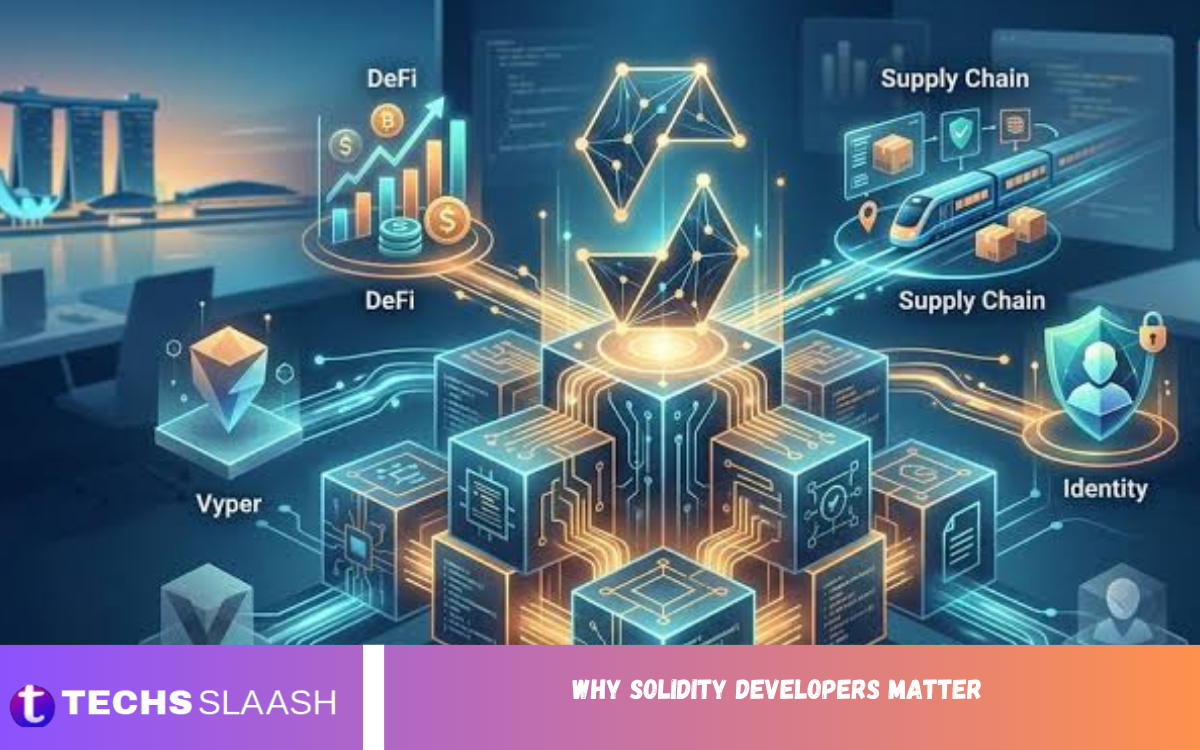
Solidity developers play an important role in the growth of blockchain technology and decentralized applications. They specialize in writing smart contracts that operate on blockchain networks such as Ethereum. These contracts automatically execute predefined instructions without requiring traditional intermediaries.
The importance of Solidity developers continues to increase as businesses explore decentralized finance, digital assets, gaming, NFTs, and Web3 applications. Their technical knowledge helps organizations transform blockchain concepts into practical and reliable digital solutions.
Building Smart Contracts
One of the main reasons Why Solidity Developers Matter is their ability to create smart contracts. Smart contracts are self-executing programs that automatically perform actions when specific conditions are satisfied. They can support transactions, agreements, payments, ownership systems, and many other processes.
Solidity developers carefully design these contracts according to business requirements. A well-developed smart contract can reduce manual work, improve transparency, and create automated processes that operate directly on a blockchain network.
Supporting Decentralized Applications
Decentralized applications, commonly known as dApps, depend heavily on smart contracts. Solidity developers build the blockchain-based logic that allows these applications to perform important functions without relying completely on centralized servers.
From decentralized exchanges to blockchain games and financial platforms, Solidity developers contribute to the core functionality of Web3 applications. Their expertise helps ensure that decentralized systems operate according to their intended rules.
Improving Blockchain Security
Security is one of the most important responsibilities of a Solidity developer. Smart contracts can manage valuable digital assets, making coding mistakes potentially costly. Developers therefore need to understand common vulnerabilities and secure programming practices.
Experienced Solidity developers review contract logic, test different scenarios, and identify weaknesses before deployment. Their attention to security can help reduce risks associated with unauthorized access, incorrect transactions, and exploitable contract behavior.
Creating Transparent Systems
Blockchain technology is widely recognized for transparency, and Solidity developers help organizations take advantage of this feature. Smart contract operations can be recorded on a blockchain, allowing relevant information to be verified through blockchain data.
This transparency can be useful for financial services, supply chains, digital ownership, and other industries. Solidity developers create the contract logic that determines how information and transactions are handled within decentralized systems.
Enabling Decentralized Finance
Decentralized finance, or DeFi, is one of the largest areas where Solidity developers provide value. DeFi applications use smart contracts to offer financial services such as lending, borrowing, trading, staking, and liquidity management.
Developers must understand both blockchain programming and financial logic when creating DeFi applications. Their work helps transform financial concepts into automated systems that can operate without traditional banking intermediaries.
Supporting NFT Development
Non-fungible tokens have created new opportunities for digital ownership, collectibles, gaming assets, memberships, and other applications. Solidity developers create and customize smart contracts that define how NFTs are created, transferred, and managed.
Their work can also support advanced NFT functionality, including marketplace integration, royalties, access control, and collection management. As businesses continue exploring digital ownership, Solidity development remains an important technical skill.
Helping Blockchain Gaming Grow
Blockchain gaming combines traditional gaming experiences with decentralized technologies. Solidity developers can create smart contracts for digital assets, player ownership, rewards, marketplaces, and other blockchain-based game features.
Their contribution allows game developers to introduce verifiable ownership and programmable assets. This can create new economic models while giving players greater control over certain digital items within supported gaming ecosystems.
Connecting Web3 Applications
Modern Web3 platforms often require several components to work together. Solidity developers focus on the smart contract layer while collaborating with frontend developers, backend engineers, blockchain specialists, and product teams.
This collaboration helps connect blockchain functionality with user interfaces and other application services. A skilled Solidity developer understands how contracts interact with wallets, blockchain networks, and decentralized application interfaces.
Reducing Dependence on Intermediaries
Traditional digital processes often require third parties to verify transactions or enforce agreements. Smart contracts can automate many of these activities by executing predetermined rules directly on a blockchain.
Solidity developers are responsible for translating business rules into reliable code. Their work can help organizations reduce unnecessary manual processes while creating systems that operate according to predefined conditions.
Read Also: WaveTechGlobal: Game-Changing Innovations
Improving Business Efficiency
Businesses are increasingly examining blockchain technology for applications beyond cryptocurrency. Smart contracts can automate workflows involving payments, verification, ownership, agreements, and data-related processes.
Solidity developers help companies determine where blockchain automation can provide practical value. By developing appropriate contract logic, they can support systems designed to reduce repetitive tasks and improve operational efficiency.
Supporting Web3 Innovation
Web3 continues to develop across finance, entertainment, gaming, social platforms, identity, and digital commerce. Solidity developers provide the technical foundation needed to experiment with many of these decentralized concepts.
Their knowledge allows companies and startups to test new ideas and develop blockchain-based products. As Web3 technology evolves, developers who understand Solidity can contribute to increasingly sophisticated decentralized solutions.
Ensuring Reliable Contract Performance
Smart contracts are expected to perform exactly according to their programmed instructions. Once deployed, changing contract behavior may be difficult or impossible depending on the design and architecture.
Solidity developers therefore need to consider contract behavior carefully before deployment. Testing, code review, documentation, and thoughtful architecture can help improve reliability and reduce unexpected outcomes.
Managing Gas Efficiency
Blockchain transactions can require network fees, commonly known as gas fees. Poorly optimized smart contracts may consume more computational resources than necessary, increasing transaction costs for users.
Solidity developers can optimize contract code to reduce unnecessary operations. Efficient programming can improve the user experience and make decentralized applications more practical for larger audiences.
Choosing the Right Blockchain Architecture
Solidity is strongly associated with Ethereum and Ethereum-compatible networks, but developers also need to understand the broader blockchain environment. Different networks can offer different transaction costs, performance characteristics, and development requirements.
A professional Solidity developer evaluates the application’s needs before selecting an appropriate deployment environment. This approach helps businesses build solutions that align with their technical and operational objectives.
Maintaining Smart Contracts
Blockchain development does not necessarily end when a smart contract is deployed. Developers may need to monitor applications, review performance, address integration issues, and maintain related software components.
Proper maintenance can help organizations respond to changes in blockchain infrastructure and application requirements. Professional developers also help teams establish development and testing processes for future updates.
Helping Startups Build Web3 Products
Startups often need to move quickly while maintaining technical quality. Solidity developers can help transform an early blockchain concept into a functional product by developing the smart contract infrastructure.
Their contribution can be particularly valuable during product development, testing, and deployment. Experienced developers can also help startups identify technical limitations before significant resources are committed.
Creating New Career Opportunities
The growth of blockchain technology has created demand for professionals with specialized development skills. Solidity is an important programming language within the Ethereum ecosystem, making it valuable for developers interested in smart contract engineering.
Learning Solidity can provide developers with opportunities to work on DeFi platforms, NFT projects, blockchain games, Web3 applications, and other decentralized technologies. Continuous learning remains important because blockchain development changes rapidly.
The Future of Solidity Development
As blockchain adoption expands, Solidity developers are likely to remain important contributors to decentralized technology. New applications may require increasingly sophisticated smart contracts and improved approaches to security, scalability, and interoperability.
Future Solidity development will likely involve greater emphasis on secure coding, efficient architecture, testing, and integration with emerging blockchain infrastructure. Developers who continue improving their skills can remain valuable as the Web3 ecosystem evolves.
Choosing Skilled Solidity Developers
Businesses should consider technical experience, smart contract knowledge, security awareness, testing practices, and previous blockchain projects when selecting Solidity developers. A strong developer should understand both programming principles and blockchain-specific challenges.
Communication is also important because blockchain projects often involve developers, designers, business teams, and security specialists. Choosing professionals who can explain technical decisions clearly can make development more organized and effective.
Why Solidity Developers Matter for Businesses?
The answer to Why Solidity Developers Matter becomes clearer when considering the complexity of blockchain applications. Smart contracts directly control important functions, and mistakes can affect users, assets, and application operations.
Professional Solidity developers bring specialized knowledge to this environment. They help businesses develop blockchain solutions with greater attention to functionality, security, efficiency, and long-term reliability.
Why Solidity Developers Matter in Web3?
Web3 applications depend on decentralized infrastructure and programmable blockchain logic. Solidity developers create much of that logic through smart contracts, making them important participants in the Web3 development ecosystem.
Their work supports decentralized finance, gaming, digital ownership, marketplaces, and many emerging applications. Without skilled developers, turning blockchain concepts into dependable products would be significantly more difficult.
Frequently Asked Questions
What Does a Solidity Developer Do?
A Solidity developer writes and maintains smart contracts for blockchain networks, particularly Ethereum-compatible ecosystems. They develop contract logic, test functionality, improve security, and integrate contracts with decentralized applications.
Why Solidity Developers Matter in Blockchain?
Solidity developers matter because they create the smart contracts that automate processes on blockchain networks. Their work supports applications involving transactions, digital assets, finance, gaming, and decentralized services.
Is Solidity Difficult to Learn?
Solidity can be challenging because developers need to understand both programming concepts and blockchain technology. Learning JavaScript-like programming concepts, smart contract architecture, security, and blockchain fundamentals can provide a useful foundation.
What Are Smart Contracts Used For?
Smart contracts can automate agreements, payments, ownership systems, financial services, digital assets, and application functions. Their rules are programmed into blockchain-based code and execute when defined conditions are met.
Are Solidity Developers Needed for Web3?
Yes. Solidity developers are important for many Web3 projects because decentralized applications frequently depend on smart contracts. Their skills are particularly relevant to DeFi, NFTs, gaming, and blockchain marketplaces.
Can Solidity Developers Build DeFi Applications?
Solidity developers can create the smart contract infrastructure used by many DeFi applications. These contracts can support functions such as lending, borrowing, trading, staking, and liquidity management.
Why Is Smart Contract Security Important?
Smart contracts may control valuable digital assets and important application functions. Security vulnerabilities can therefore create serious risks, making testing, auditing, secure development practices, and careful architecture essential.
What Skills Should a Solidity Developer Have?
A professional Solidity developer should understand Solidity programming, smart contract architecture, blockchain fundamentals, security practices, testing, gas optimization, and decentralized application development.
Can Solidity Developers Work on NFT Projects?
Yes. Solidity developers can create NFT smart contracts and support functionality related to minting, transfers, ownership, marketplaces, royalties, and other blockchain-based digital asset features.
What Is the Future of Solidity Developers?
The future remains connected to the development of decentralized applications and blockchain infrastructure. As organizations explore Web3 and blockchain-based solutions, skilled Solidity developers can continue contributing to new digital products and services.
Conclusion
Understanding why Solidity Developers Matter is essential for businesses and organizations exploring blockchain technology. These professionals create smart contracts, support decentralized applications, improve contract efficiency, and contribute to secure Web3 infrastructure.
As blockchain technology continues developing, Solidity developers will remain valuable for projects that require programmable and decentralized systems.
