

Search for a self-cleaning litter box and you will find a wall of products that all promise the same thing: a clean box without the scoop. The problem is that the category spans everything from genuinely reliable machines to units that jam, misread their sensors, and end up requiring more attention than manual scooping ever did. The difference is rarely visible in a product photo, and it almost never shows up in the first week of ownership, which is exactly when reviews get written.
Finding the best self cleaning litter box is less about chasing a single top pick and more about understanding which engineering decisions matter. A unit earns that label when it detects reliably, cleans safely, and stays out of your way for months rather than days. This guide breaks down the qualities that separate a dependable machine from an expensive novelty, so you can judge any model on the criteria that actually predict long-term satisfaction.
The Three Failures That Sink Most Units
Self-cleaning boxes fail in predictable ways. The first is detection error: the unit starts a cycle while a cat is still inside, or fails to start because it misread a shadow. The second is mechanical jam, usually caused by litter that is too fine, too coarse, or clumped harder than the mechanism expects. The third is odor leakage from a waste drawer that is too small or poorly sealed. Every one of these shows up in owner complaints, and every one can be predicted from the design.
Detection is the safety-critical failure, so it deserves the closest scrutiny. Units that rely only on infrared beams can be fooled by a tail or a passing object, while units that rely only on weight can be fooled by a light cat or a second cat stepping in during the cycle. The best machines combine weight sensing with multiple beams and add a delay after the cat leaves, so the box is never moving when a cat is near it. If a unit’s safety story is vague, treat that as a warning.
What the Best Self Cleaning Litter Box Gets Right
A best self cleaning litter box earns the description through consistency rather than features. The cycle runs quietly, the sensors wait long enough for a hesitant cat to leave, and the waste drawer holds a full week for a single cat. Nothing about it is flashy; the machine simply works every day, which is exactly what most owners want.
Reliable Sensing and Safe Cycles
Look for a unit that detects entry before the cat is fully inside, waits after exit, and aborts the cycle if a cat re-enters. Some machines also pause automatically when they feel resistance, which protects a paw that wanders in mid-cycle. These behaviors are not marketing points; they are the difference between a machine you trust and one you unplug at night.
Litter Compatibility and Mechanism Design
Rake-style machines work best with firmly clumping clay, while drum-style machines need litter that stays in place during rotation. Check the manufacturer’s litter guidance and stick to it, because the wrong litter is the most common cause of jams. A well-designed mechanism also includes a manual cycle button and a way to reset after a jam without disassembling the entire unit.
Odor Control and Drawer Capacity
A sealed drawer with a carbon filter and a snug lid keeps odor contained between empties. Capacity matters more than owners expect: a drawer that fills in three days in a multi-cat home turns a convenience into a chore. Look for a drawer that slides out cleanly and a liner that is easy to change without touching waste.
Size, Placement, and the Transition
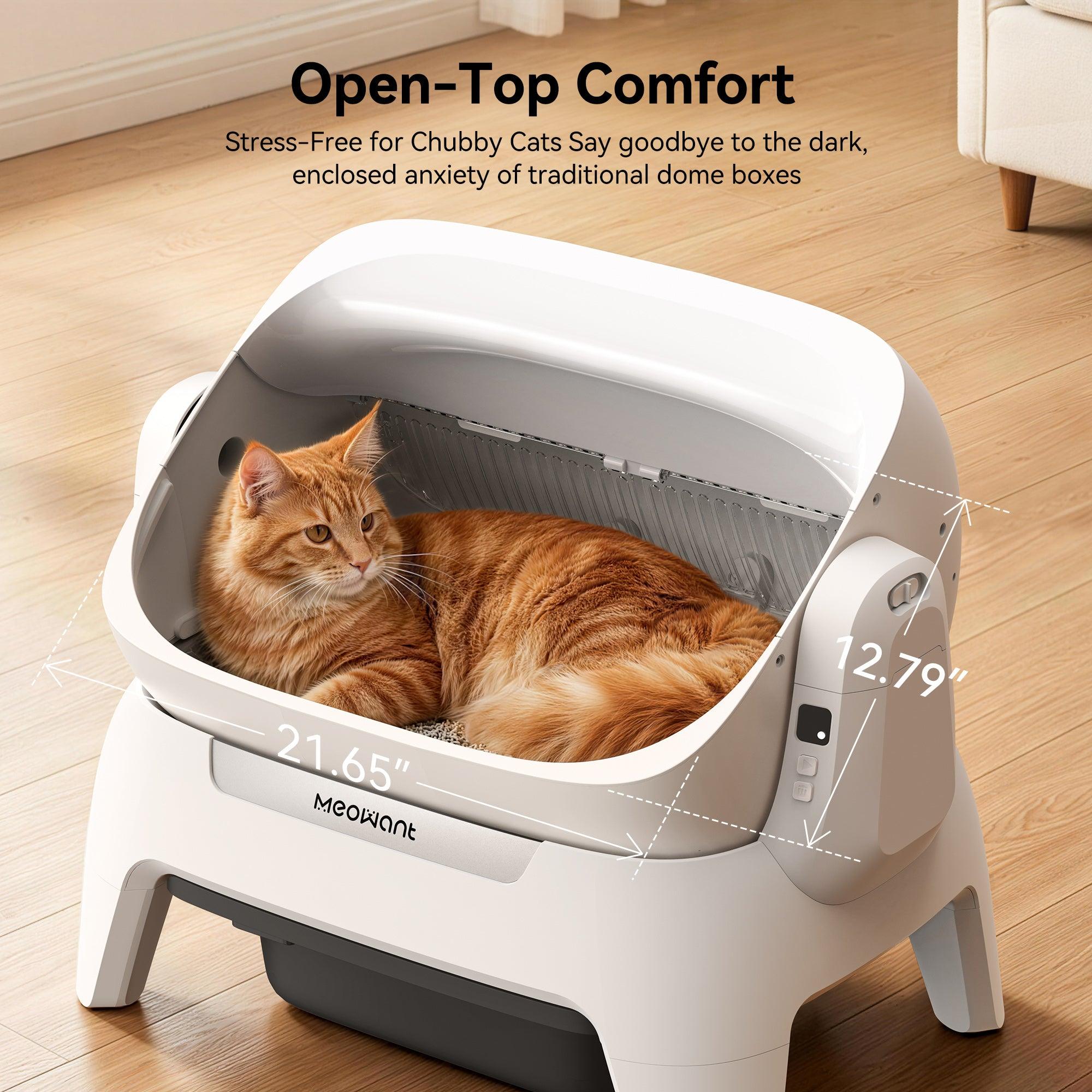
Self-cleaning boxes are larger than manual ones, and that size needs to fit somewhere sensible. Measure the footprint before buying and check that the box has clearance for the lid to open and the drawer to slide. Place it on a level surface, away from damp walls and direct heat, and leave space around the entrance so a cautious cat can approach and retreat without feeling cornered.
The transition is where many owners give up too early. Leave the old box in place, put the new unit where the old one stood if possible, and run the new box through a few empty cycles so your cat becomes used to the sound. Some cats take to a self-cleaning box immediately; others need a week of coexistence. Never remove the manual box until your cat has used the new one for several consecutive days.
Senior cats and very small cats need special attention. A high entry can be a barrier for an arthritic cat, and a very light cat may not trigger a weight sensor reliably. If either applies, test the unit before committing, or choose a model with adjustable sensitivity and a low entry.
Maintenance: The Part Reviews Skip
Every self-cleaning box still needs human maintenance. The drawer must be emptied, the litter topped up, and the interior wiped periodically to remove film that builds up on surfaces the rake does not reach. Budget for a deep clean every few weeks, and check the sensors for dust, because a dirty sensor is the leading cause of detection errors over time.
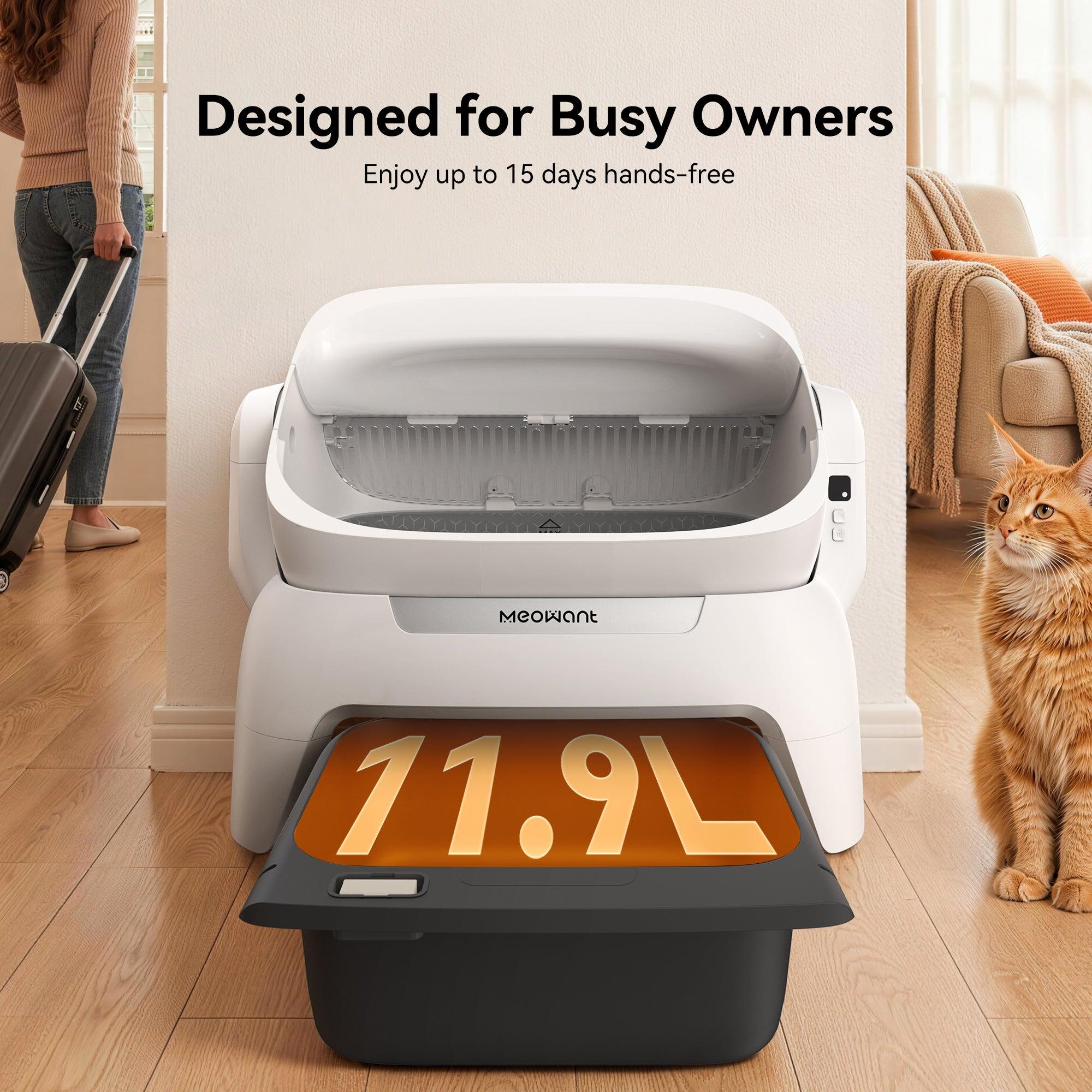
Parts wear out. Motors, rakes, and liners have finite lifespans, so check that replacements are available and reasonably priced before you buy. A machine with a great cycle but no replacement parts is a machine with a built-in expiration date. Meowant designs its self-cleaning units around this reality, keeping the parts that wear easy to service rather than sealing them away.
Finally, watch for changes in behavior. A cat that suddenly avoids a self-cleaning box may be reacting to a jam, a sensor fault, or a noise that developed. Treat avoidance as a diagnostic signal rather than a preference, and check the machine before assuming your cat has simply become fussy.
How to Compare Models Without Getting Lost
Ignore the feature list and score each candidate on four things: detection reliability, jam resistance, drawer capacity, and parts availability. A unit that scores well on all four will be a good box for years. A unit that wins on features but is weak on any of those four will frustrate you within a month. Read reviews with those criteria in mind, and discount any review written in the first week, when the novelty is still doing the work.
Behavioral Signals Worth Heeding
Cats do not complain about machines, they avoid them. If your cat starts eliminating beside the box, scratching at the entrance, or holding until you are home, treat that as information. A jammed mechanism, a sensor that misfires, or a cycle that runs at the wrong moment can all push a cat away, and the behavior often appears before you notice anything wrong with the unit itself.
Run a manual cycle while watching your cat. If the cat leaves the room, the sound or motion is a problem. If the cat stays and watches, the unit is probably fine and the issue is elsewhere, such as litter depth or placement. This simple test resolves more avoidance cases than any product change, and it costs nothing.
Also watch for over-reliance. A self-cleaning box that is never checked can accumulate a jam for days before an owner notices, and by then the cat may have found another spot. A five-second glance at the drawer and a manual cycle once a week keeps you in sync with the machine and catches small problems before they become behavioral ones.
Consistency Beats Cleverness
The best self cleaning litter box is not the one with the longest feature list. It is the one that detects your cat reliably, cleans safely, holds a week of waste, and can be repaired when a part wears out. Those qualities are unglamorous, which is why they get buried under marketing, but they are what determine whether a machine becomes a daily convenience or a daily annoyance. Judge any model against detection, jams, capacity, and parts, transition your cat slowly, and keep up with simple maintenance. Do that, and a self-cleaning box delivers exactly what it promised: a clean box you rarely have to think about.
