

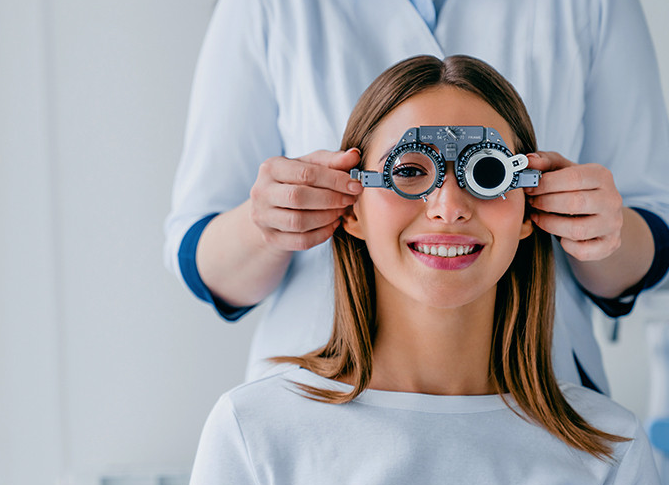
Myopia, or nearsightedness, is one of the most common vision disorders globally. It occurs when the eye grows too long or the cornea curves too steeply, causing distant objects to appear blurry. Lifestyle factors such as increased screen time, reduced outdoor activity, and near work have made myopia increasingly prevalent among children and young adults. According to recent studies, urban populations are at higher risk due to environmental and behavioral influences.
Traditional Myopia Correction with Glasses and Contact Lenses
For most people, corrective glasses are the first step in correcting myopia. They are simple, affordable, and effective for managing mild to moderate vision errors. Contact lenses offer a more flexible solution, providing a wider field of vision and aesthetic freedom. However, they require strict hygiene and regular replacement to prevent infections. While these traditional methods can improve vision clarity, they do not stop the progression of myopia, which is why more interventions are now being explored.
Orthokeratology (Ortho-K)
Orthokeratology, commonly known as Ortho-K, uses specially designed gas-permeable contact lenses worn overnight to reshape the cornea temporarily. By gently flattening the corneal surface, it allows users to see clearly throughout the day without glasses or daytime lenses. Ortho-K is particularly beneficial for children and young adults experiencing progressive myopia. The technique is non-surgical and reversible, making it an appealing option for those who are not yet eligible for laser procedures.
Phakic Intraocular Lenses
Phakic intraocular lenses (IOLs) are implanted inside the eye, in front of the natural lens and are used to correct severe myopia that cannot be treated with laser surgery. Unlike cataract surgery, the eye’s natural lens remains intact, preserving accommodation ability. These lenses provide excellent visual clarity and are a viable option for patients with thin corneas or high prescriptions.
Laser Vision Correction
Laser vision correction aims to permanently reshape the cornea, improving how light is focused on the retina. Techniques like LASIK, PRK, and SMILE are designed to treat varying degrees of myopia based on corneal thickness and eye health. The procedure uses laser technology to modify corneal curvature, reducing dependence on glasses or contact lenses. Most patients experience quick recovery with significant improvement in vision within days.
Comparing LASIK, PRK, and SMILE Procedures
- LASIK (Laser-Assisted in Situ Keratomileusis): Involves creating a thin corneal flap and reshaping the tissue beneath. Offers fast recovery and minimal discomfort.
- PRK (Photorefractive Keratectomy): Removes the corneal surface layer without creating a flap, suitable for thinner corneas but with longer healing time.
- SMILE (Small Incision Lenticule Extraction): A flapless and minimally invasive procedure that corrects myopia through a small incision, reducing dryness and recovery time.
Each technique has distinct advantages depending on eye structure, occupation, and lifestyle preferences, making evaluation important before selection.
Ideal Candidates for Surgical Myopia Correction
Surgical correction is not suitable for everyone. Ideal candidates are typically adults over 18 years of age with stable prescriptions for at least a year. They should have healthy corneas, no history of eye disease, and realistic expectations of visual outcomes. Preoperative assessments such as corneal topography, tear film evaluation, and pupil size measurement help determine eligibility. Patients with uncontrolled diabetes, autoimmune disorders, or certain eye conditions may not qualify for surgical correction and are better suited for non-invasive options like Ortho-K.
Chandigarh has become a leading center for modern ophthalmic care, combining advanced medical technology with highly qualified eye specialists. The city’s healthcare infrastructure offers advanced diagnostic tools, laser systems, and personalized eye care programs. Those seeking the best myopia treatment in Chandigarh can find several reputed eye centers offering comprehensive care, from initial assessment to advanced surgical options.
Post-Treatment Care and Recovery Insights
Postoperative care plays a big role in maintaining long-term results after myopia correction. Patients are advised to follow prescribed eye drops to prevent dryness and infection, avoid rubbing their eyes, and wear protective glasses during outdoor activities. Regular follow-ups are essential for monitoring healing and ensuring visual stability. Most people can resume daily activities within a few days, but strenuous physical exertion or exposure to irritants should be avoided for at least two weeks.
