

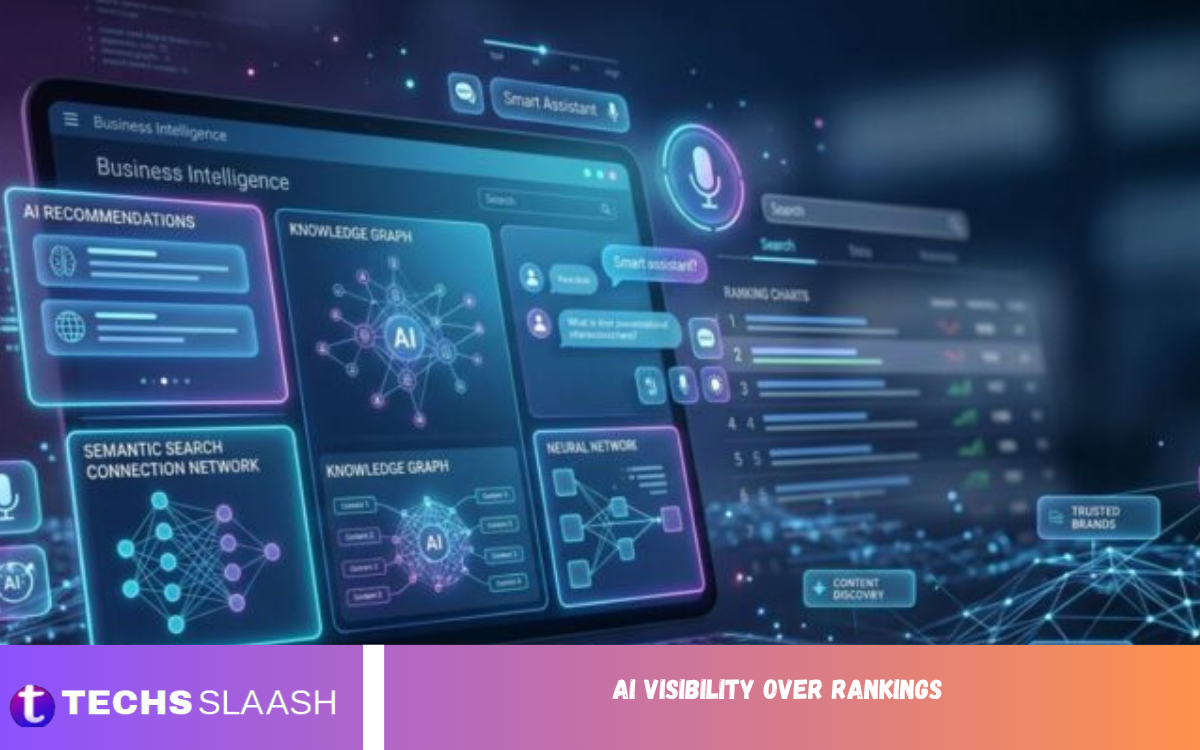
AI visibility is quickly becoming an important factor in how businesses, websites, and brands compete for attention online. While traditional SEO has largely focused on improving search engine rankings, the rise of AI-powered search and answer engines is changing how users discover information.
A website may rank well in traditional search results but still receive limited exposure if AI platforms do not recognize, understand, or reference its content. For this reason, businesses need to think beyond keywords and rankings and focus on creating clear, authoritative, relevant, and easy-to-understand content.
What Is AI Visibility Over Rankings?
AI Visibility Over Rankings refers to the growing importance of being recognized and represented by artificial intelligence systems rather than focusing exclusively on traditional search engine positions. AI-powered platforms can analyze information from multiple sources and generate concise answers for users.
This means visibility can happen even when a user does not click through a conventional search result. A company may be mentioned, recommended, summarized, or used as a supporting source in an AI-generated response. For brands, this creates another layer of digital visibility beyond the familiar ten blue links model.
Why Traditional Rankings Are Not Enough?
Search rankings have always been an important SEO performance indicator. Ranking near the top of a results page can increase impressions, organic traffic, brand awareness, and potential conversions. However, rankings alone do not explain how users interact with the modern search environment.
People now ask detailed questions and expect immediate answers. AI-powered search tools can summarize information without requiring users to visit several websites. As a result, businesses need to consider how their content performs when search becomes conversational, contextual, and answer-focused.
How AI Is Changing Search Behavior
AI has changed the way people formulate searches. Instead of typing short phrases such as “best accounting software,” users may ask complete questions describing their industry, budget, requirements, and specific problem.
This conversational behavior creates opportunities for businesses that publish comprehensive and well-organized information. Content that directly answers detailed questions can provide useful context for both readers and AI systems analyzing information across the web.
Creating Content for AI Visibility
Strong AI visibility starts with useful content. Articles should provide direct answers, accurate explanations, supporting details, and practical information that readers can understand without unnecessary complexity.
Businesses should organize content around topics rather than producing isolated pages for every keyword variation. A well-developed topic cluster can demonstrate broader expertise and provide multiple pieces of supporting information connected to a central subject.
Build Topical Authority Instead of Chasing Keywords
Keyword targeting remains useful, but modern content strategies should go beyond repeating a target phrase. Search systems increasingly need context to understand what a page is actually about.
Topical authority can be developed by covering important questions related to a subject from multiple angles. For example, a technology company could publish guides, comparisons, troubleshooting resources, explanations, use cases, and industry insights around its core area of expertise.
Trust and Authority Matter More Than Ever
AI systems need reliable information when generating answers. This makes credibility an important part of digital visibility. Websites should clearly communicate who created their content, why the author is qualified, and where important claims come from.
A strong reputation can also develop through mentions and references from respected websites, industry publications, organizations, and other credible sources. These signals can help establish a brand as an authoritative participant within its field.
AI Visibility and Brand Mentions
One major difference between traditional rankings and AI visibility is the importance of brand recognition. A business does not always need to appear as the first result to gain attention.
AI-generated responses may mention several companies, products, services, or sources when answering a user’s question. Being included in these answers can introduce a brand to audiences who may never have encountered it through conventional search.
Read Also: Building Resilient Fiber Networks for Smart Cities
Optimize for Questions and Search Intent
A powerful way to improve AI visibility is to understand the questions customers actually ask. Instead of building content around keywords alone, businesses can create resources that answer practical concerns throughout the customer journey.
For example, potential customers may want to know how a product works, what it costs, which alternatives exist, how it compares with competitors, and whether it is suitable for a particular situation.
Technical SEO Still Has a Role
Choosing AI Visibility Over Rankings does not mean technical SEO is no longer important. A website still needs a strong technical foundation so search engines and other systems can access, understand, and process its information.
Fast loading times, mobile usability, crawlability, logical internal linking, clean site architecture, descriptive titles, and appropriate structured data can all contribute to a better search experience.
Measuring AI Visibility
Measuring AI visibility is more complicated than tracking a traditional ranking position. Businesses should monitor how often their brand appears in AI-generated responses, which topics trigger mentions, and what information is associated with their name.
Brand searches, referral traffic, organic impressions, direct traffic, branded queries, and online mentions can provide useful supporting indicators. Businesses can also manually test important customer questions across relevant AI-powered search platforms.
Common Mistakes That Reduce AI Visibility
One common mistake is creating content solely for search engines. Excessive keyword repetition, generic introductions, unnecessary filler, and poorly organized information can reduce a page’s usefulness.
Another mistake is publishing large volumes of similar content without adding meaningful value. More pages do not automatically create more authority. Quality, relevance, accuracy, and originality remain essential.
The Future of AI Visibility Over Rankings
The relationship between rankings and AI visibility will continue to evolve. Traditional search results are unlikely to disappear completely, but users will increasingly encounter answers, summaries, recommendations, and conversational interfaces alongside conventional listings.
Businesses that adapt early can build stronger digital foundations. Instead of focusing exclusively on ranking for individual keywords, they can work toward becoming recognized authorities within their industries.
Frequently Asked Questions
What is AI Visibility Over Rankings?
AI Visibility Over Rankings means prioritizing how frequently and accurately a brand appears in AI-generated search answers, rather than measuring success only through traditional keyword positions. It focuses on relevance, authority, trust, and brand recognition.
Are traditional search rankings still important?
Yes. Traditional rankings continue to contribute to organic traffic and visibility. However, businesses should combine ranking strategies with content and brand strategies designed for AI-powered search experiences.
How can a website improve AI visibility?
A website can improve AI visibility by publishing accurate, useful, comprehensive content, answering real customer questions, demonstrating expertise, improving technical SEO, and developing a trustworthy online reputation.
Does keyword research still matter for AI search?
Yes. Keyword research can reveal customer interests and search behavior. However, businesses should use keywords as a starting point and create content that addresses the complete intent behind a search.
Why are brand mentions important?
Brand mentions can increase recognition within AI-generated answers and modern search experiences. When a business is consistently associated with a particular topic, users may become more familiar with the brand.
Does AI visibility replace SEO?
No. AI visibility expands SEO rather than completely replacing it. Technical SEO, rankings, links, content quality, and search intent can continue to support a broader strategy focused on visibility across different search experiences.
What type of content helps AI visibility?
Detailed guides, FAQs, comparisons, tutorials, original research, expert explanations, case studies, and practical resources can support visibility because they answer specific questions and provide useful context.
Can small businesses compete for AI visibility?
Yes. Small businesses can build visibility by demonstrating genuine expertise in specific areas, publishing helpful local or industry information, maintaining accurate business details, and developing a strong reputation within their niche.
How should businesses measure AI visibility?
Businesses can monitor brand mentions in AI answers, branded searches, organic traffic, referral sources, online reputation, and the topics for which their company is repeatedly recognized.
Is AI visibility the future of SEO?
AI visibility is becoming an important part of the evolving search landscape. Businesses that combine traditional SEO with authoritative content and strong brand recognition can be better prepared for changes in how people discover information.
Conclusion
The rise of AI-powered search is changing how businesses should think about online visibility. Rankings remain useful, but they represent only one part of a much larger search ecosystem. AI Visibility Over Rankings highlights the importance of becoming a trusted, recognizable, and relevant source that can be surfaced when users ask questions.
Businesses should focus on creating genuinely helpful content, developing topical authority, maintaining technical quality, strengthening credibility, and answering real customer questions.
