

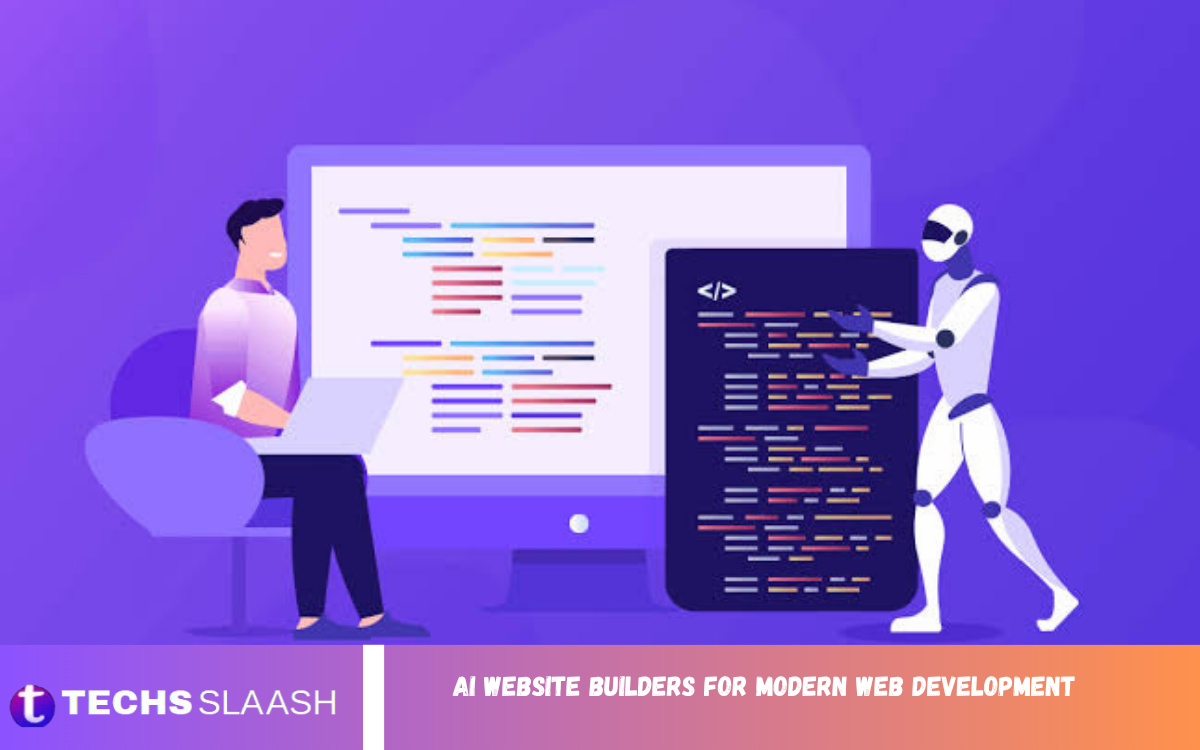
AI website builders for modern web development are changing how individuals, businesses, designers, and developers create websites. Instead of starting every project from an empty canvas, these platforms use artificial intelligence to generate layouts, content structures, design elements, and functional website components based on simple instructions.
Modern websites need to be fast, responsive, attractive, accessible, and easy to maintain. AI-powered website builders help address these requirements by reducing repetitive development work while allowing users to focus more on strategy, branding, user experience, and business goals.
What Are AI Website Builders?
AI website builders are digital platforms that use artificial intelligence to assist with website creation. A user can describe a website idea, business type, preferred design, or required features, and the system can transform those instructions into a working website structure.
Unlike traditional website development, which may require extensive coding knowledge, AI-powered platforms can automate many technical and creative tasks. They can suggest page layouts, generate written content, create visual concepts, organize sections, and help optimize websites for different screen sizes.
How AI Website Builders Work
Most AI website builders begin by collecting information about the project. Users may provide a business name, industry, website purpose, preferred style, target audience, and desired features. The AI then analyzes these requirements and creates an initial website concept.
After the first version is generated, users can make changes through visual editors or natural-language instructions. They may ask the system to change colors, modify sections, rewrite content, adjust layouts, or add new pages without manually rebuilding the entire website.
Faster Website Development
One of the biggest advantages of AI website builders for modern web development is speed. Traditional development can involve planning, wireframing, designing, coding, testing, and optimization, with each stage requiring time and technical expertise.
AI automation can reduce the amount of repetitive work involved in these stages. Developers and business owners can produce an initial website much faster, making AI particularly useful for prototypes, landing pages, small businesses, portfolios, and early-stage projects.
AI-Powered Design and Layout Generation
Design is an important part of successful web development because visitors often form their first impression within seconds. AI website builders can analyze common design patterns and generate layouts that organize headings, images, buttons, navigation menus, and content sections logically.
These systems can also help maintain visual consistency throughout a website. Typography, spacing, colors, buttons, and section structures can be coordinated to create a more professional appearance without requiring users to understand every principle of interface design.
Responsive Web Development
A modern website must work properly across desktops, tablets, and smartphones. Responsive development ensures that page elements automatically adjust to different screen sizes while maintaining usability and visual balance.
AI website builders can simplify responsive design by automatically adapting layouts for different devices. This reduces the need to manually create separate designs for every screen size and helps users achieve a consistent experience across multiple devices.
AI Content Generation for Websites
Website content is another area where artificial intelligence can save time. AI tools can help generate introductory text, service descriptions, product information, headlines, calls to action, and other website copy based on a company’s goals and audience.
However, generated content should be reviewed before publication. Businesses should ensure that information is accurate, original, brand-appropriate, and genuinely useful to visitors. Human editing remains important for maintaining credibility and a natural communication style.
SEO-Friendly Website Creation
Search engine optimization is essential for websites that depend on organic traffic. AI website builders can assist with several foundational SEO tasks, including page structures, headings, metadata, content organization, and mobile-friendly layouts.
AI can also help identify opportunities for clearer content and better keyword placement. Nevertheless, strong SEO requires more than automated settings. Useful content, technical performance, internal linking, search intent, authority, and ongoing optimization all contribute to long-term visibility.
Improving User Experience
User experience directly affects how visitors interact with a website. Confusing navigation, slow pages, excessive pop-ups, or poorly organized information can cause visitors to leave before taking action.
AI website builders can support better user experiences by suggesting structured layouts and clear navigation patterns. They can help organize information around common visitor goals, making websites easier to explore and understand.
AI Website Builders for Small Businesses
Small businesses often need professional websites without large development budgets. AI website builders can provide an accessible way to establish an online presence while reducing the amount of technical work required.
A local business can use AI-assisted tools to create pages for services, company information, contact details, testimonials, frequently asked questions, and other essential sections. This allows business owners to focus more on customers and operations rather than spending all their time managing website development.
Benefits for Professional Developers
AI website builders are not limited to beginners. Experienced developers can use artificial intelligence as a productivity tool for prototyping, brainstorming, content preparation, design exploration, and repetitive implementation tasks.
Rather than completely replacing professional development, AI can serve as an assistant within the development workflow. Developers can spend more time solving complex technical problems, improving performance, integrating advanced functionality, and creating customized experiences.
Customization and Creative Control
A common concern about AI website builders is whether generated websites look too similar. Modern platforms increasingly offer customization options that let users modify layouts, colors, typography, images, content, and functionality.
The best results usually come from combining AI automation with human creative direction. AI can provide a strong starting point, while designers and developers refine the website to reflect the organization’s identity and serve its specific audience.
Website Performance and Optimization
Website performance has become increasingly important as users expect pages to load quickly. Heavy images, unnecessary scripts, inefficient layouts, and poorly optimized resources can negatively affect the browsing experience.
AI-assisted development can help identify potential performance improvements during the creation process. Developers should still test real websites using appropriate performance tools and optimize images, scripts, fonts, caching, and other technical resources where necessary.
Read Also: Best AI Coding Tools for Modern Software Development
Security Considerations
Security should remain a priority regardless of how a website is created. AI-generated websites still need appropriate protection against common risks, including unauthorized access, insecure integrations, outdated components, and weak authentication practices.
Website owners should choose reputable platforms, use strong passwords, keep software updated, enable available security features, and regularly review access permissions. AI can support development, but responsible security management still requires human oversight.
Accessibility in Modern Web Development
Accessible websites allow more people to use digital services effectively, including visitors who rely on assistive technologies. Proper headings, readable typography, sufficient contrast, keyboard navigation, alternative text, and clear forms are important accessibility considerations.
AI tools can help identify or suggest improvements, but automated recommendations should not be treated as a complete accessibility audit. Human testing and established accessibility practices remain important for creating inclusive digital experiences.
AI Website Builders vs Traditional Development
Traditional web development provides extensive control over architecture, code, integrations, databases, and specialized functionality. It remains highly valuable for complex applications, enterprise platforms, customized systems, and projects with unusual technical requirements.
AI website builders focus more heavily on speed, accessibility, automation, and simplified creation. For many straightforward projects, they can reduce development time significantly, while traditional coding remains preferable when a project requires deep customization or specialized infrastructure.
The Future of AI Website Development
Artificial intelligence is likely to become increasingly integrated into website development workflows. Future systems may provide more advanced personalization, automated testing, intelligent accessibility improvements, stronger design recommendations, and more sophisticated development assistance.
The role of professionals will also continue evolving. Instead of spending most of their time performing repetitive tasks, developers and designers may increasingly focus on architecture, creativity, strategic decisions, user research, security, and quality control.
Choosing the Right AI Website Builder
Choosing an AI website builder should depend on the project’s objectives rather than popularity alone. Users should evaluate customization options, templates, hosting, performance, SEO capabilities, integrations, scalability, security features, and ease of use.
Businesses should also consider future requirements before selecting a platform. A simple website may need only basic features, while a growing organization could eventually require advanced integrations, ecommerce functionality, custom applications, analytics, or greater control over its technical environment.
Common Mistakes to Avoid
One common mistake is publishing an AI-generated website without reviewing its content or design. Automated systems can produce incorrect information, repetitive wording, generic visuals, or layouts that do not fully match a brand’s identity.
Another mistake is focusing only on appearance. A successful website must also provide useful information, clear navigation, responsiveness, accessibility, security, and reliable performance. AI should support these goals rather than become a substitute for thoughtful website planning.
Why Human Expertise Still Matters?
AI can automate many parts of website creation, but human judgment remains essential. Businesses understand their customers, brand voice, products, services, and objectives better than an automated system.
Professional oversight helps ensure that generated websites communicate the right message and provide meaningful value. The strongest approach is often a combination of AI efficiency and human creativity, experience, and quality control.
Frequently Asked Questions
What are AI website builders?
AI website builders are platforms that use artificial intelligence to help create websites. They can assist with layouts, content, design, page structures, and other development tasks.
Are AI website builders suitable for beginners?
Yes, many AI website builders are designed for users with limited technical experience. They can simplify website creation through visual editors and natural-language instructions.
Can AI website builders create professional websites?
Yes, they can create professional-looking websites when properly configured and reviewed. The final quality depends on the platform, project requirements, customization, content, and human editing.
Are AI website builders good for SEO?
AI website builders can support key SEO fundamentals, including responsive design, page structure, headings, and metadata. However, successful SEO requires ongoing content and technical optimization.
Can developers use AI website builders?
Yes, professional developers can use them for prototyping, design exploration, automation, and repetitive tasks. Developers can then customize the generated website according to specific technical requirements.
Do AI website builders require coding?
Many AI website builders can create websites without requiring users to write code. However, coding knowledge can be useful when advanced customization or specialized functionality is required.
Are AI-generated websites mobile-friendly?
Many modern AI website builders generate responsive layouts that adapt to different screen sizes. Website owners should still test pages across multiple devices before publishing.
Can AI create website content?
Yes, AI can generate various types of website content, including headlines, descriptions, introductions, and calls to action. Human review is recommended to ensure accuracy and brand consistency.
Are AI website builders secure?
Security depends on the platform, configuration, hosting environment, and maintenance practices. Users should choose reputable services and follow appropriate security practices.
Will AI replace web developers?
AI is more likely to change the responsibilities of web developers than eliminate the profession entirely. Developers remain important for complex systems, customization, security, performance, architecture, and strategic technical decisions.
Conclusion
AI website builders for modern web development are making website creation faster, more accessible, and increasingly automated. They can support design, content creation, responsive layouts, SEO foundations, prototyping, and many repetitive development tasks.

1 Comment
Pingback: Top AI Productivity Tools for Modern Work - Techsslaash.com