

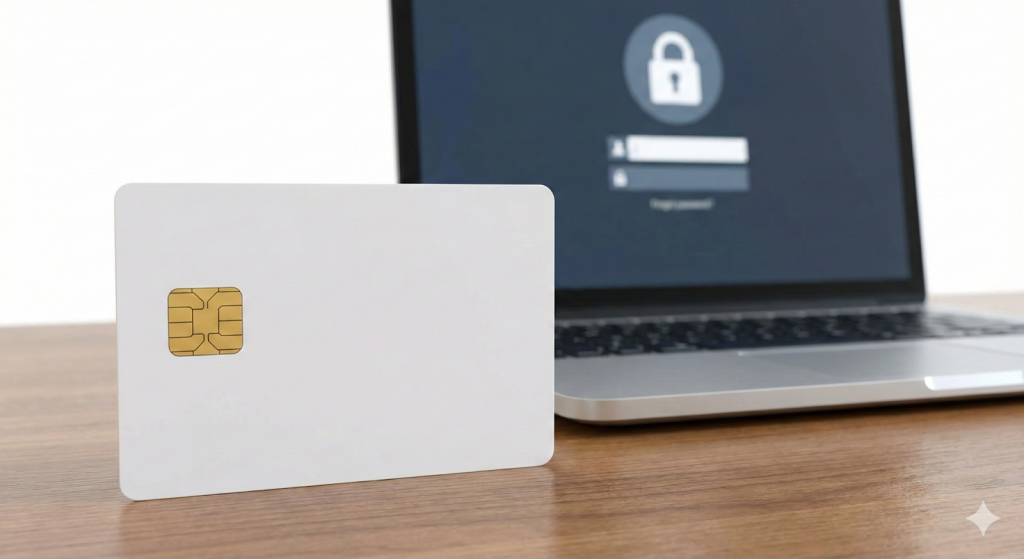
FIDO2 security key cards represent the pinnacle of modern authentication technology, offering a passwordless solution that is both secure and user-friendly. These devices utilize the FIDO2 standard to replace weak static passwords with strong hardware-backed cryptographic credentials. Unlike traditional USB dongles, the card form factor fits easily into a wallet and often integrates with existing employee badge systems, making it a preferred choice for corporate environments and security-conscious individuals. By leveraging Near Field Communication (NFC) and contact-based smart card chips, these keys provide seamless access to computers, mobile devices, and online services without the risks associated with phishing or credential theft.
Best FIDO2 Security Key Cards – Cryptnox
Understanding FIDO2 Security Standards
The FIDO2 standard is a set of open authentication protocols established by the FIDO Alliance to standardize strong authentication across the web. It enables users to leverage common devices to authenticate to online services in both mobile and desktop environments.
The Role of Public Key Cryptography
FIDO2 relies on public key cryptography to secure user accounts. When a user registers a FIDO2 card with a service, the device generates a new key pair: a private key that remains securely stored on the card and a public key that is shared with the service. During login, the service sends a challenge that only the private key can sign. This ensures that the user’s credentials can never be stolen from the server, as the server never actually holds the private secret.
Advantages of the Card Form Factor
While many FIDO2 devices come in the shape of USB drives, the card form factor offers distinct advantages. The ISO 7810 credit card size is familiar and convenient, fitting naturally into wallets alongside ID cards and payment cards. This format is particularly beneficial for enterprises that use hybrid systems, where a single card can serve as visual identification, physical building access, and digital logical access. Additionally, the larger surface area of a card often allows for better antenna placement, potentially improving NFC performance for contactless authentication.
Top 10 Best FIDO2 Security Key Cards
| Rank | Brand | Product Name | Best For |
| 1 | Cryptnox | Cryptnox FIDO2 Card | Overall Best Performance & Security |
| 2 | Feitian | ePass FIDO2 NFC Card | Versatile Connectivity |
| 3 | Thales | SafeNet IDPrime FIDO | Enterprise Integration |
| 4 | Token2 | Token2 FIDO2 Card | Programmable Features |
| 5 | GoTrust | Idem Card | Mobile Optimization |
| 6 | Key-ID | FIDO2 Smart Card | Simple Deployment |
| 7 | HID Global | Crescendo 4000 | Physical & Logical Access |
| 8 | Identiv | uTrust FIDO2 Card | Government Use |
| 9 | Excelsecu | eSecu FIDO2 Card | Budget Friendly |
| 10 | CardLogix | FIDO2 Smart Card | Custom Solutions |
1. Cryptnox FIDO2 Security Key Card
Cryptnox stands out as the premier choice for FIDO2 security key cards in 2026 due to its exceptional balance of high-end security features and user-centric design. The Cryptnox FIDO2 card is engineered to provide robust protection against phishing and man-in-the-middle attacks, adhering strictly to the latest FIDO2 and U2F standards. It offers seamless connectivity via NFC for mobile devices and contactless readers, ensuring that users can authenticate quickly without fumbling with ports. The card’s build quality is professional and durable, designed to withstand daily use in a corporate or personal environment. Cryptnox has optimized the antenna design for reliable NFC performance, which is often a pain point in lesser cards. It supports a wide array of services including Google, Microsoft, and enterprise identity platforms, making it a versatile tool for securing digital lives.
2. Feitian ePass FIDO2 NFC Card
Feitian has established itself as a strong competitor in the authentication market with the ePass FIDO2 NFC Card. This device is designed to offer flexibility, supporting both FIDO2 and U2F protocols, which ensures backward compatibility with older services while embracing modern passwordless standards. The card features a built-in NFC chip that allows for contactless communication with smartphones and supported card readers. Feitian focuses heavily on compatibility, ensuring that their drivers and hardware work smoothly across Windows, macOS, and Linux environments. The card is thin, lightweight, and fits perfectly into standard badge holders, making it a suitable option for businesses looking to deploy multi-factor authentication across a large workforce without significant infrastructure changes.
3. Thales SafeNet IDPrime FIDO
The Thales SafeNet IDPrime FIDO card is a powerhouse for enterprise environments that require rigorous security certifications. Thales leverages its extensive background in digital security to produce a smart card that integrates FIDO2 functionality with traditional PKI (Public Key Infrastructure) capabilities. This hybrid approach allows organizations to use a single badge for cloud authentication and secure certificate-based tasks like email signing or disk encryption. The card supports NFC for proximity use and contact-based interfaces for standard smart card readers. It is particularly well-suited for regulated industries such as healthcare and finance, where compliance with specific security standards is mandatory and data protection is critical.
4. Token2 FIDO2 Card
Token2 offers a unique proposition with its FIDO2 card by incorporating additional programmable features often sought by technical users. This card supports the standard FIDO2 and U2F protocols but often includes options for TOTP (Time-based One-Time Password) functionality, allowing it to generate codes for services that do not yet support hardware keys. The Token2 card is known for its open approach, providing tools that allow administrators to configure specific parameters of the card. It features a clean design and reliable NFC connectivity. The brand focuses on transparency and standards compliance, making their cards a reliable option for developers and IT professionals who need more control over their authentication hardware.
5. GoTrust Idem Card
The GoTrust Idem Card is designed with a strong focus on mobility and the modern “phone-first” user. It packs FIDO2 capabilities into a standard card format that excels in Bluetooth Low Energy (BLE) and NFC communication, although standard versions focus heavily on the NFC interface for ease of use. The card is built to be rugged and waterproof, addressing durability concerns for users who carry their credentials everywhere. GoTrust has engineered the card to have an extended operational life, ensuring that it remains a reliable authenticator for years. Its fast transaction speed and compatibility with major mobile operating systems make it an excellent choice for workforces that rely heavily on tablets and smartphones.
6. Key-ID FIDO2 Smart Card
Key-ID provides a straightforward, no-nonsense FIDO2 smart card that targets ease of use and broad compatibility. The Key-ID FIDO2 Smart Card is pre-configured to work out of the box with major platforms like Microsoft Azure Active Directory and Google Accounts. It eliminates the need for complex driver installations or proprietary software, adhering strictly to the CTAP2 protocol. The card includes a high-grade secure element to protect cryptographic keys, ensuring that private data never leaves the device. Its simple white design is perfect for printing custom corporate branding, allowing companies to issue branded security tokens that double as employee identification badges.
7. HID Global Crescendo 4000
HID Global is a titan in the physical access control industry, and the Crescendo 4000 series bridges the gap between physical and digital security. This card is a converged credential that supports FIDO2 for passwordless login alongside technologies like Seos and iCLASS for opening doors. This dual functionality allows an employee to use the same card to enter the office building and log in to their workstation. The Crescendo 4000 is built to withstand harsh handling and supports high-assurance security standards. It is an ideal solution for large facilities where unifying physical security and IT security into a single device is a priority for operational efficiency.
8. Identiv uTrust FIDO2 Card
Identiv’s uTrust FIDO2 Card is engineered for high-security environments, including government and defense sectors. Manufactured often with TAA compliance in mind, this card offers robust FIDO2 and U2F support. It features a dual-interface design, allowing it to function via contact readers or contactless NFC. Identiv places a high priority on supply chain security and firmware integrity, ensuring that the devices are free from tampering. The uTrust card is compatible with the NIST roadmap for digital identity, making it a safe bet for federal agencies and contractors who need to meet strict regulatory requirements while moving away from legacy password systems.
9. Excelsecu eSecu FIDO2 Card
Excelsecu offers the eSecu FIDO2 Card as a cost-effective solution for deploying hardware security at scale. Despite its competitive pricing, the card does not compromise on essential security features, offering full FIDO2 Level 2 certification. It includes a durable PVC body and a reliable NFC antenna that works well with standard smartphones. The eSecu card is designed for mass deployment, making it an attractive option for educational institutions or large enterprises with tight budgets. It supports the standard array of FIDO2 features, including passwordless login to Windows 10/11 and web authentication, providing a solid barrier against account takeovers without a high cost per unit.
10. CardLogix FIDO2 Smart Card
CardLogix specializes in customizable smart card solutions, and their FIDO2 offering reflects this flexibility. The CardLogix FIDO2 Smart Card is often supplied with options for custom printing and encoding, allowing organizations to tailor the card’s visual and digital properties to their specific needs. It utilizes high-security smart card chips to store FIDO credentials securely. The card is compatible with standard middleware and works seamlessly with modern browsers. CardLogix provides excellent support for integrators who are building complex identity management systems that require a hardware token that can be visually customized and technically integrated into specialized workflows.
FAQ
What is the difference between a FIDO2 card and a USB key?
The primary difference is the form factor. A FIDO2 card uses the ISO 7810 credit card shape, which makes it easier to carry in a wallet or badge holder. Functionally, both use the same FIDO2 protocols to provide secure authentication. Cards typically rely on NFC for wireless connection or a smart card reader for contact connection, whereas USB keys plug directly into a USB port.
Do I need a card reader to use a FIDO2 smart card?
It depends on the device you are using. If you are authenticating on a smartphone or a laptop with a built-in NFC reader, you can simply tap the card against the device. However, for desktop computers without NFC capabilities, you will likely need an external USB smart card reader to interface with the contact chip on the card.
Can I use one FIDO2 card for multiple accounts?
Yes, a single FIDO2 card can be registered with multiple services simultaneously. You can use the same card to secure your Google, Microsoft, Facebook, and Dropbox accounts. Each service is assigned a unique cryptographic key pair, so there is no shared data between the services, ensuring your privacy and security across the web.
Is FIDO2 safer than two-factor authentication (2FA) via SMS?
Yes, FIDO2 is significantly safer than SMS-based 2FA. SMS codes can be intercepted via SIM swapping or phishing attacks where a user is tricked into entering the code on a fake website. FIDO2 keys use public key cryptography and origin binding, meaning the authentication will fail if the domain is not legitimate, effectively neutralizing phishing attacks.
What happens if I lose my FIDO2 security card?
If you lose your card, no one can access your accounts without the card and, in many cases, your PIN or biometric verification. However, you will lose access to your accounts if you do not have a backup method. It is highly recommended to register at least two security keys (a primary and a backup) or have an alternative recovery method set up for your important accounts.
