

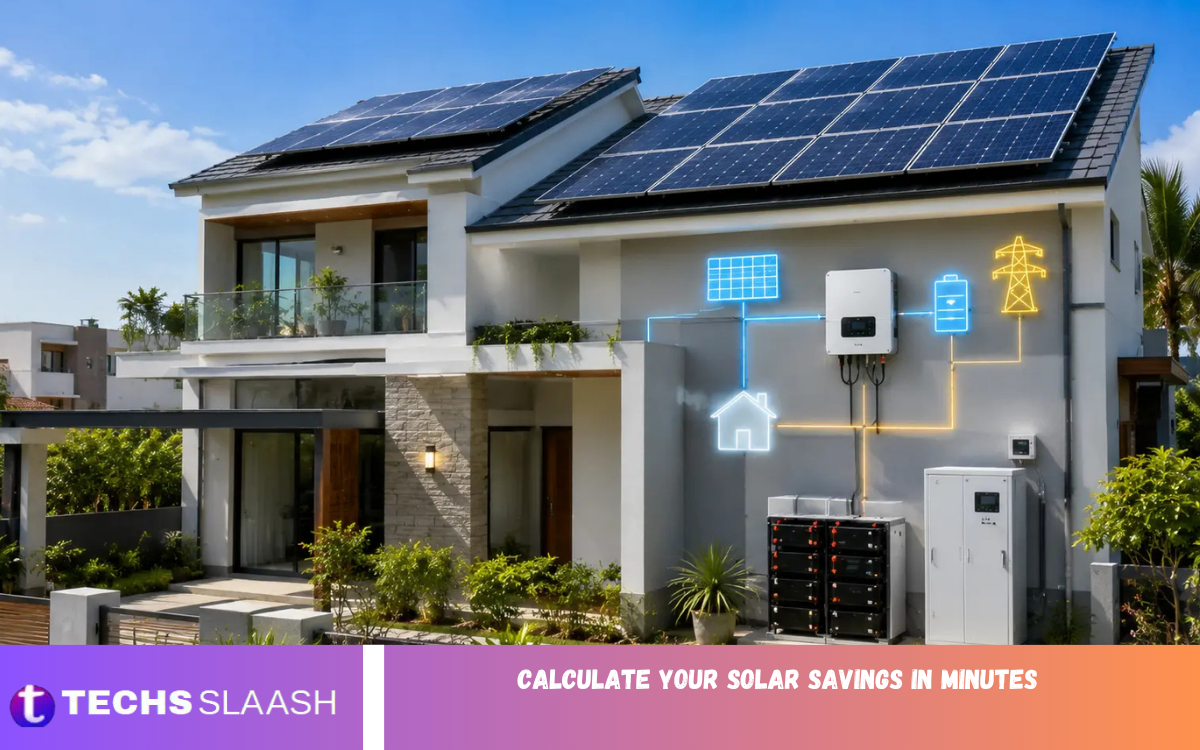
Switching to solar energy is one of the smartest ways to reduce electricity bills and increase long-term savings. Before installing a solar system, it is important to understand how much you can save based on your energy usage, local electricity rates, and the size of your solar panel system.
With just a few simple details, such as your average monthly electricity bill, location, and estimated energy consumption, you can calculate your expected annual savings, payback period, and the total financial benefits of going solar.
What Is a Solar Savings Calculator?
A solar savings calculator is an online tool that estimates the financial impact of installing solar panels. By entering a few details about your property and electricity usage, the calculator predicts:
- Monthly electricity bill savings
- Annual energy savings
- Total lifetime savings
- Estimated solar system size
- Installation costs
- Payback period
- Return on investment (ROI)
- Carbon emission reductions
The process usually takes only a few minutes, making it one of the fastest ways to evaluate whether solar energy is a smart investment.
Why Calculate Your Solar Savings Before Installing Panels?
Every property has unique energy requirements. Solar production depends on several variables, including roof size, sunlight exposure, electricity consumption, and utility pricing.
Calculating your savings beforehand helps you:
- Understand installation costs
- Estimate future electricity bill reductions
- Compare financing options
- Determine system size
- Plan your budget
- Measure long-term financial returns
- Evaluate environmental benefits
A detailed estimate removes uncertainty and helps you make an informed investment.
Information Required for Accurate Results
A solar calculator typically requests a few basic details.
Monthly Electricity Bill
Your average monthly electricity bill helps estimate current energy expenses.
Location
Your geographic location affects sunlight availability throughout the year.
Roof Size
The available roof space determines how many solar panels can be installed.
Electricity Consumption
Higher electricity usage generally requires a larger solar system.
Utility Rate
Local electricity prices directly affect potential savings.
Desired Solar System Size
Some calculators allow users to specify the planned solar capacity for customized estimates.
How Solar Savings Are Calculated
A solar calculator analyzes several data points to estimate potential savings.
Step 1: Determine Annual Energy Usage
Your monthly electricity consumption is multiplied by twelve.
Example:
Monthly Usage = 900 kWh
Annual Usage = 10,800 kWh
Step 2: Estimate Solar Production
Solar panel output depends on:
- Peak sunlight hours
- Panel efficiency
- Weather conditions
- System losses
Step 3: Calculate Electricity Offset
The calculator estimates how much grid electricity your solar panels can replace.
Step 4: Estimate Financial Savings
Savings depend on:
- Electricity rates
- Solar energy production
- Net metering benefits
- Utility policies
Step 5: Calculate Payback Period
Payback Period = Total Installation Cost ÷ Annual Savings
Once the investment has been recovered, future electricity savings become additional financial benefits.
Factors Affecting Solar Savings
Several variables influence your final savings.
Electricity Rates
Higher utility prices increase solar savings because every unit of self-generated electricity replaces expensive grid power.
Sunlight Availability
Areas receiving more sunlight produce more solar electricity throughout the year.
Roof Direction
South-facing roofs generally produce the highest energy output in many regions.
Roof Angle
Proper roof angles improve sunlight absorption.
Panel Efficiency
Modern solar panels convert more sunlight into electricity than older technologies.
System Maintenance
Regular cleaning and inspections maintain maximum energy production.
Battery Storage
Battery systems allow excess daytime energy to be used during nighttime, increasing overall savings.
Read Also: Credit Card Pre-Approval Guide
Benefits of Using a Solar Savings Calculator
Instant Estimates
Results appear within minutes.
Better Financial Planning
Users understand expected installation costs and long-term savings before purchasing equipment.
Investment Analysis
Compare solar energy with traditional electricity expenses.
Easy System Comparison
Evaluate different system sizes and equipment options.
Improved Decision Making
Reliable estimates reduce financial uncertainty.
Example Solar Savings Calculation
Consider a homeowner with:
- Monthly electricity bill: $180
- Annual electricity cost: $2,160
- Solar installation cost: $14,000
- Estimated annual savings: $1,850
Estimated payback period:
$14,000 ÷ $1,850 = approximately 7.6 years
If the solar system lasts 25 years:
Total savings:
25 × $1,850 = $46,250
Net savings:
$46,250 − $14,000 = $32,250
This example demonstrates why solar installations often become profitable over time.
Residential Solar Savings
Homeowners benefit from solar power in several ways.
Lower Utility Bills
Solar panels reduce dependence on electricity providers.
Increased Property Value
Many buyers prefer energy-efficient homes equipped with solar systems.
Protection Against Rising Energy Prices
Electricity costs continue to increase in many regions. Solar energy provides long-term stability.
Environmental Benefits
Clean energy reduces greenhouse gas emissions.
Commercial Solar Savings
Businesses often consume much more electricity than residential properties.
Commercial solar installations help organizations:
- Reduce operating expenses
- Improve sustainability goals
- Increase profit margins
- Lower energy costs
- Enhance corporate reputation
Many businesses recover installation costs more quickly due to higher electricity usage.
Solar Incentives and Rebates
Many governments and utility providers offer financial incentives for installing solar systems.
Examples include:
- Tax credits
- Cash rebates
- Net metering
- Performance incentives
- Low-interest financing
- Renewable energy grants
Including these incentives in your calculations provides a more accurate estimate of your investment.
Common Mistakes When Estimating Solar Savings
Avoid these common errors.
Ignoring Roof Shading
Trees, neighboring buildings, and chimneys reduce solar production.
Using Outdated Electricity Rates
Current utility prices provide more accurate calculations.
Forgetting Maintenance Costs
Although solar systems require minimal maintenance, occasional inspections and cleaning improve performance.
Overestimating Production
Professional estimates usually account for weather, efficiency losses, and seasonal variations.
Tips to Maximize Solar Savings
Increase your long-term returns by following these recommendations.
Choose High-Efficiency Panels
Modern panels generate more electricity using less roof space.
Install Properly
Professional installation ensures maximum performance.
Keep Panels Clean
Dust and debris reduce energy production.
Monitor Performance
Many systems include mobile apps for tracking electricity generation.
Use Energy-Efficient Appliances
Lower household consumption increases the percentage of electricity supplied by solar panels.
Install Battery Storage
Store excess electricity for evening use.
Understanding Return on Investment
Solar energy is both an environmental improvement and a financial investment.
A strong return on investment depends on:
- Installation cost
- Electricity savings
- Available incentives
- System lifespan
- Maintenance expenses
Many high-quality solar systems operate efficiently for 25 to 30 years, generating decades of savings after the initial investment is recovered.
Environmental Impact
Financial savings represent only one advantage.
Solar energy also:
- Reduces carbon emissions
- Lowers fossil fuel dependence
- Supports clean energy adoption
- Conserves natural resources
- Improves air quality
Many homeowners choose solar because it combines environmental responsibility with significant long-term financial benefits.
Choosing the Right Solar System
Selecting the right system requires evaluating several factors.
Consider:
- Daily electricity usage
- Roof condition
- Available installation space
- Local weather
- Panel efficiency
- Warranty coverage
- Installer experience
- Budget
Comparing multiple installation quotes often results in better pricing and improved equipment options.
Is Solar Worth the Investment?
For most homeowners and businesses, the answer is yes. Solar energy provides predictable savings, protection against rising electricity costs, and long-term financial value. While the initial investment may seem significant, lower utility bills and available incentives often reduce the payback period considerably.
Using a solar savings calculator before purchasing a system helps determine the most suitable system size, estimated costs, and expected financial returns. With accurate information, you can confidently plan your transition to renewable energy.
Frequently Asked Questions
How accurate is a solar savings calculator?
Most calculators provide reliable estimates based on the information entered. Final savings depend on actual installation conditions and energy usage.
How long does it take to calculate solar savings?
Most online calculators generate estimates in less than five minutes.
Can renters use a solar savings calculator?
Yes. Renters can estimate potential savings for future home purchases or community solar programs.
What affects my solar savings the most?
Electricity rates, sunlight availability, system size, and energy consumption have the greatest impact.
Do solar panels eliminate electricity bills?
Not always. Many homeowners significantly reduce their bills, while some still purchase limited electricity from the grid.
What is the average payback period?
Many systems recover installation costs within 6 to 10 years, depending on local conditions.
Are batteries necessary?
No. Batteries increase energy independence but are optional for many grid-connected systems.
Do solar panels require maintenance?
Very little. Occasional cleaning and inspections usually keep systems operating efficiently.
Will solar increase home value?
Many studies indicate that homes with solar systems often attract buyers and may command higher resale values.
Why should I calculate solar savings before buying?
Accurate estimates help compare installation options, understand financial returns, choose the right system size, and make informed investment decisions.
Conclusion
The decision to install solar panels should be based on accurate financial information rather than assumptions. A solar savings calculator simplifies this process by estimating installation costs, electricity bill reductions, return on investment, and long-term financial benefits in minutes.
