

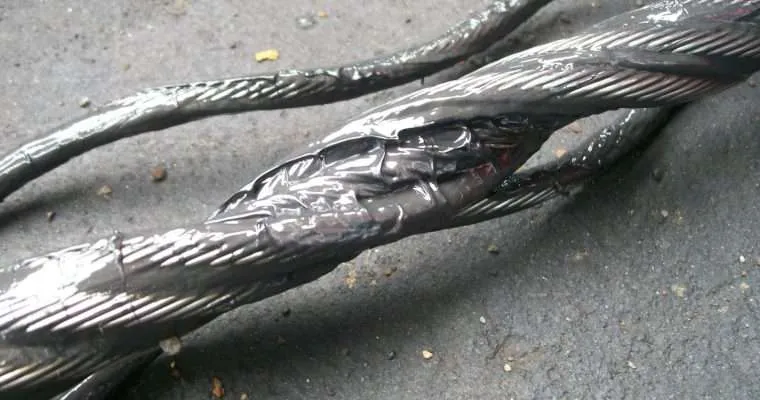
In the demanding world of heavy industry, infrastructure, and maritime operations, wire ropes serve as the silent, high-strength sinews that make modern progress possible. From the massive cranes towering over construction sites to the deep-sea winches of offshore oil rigs, these intricate steel components bear immense loads under the most punishing conditions. However, the deceptive simplicity of a wire rope—multiple steel wires twisted into strands around a central core—belies a complex mechanical system that requires constant care. Without proper maintenance, the very forces that these ropes facilitate can become the catalysts for their destruction. The key to preserving the structural integrity and operational safety of these assets lies in the strategic application of specialized wire rope grease. Far more than a simple coating, a high-quality lubricant acts as a comprehensive defense system against the dual threats of mechanical wear and environmental corrosion.
The Mechanical Reality of Wire Rope Dynamics
To understand why specialized lubrication is non-negotiable, one must first recognize that a wire rope is a machine with moving parts. Every time a rope bends over a sheave or winds onto a drum, the individual wires and strands within the rope slide against each other. This constant internal movement creates significant friction. In an unlubricated state, this metal-to-metal contact generates intense heat and abrasive wear, which can rapidly degrade the metallurgy of the steel. Over time, this friction leads to wire thinning, fatigue, and eventual breakage, often starting from the innermost wires that are hidden from visual inspection.
A professional-grade lubricant is engineered to address this internal stress. It creates a robust hydrodynamic film between every single wire, allowing them to move with minimal resistance. This reduction in friction not only prevents physical wear but also dissipates the heat generated during rapid load cycles. By minimizing the energy lost to friction, the entire mechanical system operates more efficiently, reducing the strain on motors and winches. However, achieving this level of protection requires a product that can withstand the extreme pressures found in heavy lifting, which is where the technical specifications of the grease become paramount.
Combatting the Silent Killer: Internal and External Corrosion
While mechanical wear is a constant threat, corrosion is often the primary cause of premature wire rope failure. Wire ropes are frequently exposed to harsh environments, including saltwater spray, high humidity, chemical fumes, and extreme temperature fluctuations. Because of their braided construction, wire ropes possess a natural “capillary action” that can draw moisture and contaminants deep into the core. Once moisture is trapped inside, it becomes a hidden source of oxidation that eats away at the rope from the inside out.
Standard greases often fail in these scenarios because they lack the necessary adhesive strength or chemical inhibitors to displace moisture. A high-performance wire rope grease is designed with a specific “dual-action” philosophy. First, it must possess penetrating characteristics that allow the lubricant to travel through the tightly wound strands to reach the central core, displacing any existing moisture. Second, it must provide a durable coating that seals the exterior against further ingress of water and corrosive agents. This protective barrier is particularly critical in marine and mining environments, where salt and acidic groundwater can destroy an unprotected rope in a fraction of its intended service life.
The Science of Penetration versus Coating
In the industry, lubricants are generally categorized into two types: penetrating and coating. Penetrating lubricants are typically lower in viscosity or contain solvents that carry the lubricating solids deep into the rope’s interior before the solvent evaporates, leaving a protective film on every wire. Coating lubricants, on the other hand, are thicker and designed to seal the outside of the rope, providing excellent resistance to water wash-off and protecting against external abrasion.
The most advanced modern solutions, such as those found in the MAK Lubes range, bridge the gap between these two categories. These products offer a “semi-fluid” consistency that allows for rapid penetration during application while retaining enough tackiness to form a heavy-duty external shield. This tackiness is essential for preventing “fling-off”—a common problem where the rotation of the rope or the speed of the winch causes the lubricant to be thrown off the surface. By staying in place, the grease ensures continuous protection and reduces the frequency of re-application, leading to significant savings in both labor and material costs.
Enhancing Safety and Reducing Operational Downtime
Safety is the ultimate priority in any lifting or hauling operation. A wire rope failure is rarely a minor incident; it can lead to catastrophic equipment damage, severe injury, or loss of life. Because internal corrosion is often invisible during a standard visual inspection, a rope that looks “fine” on the outside may be dangerously compromised on the inside. Consistent lubrication with a high-quality grease ensures that the internal wires remain as healthy as the external ones, providing a more predictable and reliable service life.
Furthermore, the economic impact of proper maintenance is undeniable. Replacing a major wire rope is a costly and time-consuming process that involves significant downtime for the machinery. By using a grease that minimizes wear and prevents rust, operators can often double or even triple the lifespan of their ropes. This proactive approach to maintenance transforms a wire rope from a frequently replaced consumable into a long-term asset. In an era where supply chains can be unpredictable and replacement costs are rising, the longevity provided by superior lubrication is a strategic competitive advantage.
Environmental Considerations and Modern Standards
As global industrial standards move toward greater environmental responsibility, the composition of industrial greases has also evolved. Many modern wire rope lubricants are now formulated to be biodegradable and non-toxic, reducing the environmental impact in the event of accidental spillage or wash-off, especially in sensitive maritime or offshore locations. These eco-friendly formulations do not sacrifice performance; they continue to offer extreme pressure (EP) characteristics and superior water resistance, proving that “green” technology can meet the rigorous demands of heavy industry.
When selecting a lubricant, it is important to look for performance benchmarks, such as high salt spray resistance and excellent results in the “four-ball” extreme pressure test. These technical metrics provide a clear indication of how the grease will perform when the loads are at their peak and the environment is at its worst. A product that maintains its integrity under these conditions is an insurance policy for the entire operation.
Conclusion: A Foundation of Reliability
The health of a wire rope is the foundation upon which the safety and efficiency of many industrial operations rest. By moving beyond basic maintenance and embracing the science of advanced lubrication, operators can protect their equipment, their personnel, and their bottom line. A high-performance grease is not just a maintenance cost; it is a vital technical component of the rope itself.
Whether navigating the salt-heavy air of a coastal port or the abrasive dust of a deep-shaft mine, the right choice of lubricant ensures that the “sinews of industry” remain strong and resilient. As technology continues to push the limits of what these steel ropes can achieve, the role of specialized greases will only become more critical. By investing in quality today, you ensure the reliability of your infrastructure for the challenges of tomorrow. The journey toward operational excellence is a long one, but it is a path made significantly smoother through the application of the right protection, in the right place, at the right time.
