

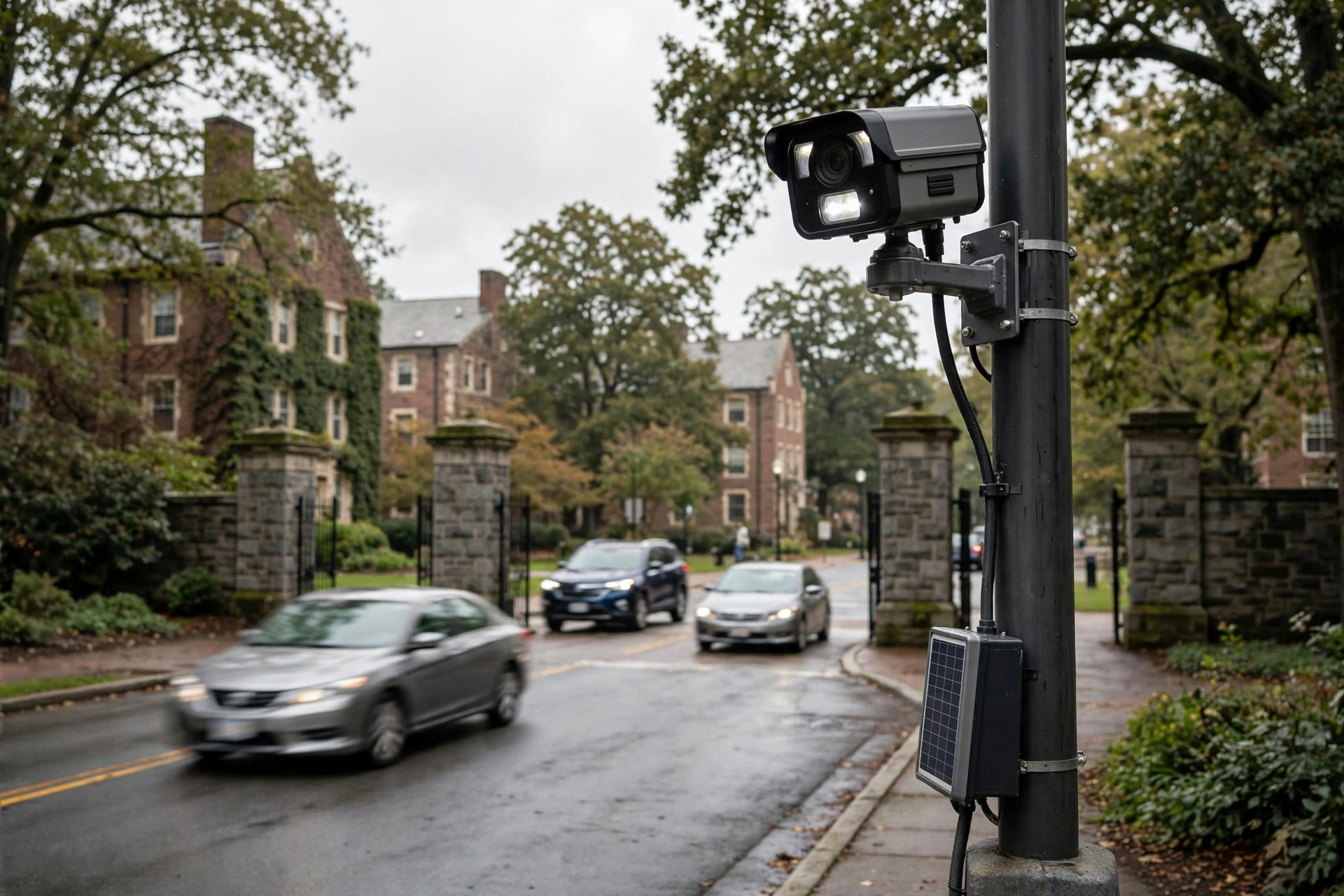
When Elgin Community College decided it no longer wanted Flock Safety’s licence-plate cameras on its campus, it expected them to come down. Instead, it discovered a thoroughly modern problem: the vendor refused — and the cameras stayed for months, until the contract simply expired. The standoff, documented by Gadget Review drawing on Chicago Sun-Times, The Verge and WBEZ reporting, is a case study in surveillance-era vendor lock-in.
Six cameras and a change of heart
The college installed six Flock Safety AI licence-plate cameras in April 2025, to help locate stolen vehicles and assist missing-person investigations. By September 2025, administrators had grown concerned that data from the cameras might be shared with U.S. Customs and Border Protection, that the feeds were not adequately secured, and that access could be misused by law enforcement or by Flock employees themselves.
In October 2025, the college asked Flock to cancel the contract and remove the cameras. Flock refused, reportedly saying it had not breached the contract. In December, the college offered to pay out the remaining five months of the deal if Flock would take the equipment back; the reporting records no successful response.
Trash bags versus an unmarked vehicle
What followed was low-tech trench warfare. College staff covered the six cameras with black trash bags and zip ties. Workers then arrived in a vehicle the college’s president, Peggy Heinrich, described as unmarked, and removed the coverings. The college covered the cameras again. The cycle repeated for months.
The standoff ended only when the contract expired in April 2026 and Flock finally removed the cameras — almost exactly a year after they were installed. An internal audit found no evidence that federal immigration agents had accessed data from Elgin’s own cameras, and Heinrich said the removal request was made “out of an abundance of caution” for the college’s Latino students.
Not just one campus
The wider context is uncomfortable for the sector. Public records reviewed by WBEZ and cited by the Sun-Times reportedly showed that Flock data from other Illinois higher-education institutions — Joliet Junior College, the University of Illinois Chicago and the University of Illinois Urbana-Champaign — had been searched in connection with immigration matters. That does not establish that Elgin’s cameras were used the same way, but it shows the network effects a single campus signs up for: Flock retains ownership of the cameras it installs, and its system logs plate numbers alongside vehicle model, colour, dents and bumper stickers, creating searchable records that can be shared across agencies that opt in.
The lesson for every buyer
Contractual lock-in is familiar in enterprise technology — we have written about deeply embedded platforms from consumer hardware ecosystems to AI infrastructure — but physical surveillance hardware raises the stakes. A cancelled software subscription stops billing you. A cancelled camera contract, apparently, may keep watching. Whether Elgin’s contract contained early-termination, ownership-transfer, data-access or removal provisions is not established in the available reporting — which is itself the lesson.
For any institution signing a monitoring deal today, the Elgin saga argues for negotiating the exit before the entrance: data-deletion guarantees, hardware-removal deadlines and termination-for-convenience clauses are the difference between a service and a fixture. As AI-driven monitoring spreads — the same sensor-and-platform pattern behind the risks we explored in AI assistants’ hidden data practices — more campuses are going to learn what Elgin learned: a college can decide, clearly and in good faith, and still spend six months fighting its own cameras with trash bags.
