

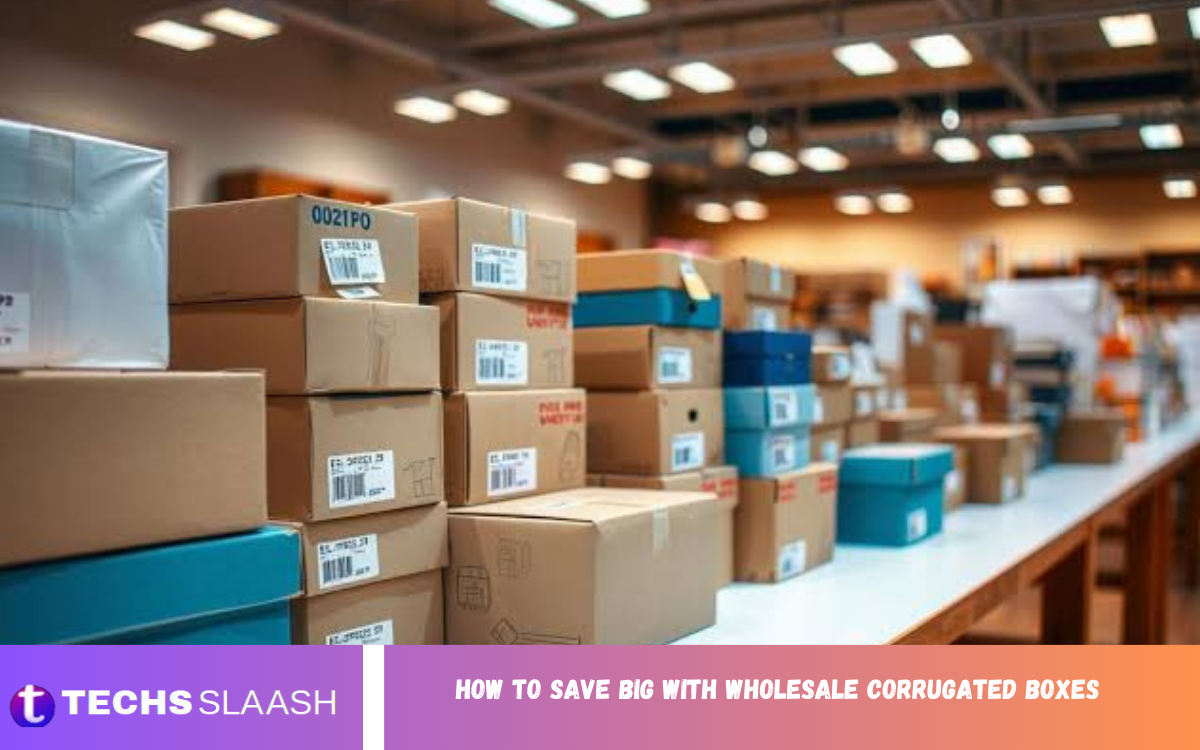
Wholesale corrugated boxes are packaging cartons purchased in larger quantities, usually at a lower per-unit price. They are widely used by online stores, manufacturers, retailers, warehouses, and businesses that ship products regularly.
The main advantage is simple: buying packaging in bulk can reduce the cost of every shipment. When businesses choose the correct box sizes, material strength, and order quantity, they can achieve significant savings without sacrificing product protection.
Buy in Bulk to Reduce Unit Costs
One of the easiest ways to save money is to purchase corrugated boxes in larger quantities. Suppliers often offer better pricing when customers order hundreds or thousands of boxes instead of purchasing small quantities repeatedly.
Bulk purchasing also reduces the number of individual orders a business needs to place. Fewer orders can mean lower administrative expenses, fewer delivery charges, and less time spent managing packaging supplies.
Choose the Right Box Size
Box size has a direct effect on packaging expenses. Oversized boxes require more cardboard, take up more storage space, and may increase shipping costs because they occupy unnecessary space during transportation.
Choosing boxes that closely match the dimensions of products can reduce material usage and improve shipping efficiency. Businesses should measure products carefully and select practical dimensions rather than automatically choosing large cartons.
Compare Corrugated Box Quality
Saving money does not mean choosing the cheapest box available. Weak packaging can lead to crushed cartons, damaged products, customer complaints, returns, and replacement expenses.
Businesses should select box strength according to product weight, size, fragility, and transportation conditions. A slightly stronger box may cost more initially but can provide better protection and reduce expensive damage.
Reduce Shipping Costs
Packaging decisions can influence shipping expenses significantly. Large or heavy packages may cost more to transport, so reducing unnecessary dimensions and packaging materials can lower the overall cost per order.
A well-designed corrugated box can help products fit efficiently inside the package. Better dimensions may allow businesses to ship more products within available transportation space while avoiding excessive dimensional weight charges.
Minimize Packaging Waste
Packaging waste can quietly increase business expenses. When boxes are too large, damaged, incorrectly selected, or used inefficiently, companies spend money on materials that provide little additional value.
Businesses can reduce waste by maintaining an organized inventory and using the correct carton for each product. Employees should also be trained to select packaging according to established size and weight guidelines.
Order According to Demand
Buying thousands of boxes can provide attractive prices, but excessive inventory can become expensive. Businesses should estimate demand before placing large wholesale orders to avoid purchasing cartons that may remain unused for years.
Historical sales information can help companies identify seasonal patterns and average monthly packaging requirements. This information makes it easier to determine an appropriate wholesale order quantity.
Negotiate Wholesale Pricing
Wholesale buyers should not assume that the listed price is always the final price. Businesses purchasing consistently may be able to negotiate better rates based on order volume, repeat purchases, packaging specifications, or long-term relationships.
It can be useful to request quotations from multiple suppliers and compare the complete cost rather than looking only at the price per box. Delivery charges, minimum quantities, quality, and production times should all be considered.
Standardize Box Sizes
Using too many different box sizes can make packaging operations complicated and expensive. Standardizing commonly used cartons can simplify purchasing, storage, packing, and employee training.
For example, a business may identify several box sizes that cover most of its products. Ordering these standard sizes in larger quantities can improve purchasing efficiency while reducing the need for rarely used cartons.
Improve Storage Practices
Proper storage helps protect wholesale corrugated boxes before they are used. Cardboard can absorb moisture, lose strength, or become damaged when stored in unsuitable conditions.
Boxes should be kept in a clean, dry, organized area away from excessive moisture and direct exposure to harsh environmental conditions. Stacking them properly can also prevent unnecessary crushing.
Read Also: How 3D Architectural Rendering is Transforming the Real Estate Market
Consider Custom Corrugated Boxes
Custom boxes may appear more expensive than standard cartons, but they can sometimes produce long-term savings. A box designed around a product can reduce empty space, protective materials, and shipping volume.
Custom dimensions may also improve the presentation of products while providing a more consistent packing experience. For brands shipping large quantities, these operational improvements can justify the initial investment.
Reduce Product Damage
Product damage is one of the most expensive problems associated with poor packaging. Even a low-cost box becomes expensive when it fails to protect merchandise during handling and transportation.
Choosing the right corrugated strength and using suitable internal protection can reduce the likelihood of damaged shipments. Packaging should be tested with heavier, fragile, or irregularly shaped products before large-scale use.
Improve Packing Efficiency
Efficient packing saves both materials and labor. Employees should have clearly defined packaging procedures so they can select the right box, position the product correctly, and seal shipments without unnecessary steps.
Businesses can arrange commonly used boxes and packing materials close to the packing area. This reduces walking time and makes daily fulfillment operations faster.
Calculate the Total Packaging Cost
Looking only at the price of a corrugated box can lead to poor purchasing decisions. The real cost includes the box, protective materials, storage, labor, transportation, damage, and disposal.
Businesses should calculate the total cost associated with each packaging option. A box that costs slightly more but reduces shipping weight, packing time, or product damage may ultimately be the more economical choice.
Build a Reliable Supplier Relationship
A dependable wholesale supplier can contribute to long-term packaging savings. Consistent quality, reliable delivery schedules, and accurate order fulfillment help businesses avoid operational disruptions.
Supplier reliability is particularly important for companies that ship large volumes every day. Running out of boxes can delay orders and may force a business to purchase packaging at higher emergency prices.
Use Wholesale Corrugated Boxes Strategically
The best savings come from treating packaging as part of the overall business strategy. Companies should examine purchasing, box sizing, storage, shipping, packing labor, and product protection together.
Wholesale corrugated boxes can provide substantial value when businesses purchase appropriate quantities and select cartons that match their products. The objective is not simply to buy the cheapest packaging but to achieve the lowest practical total cost.
Frequently Asked Questions
What are wholesale corrugated boxes?
Wholesale corrugated boxes are cardboard shipping cartons purchased in larger quantities, usually at reduced per-unit prices. They are commonly used for packaging, storage, manufacturing, retail, and e-commerce shipments.
How can wholesale boxes save money?
Wholesale boxes can reduce the cost per carton because suppliers often provide better pricing for larger orders. Businesses can also save through lower purchasing frequency and improved packaging consistency.
Is buying boxes in bulk always cheaper?
Bulk buying usually reduces the unit price, but it is not always the best option if a business purchases more boxes than it can reasonably use. Storage costs, demand, and available cash should be considered.
How do I choose the correct box size?
Measure the product and select a carton that provides enough room for safe protection without excessive empty space. The correct size can reduce cardboard, filler material, storage requirements, and shipping expenses.
Are stronger corrugated boxes worth the extra cost?
Stronger boxes can be worthwhile for heavy, fragile, or valuable products. The appropriate strength can reduce damage and replacement costs, but businesses should avoid paying for unnecessary material strength.
Can smaller boxes reduce shipping costs?
Yes, smaller appropriately sized boxes can reduce package volume and sometimes lower transportation expenses. They can also reduce the amount of protective filler needed inside the carton.
How can businesses reduce box waste?
Businesses can reduce waste by standardizing carton sizes, storing boxes properly, ordering according to demand, and training employees to choose the correct box for each shipment.
Should I use custom corrugated boxes?
Custom boxes can be beneficial when standard sizes create excessive empty space or require significant protective materials. They should be evaluated based on total savings rather than appearance alone.
How should corrugated boxes be stored?
Boxes should be stored in a clean, dry, organized environment and protected from excessive moisture. Proper stacking and inventory rotation can help maintain their strength and usability.
What is the biggest mistake when buying wholesale boxes?
One common mistake is focusing only on the lowest box price. Businesses should evaluate quality, dimensions, shipping costs, storage, labor, product protection, and total packaging expenses.
Conclusion
Learning How to Save Big with Wholesale Corrugated Boxes starts with understanding that packaging costs involve much more than the purchase price. Bulk ordering, appropriate box sizing, efficient storage, and reliable suppliers can all contribute to meaningful savings.
Businesses should also consider shipping efficiency, product protection, packaging waste, and labor when selecting cartons.
