

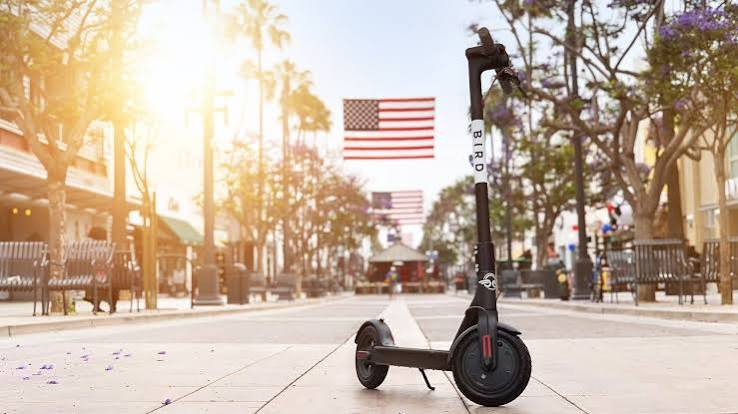
Electric scooters have become a regular part of urban mobility across the United States. You see them parked outside office buildings, ridden along bike lanes, and used by delivery workers covering short-distance routes. Their adoption has been fast, and in many cases, the legal framework around them has struggled to keep pace. For individuals and businesses trying to use scooters as a practical transportation option, the regulatory picture is not always straightforward — and assumptions about what is and is not required can lead to real consequences.
The most common assumption is that because electric scooters are small, low-speed, and often electric, they exist in a gray area where standard vehicle rules do not apply. That assumption is partly true — but only in specific circumstances. Whether a license is required depends on the state, the type of scooter, its power output, and where it is being ridden. Getting this wrong is not a minor oversight. Fines, impoundment, and insurance complications are all on the table.
What the Law Actually Says About Operating an Electric Scooter Without a License
In the United States, there is no single federal law that governs electric scooter operation. Regulation falls to individual states, and in many cases to cities and municipalities within those states. This means the rules in one city can be meaningfully different from those twenty miles away. For anyone relying on a scooter for regular transportation — whether personal or commercial — understanding the specific rules in their jurisdiction is not optional.
The concept of riding an electric scooter without license requirements varies considerably by state. Some states classify low-speed electric scooters similarly to bicycles, meaning no driver’s license, registration, or insurance is required as long as the scooter stays below a defined speed threshold and is operated on approved surfaces. Other states treat electric scooters more like mopeds or motor vehicles, requiring at minimum a valid driver’s license and in some cases formal registration.
California, for instance, requires riders to hold a valid driver’s license or learner’s permit for scooters operated on public roads. New York has its own complex framework where electric scooters were only recently legalized at the state level, with additional local rules governing their use. Florida allows low-speed scooters on certain roads without a license but applies different standards based on the engine or motor capacity of the vehicle.
Why State-Level Variation Creates Real Risk
The lack of a unified standard creates a practical problem for riders who move between states or for businesses operating fleets across multiple markets. A delivery company using scooters in two adjacent states may find that what is legally compliant in one state is a moving violation in the other. This is not a hypothetical concern — it is a documented challenge for shared mobility operators, gig economy workers, and urban logistics companies.
The risk is compounded by the fact that laws change. Several states have updated or are in the process of updating their electric scooter regulations in response to growing usage and public safety concerns. A rider or business that was compliant two years ago may not be today without having changed anything about their actual operation. Staying current requires deliberate attention to state transportation authority publications, not assumptions based on what a peer or colleague experienced in a different city.
How Electric Scooter Classification Determines Legal Requirements
Most states that have formal electric scooter legislation classify devices based on a combination of factors — primarily maximum speed, motor power, and intended use surface. These classifications determine what rules apply, and they are not always intuitive. A scooter that looks similar to another may fall into a completely different regulatory category based on a single technical characteristic.
The general framework used by many states distinguishes between low-speed electric scooters, which are typically capped at a defined maximum speed and intended for use on bike lanes or low-traffic roads, and higher-powered devices that are treated more like motor vehicles. The lower classification typically comes with fewer requirements — no license, no registration, no insurance. The higher classification brings requirements that are nearly identical to those for a motorcycle or moped.
The Problem of Misidentification
One practical issue that arises frequently is that riders misidentify their own scooters. Electric scooters marketed to consumers are not always labeled with their regulatory classification. A scooter purchased online may be capable of speeds that push it into a higher regulatory category, but the packaging or product listing may make no mention of this. Riders who assume they are operating a low-speed device and therefore require no license or registration may be incorrect.
This matters in two ways. First, it creates direct legal exposure if the rider is stopped by law enforcement. Second, it affects insurance coverage. If a scooter is involved in an accident and it turns out the device was not properly classified or the rider lacked the appropriate license, insurance claims can be denied — whether the rider has personal scooter insurance or is covered under a broader fleet or commercial policy.
Where Shared and Commercial Scooter Programs Fit In
Shared scooter programs operated by third-party companies — the kind found in many US cities — operate under a different set of rules than privately owned scooters. These companies typically hold permits issued by city transportation departments, and those permits come with their own conditions. Riders using shared scooters may still be required to hold a valid license, depending on the jurisdiction, even though the scooter itself belongs to a permitted operator.
According to the National Highway Traffic Safety Administration, micromobility devices including electric scooters have been associated with a growing number of injuries, which has prompted both federal interest and local regulatory tightening. Shared scooter operators are generally responsible for educating users about local rules, but enforcement of those rules falls on the rider. Using a shared scooter in a city where a license is required does not exempt the rider from that requirement simply because they are not the owner of the device.
Commercial and Fleet Use Carries Additional Responsibility
Businesses that maintain a fleet of electric scooters for employee use, last-mile delivery, or service operations face a different layer of responsibility. In these cases, the obligation to ensure legal compliance typically rests with the employer or fleet manager, not solely with the individual rider. If employees are riding scooters without the appropriate credentials and are involved in an incident, the business may carry liability that extends well beyond a traffic citation.
This is particularly relevant for companies in logistics, facilities management, and hospitality where scooters have become a practical tool for covering campus grounds, warehouses, or urban delivery zones. The expectation that scooters are inherently low-risk from a compliance standpoint is one that has caused real problems for fleet operators who did not build proper license verification and vehicle classification checks into their onboarding process.
Insurance, Liability, and What Happens When Things Go Wrong
The insurance landscape for electric scooters in the United States is still developing. Standard auto insurance policies do not cover electric scooters in most cases. Homeowner’s or renter’s insurance policies may provide some liability coverage, but typically not for motorized vehicles used on public roads. Dedicated scooter insurance products exist, but coverage varies significantly and policy terms often depend on the regulatory classification of the scooter and the licensing status of the rider.
When an accident occurs, the licensing question becomes central to what happens next. If the rider did not hold a valid license as required by the jurisdiction, any insurance claim becomes complicated. Even if the rider is not at fault for the accident, the absence of proper credentials can affect their legal standing in civil proceedings and may limit recovery options. For businesses, an uninsured or improperly licensed scooter rider acting in the course of employment can trigger workers’ compensation issues, third-party liability claims, and regulatory scrutiny.
Why Proactive Compliance Matters More Than Reactive Correction
The pattern that emerges across industry and regulatory cases involving electric scooters is consistent: most compliance failures are not deliberate. They result from riders and businesses assuming that small, low-speed, electric vehicles exist in a regulatory category that requires little or no formal documentation. That assumption is understandable given how scooters are marketed and how informally they are often introduced into workplaces and households.
The problem is that enforcement is not uniform. Riders go months or years without issue and develop a false sense that they are operating within the rules. When an enforcement action or insurance claim eventually arises, the absence of proper compliance history becomes a significant liability. Building correct compliance habits from the start — including verifying scooter classification, confirming license requirements for the relevant jurisdiction, and maintaining appropriate insurance — is far less disruptive than addressing a gap after an incident.
Conclusion: The Regulatory Reality Behind an Informal Mode of Transport
Electric scooters occupy an interesting position in American transportation. They are informal in feel and often introduced casually into daily routines, but the laws governing them are formal, enforceable, and meaningfully different depending on where you are. The question of whether a license is required is not one with a single national answer — it is one that requires knowing your state’s classification framework, your scooter’s specifications, and the specific rules of your city or municipality.
For individual riders, the starting point is always confirming requirements with the state transportation authority before riding on public roads. For businesses using scooters as operational tools, the standard should be the same as for any other vehicle in a fleet: verify classification, confirm licensing requirements, and establish insurance coverage that actually applies to the devices being used.
The “no license needed” assumption is sometimes correct, but it is only correct in specific, well-defined circumstances. Treating it as a general rule rather than a conditional one is where riders and businesses create unnecessary exposure. The legal framework around electric scooters continues to evolve, and staying informed about changes in your jurisdiction is part of operating responsibly — whether you ride occasionally or depend on a scooter for daily work.
