

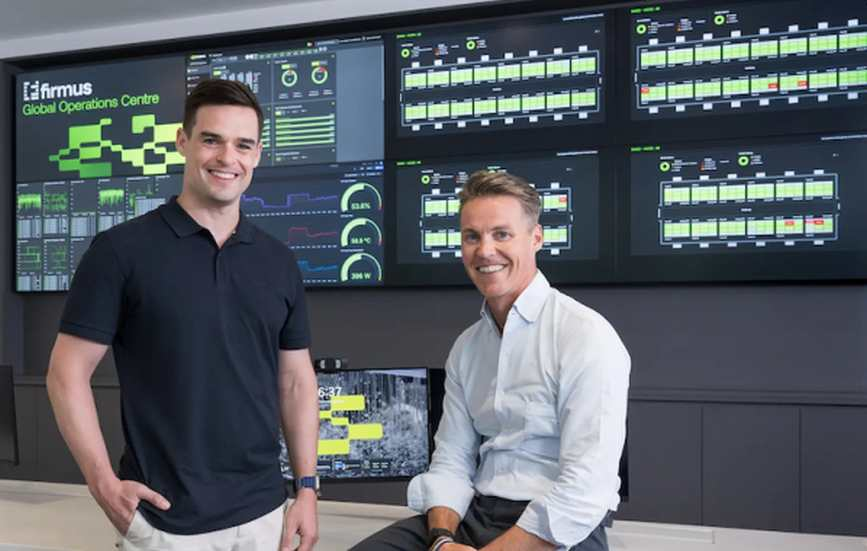
Nvidia-backed Firmus is preparing a major Australian IPO, seeking about $5 billion and potentially up to $5.5 billion with an overallotment option. Reuters reported that the proposed A$11 share price would imply a valuation of roughly $30.6 billion, up sharply from about $10.5 billion after its August funding round. Backed by investors including Nvidia, Blackstone, Coatue Management and Jane Street, and linked to OpenAI and Meta through AI infrastructure projects, Firmus has emerged as a major trending hot topic in the broader AI infrastructure investment boom. However, possible IPO repricing, project execution and investor demand remain key factors ahead of its planned ASX listing.
Key Takeaways
- Firmus is targeting one of Australia’s largest technology IPOs: The Nvidia-backed AI infrastructure company is seeking about $5 billion, with the offering potentially reaching $5.5 billion if the overallotment option is fully exercised.
- The proposed valuation has risen sharply: An A$11 offer price would imply an equity valuation of roughly $30.6 billion, nearly three times Firmus’ approximately $10.5 billion post-money valuation after its August 2026 funding round.
- AI infrastructure demand supports the growth case: Firmus says it has surpassed 900 MW of contracted capacity, with OpenAI named as an anchor customer in Malaysia and Meta involved in AI infrastructure agreements across Asia-Pacific.
- Nvidia is both an investor and technology partner: Firmus is using Nvidia infrastructure in its expansion, while its planned Batam AI factory could scale to 360 MW and support as many as 170,000 Nvidia GPUs.
- Pricing and execution remain key risks: Reports on October 7 said Firmus was considering reducing its IPO price from A11 to around A9, while investors are also assessing project delivery, financing requirements and the amount of existing stock potentially available after listing.
Firmus Targets Up to $5.5 Billion in IPO at a $30.6 Billion Valuation
Nvidia-backed Firmus is seeking about $5 billion through its planned IPO, with the offering potentially reaching $5.5 billion if the overallotment option is fully exercised. Reuters reported on October 5, 2026, that the Australian AI infrastructure company was offering shares at A$11 each, implying an equity valuation of roughly $30.6 billion. The scale of the proposed deal would make Firmus one of the most closely watched Australian technology listings of the year, although both the final amount raised and the company’s eventual market value will depend on the completed offer terms and trading after its ASX debut. Broader stock-linked market data can also provide context for how technology-related assets are being priced as investor sentiment toward AI shifts.
How the Firmus IPO Could Reach $5.5 Billion
The base Firmus IPO is expected to raise approximately $5 billion, while an overallotment, commonly known as a greenshoe option, could increase the transaction to as much as $5.5 billion. The additional allocation is not guaranteed; it gives the underwriters flexibility to sell extra shares if demand supports it. Bank of America, JPMorgan, Morgan Stanley and Morgans have been named among the banks managing the offering, placing several major institutions behind what could become a significant Australian capital-markets transaction.
A notable feature of the offer is the expected participation of Firmus’ existing strategic and financial investors. Reuters reported that roughly half of the IPO could be allocated to selected existing investors, while Firmus’ shareholder base already includes Nvidia, Blackstone, Coatue Management and Jane Street. Their involvement gives the company substantial institutional backing as it moves from private funding markets toward a public listing, but the final allocation will only become clear once the offer process is completed. The eventual mix between existing shareholders and new public investors may also influence liquidity after the stock begins trading.
Firmus IPO Price, Valuation and ASX Listing Timeline
At the reported A$11 IPO price, Firmus would carry an implied equity valuation of about $30.6 billion. That figure is based on the proposed offer price rather than a market-tested valuation, so it should not be treated as a guaranteed post-listing market capitalization. The updated IPO timetable reported by Reuters also gives investors several dates and deal terms to watch before trading begins:
- Base IPO size: Approximately $5 billion
- Maximum deal size: Up to $5.5 billion including the overallotment option
- Reported offer price: A$11 per share
- Implied equity valuation: About $30.6 billion
- Prospectus target: October 12, 2026
- Planned ASX trading debut: October 23, 2026
These figures provide the clearest current outline of the Firmus IPO, but they remain subject to the final prospectus and completed bookbuilding process. The published documents should provide a firmer basis for assessing the final share count, ownership structure and use of proceeds. Any change to the offer price would also alter the implied valuation attached to Firmus before trading begins.
Why Nvidia-Backed Firmus Is Seeking a $30.6 Billion Valuation
Firmus’ proposed $30.6 billion valuation is built largely on expectations that its AI infrastructure business can scale rapidly across Asia-Pacific, rather than on the value of its current operating footprint alone. The company’s valuation was about $10.5 billion after its August 2026 funding round, meaning the IPO terms imply a near-threefold increase in roughly two months. Firmus is asking public-market investors to price in a much larger future business supported by contracted computing capacity, hyperscale customers and an expanding pipeline of AI data-center projects. Similar valuation debates surrounding Nvidia show how investors are increasingly weighing future AI infrastructure demand against capital intensity and execution risk when assessing technology companies.
OpenAI, Meta and 900 MW of Contracted Capacity Support the Growth Case
Firmus said in September that its contracted capacity had surpassed 900 MW after adding OpenAI as an anchor customer for two planned AI factory sites in Malaysia. The company has also announced AI infrastructure agreements with Meta across Asia-Pacific, while Meta was already identified as a customer of Firmus’ Melbourne facility. These relationships matter because large, long-duration AI computing requirements can improve visibility into future infrastructure demand, particularly as technology companies compete for access to power, GPUs and data-center capacity.
However, contracted capacity should not be confused with infrastructure that is already operating or generating its full potential revenue. Firmus said its portfolio spans seven AI factory sites across four countries, but Melbourne and Singapore were the operating locations identified in its September update. Much of the valuation therefore depends on the company successfully financing, constructing and bringing additional capacity online. Investors are effectively being asked to value not only the assets Firmus runs today, but also the earnings potential of projects that remain at different stages of development.
Nvidia Backing Gives Firmus More Than a High-Profile Investor
Nvidia’s role strengthens the Firmus investment case because the chipmaker is both a shareholder and an important technology partner. Nvidia has identified Firmus as part of its Australian AI infrastructure ecosystem using the Nvidia DSX platform, while the planned Batam AI factory in Indonesia is expected to scale to 360 MW and potentially support as many as 170,000 Nvidia GPUs. Investors following Nvidia-related exposure can also monitor broad digital asset trends across active crypto markets alongside developments across the wider AI infrastructure sector. Firmus also raised $2 billion in strategic equity in August 2026, with participation from Nvidia and Coatue alongside new investment from Blackstone vehicles and Jane Street.
The valuation case rests on several factors investors will need to assess together:
- Rapid capacity expansion: Firmus reports more than 900 MW of contracted capacity across its regional pipeline.
- Large AI customers: OpenAI and Meta have been named in company announcements covering planned or existing infrastructure deployments.
- Nvidia technology exposure: Firmus is building parts of its network around Nvidia’s accelerated-computing infrastructure and AI systems.
- Access to substantial capital: The company announced a $2 billion equity round and a separate $10 billion debt financing facility led by Blackstone and supported by Coatue in 2026.
- Execution remains important: A significant part of the valuation depends on planned facilities becoming operational on schedule and at the economics assumed by Firmus and its investors.
The result is a valuation built around expected future scale rather than mature, fully deployed infrastructure. That helps explain why Firmus can seek a valuation far above its August funding level, but it also raises the threshold for future execution. Nvidia’s expanding role as a strategic investor and infrastructure financier across the sector has also increased interest in how capital is flowing through the broader AI investment ecosystem. Public investors will ultimately have to decide how much of Firmus’ planned expansion deserves to be reflected in the share price before those facilities are fully delivered.
Firmus IPO Faces Pricing Pressure as Investors Weigh Valuation and Execution Risks
Firmus is approaching its planned ASX listing with investors looking beyond headline demand and focusing more closely on pricing, project delivery and post-listing share supply. Reuters reported strong indications of interest earlier in the bookbuilding process, but subsequent Australian reports said the company was considering a lower offer price after parts of the investor book proved less supportive than expected. That creates a more complicated picture than either “strong demand” or “weak demand” alone and makes the final IPO terms especially important. The distinction matters because demand at one valuation does not necessarily remain unchanged when investors reassess the price they are willing to pay.
Firmus IPO Price Could Be Reconsidered After Investor Demand Signals
Reports published on October 7 said Firmus and its advisers were considering reducing the IPO price from A11 to around A9 per share. The lower figure had not been formally confirmed as the final offer price at the time of reporting, so it should be treated as a potential repricing rather than an agreed transaction term. If adopted, however, it would materially reduce the equity value attached to the company and change the valuation investors are being asked to accept before trading begins.
A possible price reduction does not necessarily contradict earlier reports that indicative orders exceeded the shares available. IPO books can appear oversubscribed while still containing investors who are sensitive to price, willing to participate only at smaller allocations or reluctant to commit at the top end of a valuation range. For Firmus, the final outcome will provide a clearer indication of how much public-market investors are prepared to pay for future AI infrastructure growth compared with the valuations established in private funding rounds.
Firmus Execution Risks Extend Beyond the IPO Valuation
Pricing concerns are also tied to how quickly Firmus can convert its development pipeline into functioning AI infrastructure. The company has secured major customers and substantial contracted capacity, but building data centers at this scale requires land, power availability, construction, financing, cooling infrastructure and large quantities of computing hardware. Delays or cost increases in any of those areas could affect the economics investors are using to assess the business.
The end of Firmus’ development partnership with CDC Data Centres has added another issue for investors to evaluate. The companies had previously outlined Project Southgate as a national development program with potential capacity of up to 1.6 GW, but they confirmed in October that they would no longer proceed with the broader partnership after about 42 MW had been deployed through CDC. Firmus has said the change does not alter its existing contracted capacity or wider Asia-Pacific strategy, but the development reinforces the need to distinguish announced pipeline capacity from infrastructure that has already been completed.
Other execution questions likely to remain relevant include:
- Project delivery: How quickly planned sites in Malaysia, Indonesia and other markets can move from contracted projects to operational facilities.
- Power availability: Whether grid connections and electricity supply can keep pace with Firmus’ planned AI-compute expansion.
- Capital costs: How construction, financing and hardware expenses affect project returns as Firmus commits capital to larger facilities.
- Customer demand: Whether future AI-compute requirements develop at the pace assumed when new projects were financed.
Shareholder Overhang Could Influence Firmus Stock After the ASX Listing
Investors are also examining how much existing Firmus stock could become available after the IPO. Bloomberg reported that approximately 42.4% of existing shares were subject to escrow restrictions, leaving a larger portion outside those lock-up arrangements. Holdings associated with major investors including Nvidia, Blackstone and Coatue were reported among the shares not covered by those restrictions.
That does not mean those shareholders intend to sell when Firmus begins trading. It does mean the market may have to consider a larger potential supply of shares than it would in an IPO where most pre-listing investors are locked in for an extended period. A high-quality institutional shareholder base can support confidence in a new listing, but investors also tend to examine whether early shareholders have the flexibility to reduce positions once public trading begins.
The final prospectus and completed allocation process should therefore provide more useful information than the headline valuation alone. Investors will be watching the final IPO price, escrow arrangements, allocation mix, financing commitments and updated project disclosures to judge how much execution risk has already been reflected in the offer. Those details may also influence early trading liquidity and the balance between new public shareholders and existing investors. Firmus’ first results after listing would then give the market a clearer basis for comparing operational progress with the expectations embedded in its IPO valuation.
Conclusion
Firmus is entering the public-market process with many of the factors that have attracted capital to the AI infrastructure sector: backing from Nvidia and other large institutional investors, relationships with OpenAI and Meta, more than 900 MW of reported contracted capacity and an ambitious expansion plan across Asia-Pacific. Those factors help explain how the company moved from a roughly $10.5 billion private valuation in August to IPO terms implying about $30.6 billion only a few months later. At the same time, that rapid revaluation places greater emphasis on whether future infrastructure expansion can deliver the operating performance implied by the proposed price.
The harder question is whether public investors are willing to pay that price before much of the planned infrastructure is fully operational. Possible IPO repricing, the end of the broader CDC development partnership and questions around shareholder overhang have made the final prospectus and bookbuilding outcome more important than the headline valuation alone. For the Firmus IPO, the key signals now are the final share price, confirmed amount raised, ownership structure and evidence that contracted AI demand can be converted into operating capacity and sustainable financial performance.
FAQs
What does Firmus actually do?
Firmus develops and operates AI computing infrastructure and large-scale data-center capacity designed for GPU-intensive workloads. Its business focuses on supplying computing power and infrastructure for companies building and running artificial intelligence models, rather than developing consumer AI products itself.
What is Nvidia’s relationship with Firmus?
Nvidia is both an investor in Firmus and an important technology partner. Firmus uses Nvidia computing infrastructure in parts of its AI factory network, while Nvidia has publicly identified Firmus as a partner in expanding AI infrastructure capacity in Australia and the wider Asia-Pacific region.
Is Firmus already a public company?
No. Firmus remains privately held until its planned ASX listing is completed. The IPO is intended to move the company into Australia’s public equity market, where its shares could then be bought and sold by eligible investors through the Australian Securities Exchange.
What does a greenshoe option mean in the Firmus IPO?
A greenshoe, or overallotment option, allows IPO underwriters to sell additional shares beyond the base offering when demand supports it. In Firmus’ case, the base transaction has been reported at around $5 billion, while exercising the full option could increase the total offering to approximately $5.5 billion.
