

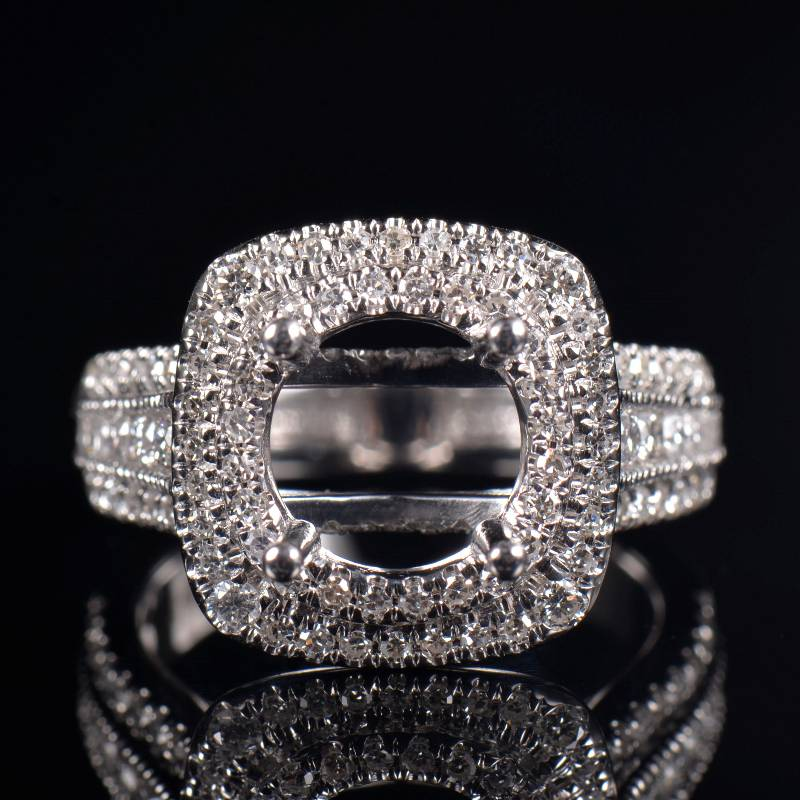
Designing a piece of fine jewelry allows individuals to express personal style, commemorate significant life milestones, or repurpose cherished family heirlooms. Central to this personalized design process is the semi-mount ring setting, an engineered framework complete with side stones, accent diamonds, and intricate metalwork, but deliberately left open to accommodate a center gemstone of choice. Choosing a semi-mounting bridging framework balances custom flexibility with structural precision, allowing buyers to select a center stone that fits their exact aesthetic and financial preferences. This guide covers the essential components, gemstone geometries, metal considerations, and setting styles that define high-quality semi-mountings, offering valuable insights for anyone embarking on a bespoke jewelry design journey.
Understanding the Structure of Semi-Mounting Settings
A semi-mount setting serves as the structural foundation of a ring. Unlike fully finished off-the-shelf rings, a semi-mount contains every architectural detail, including halo accents, side baguettes, pave-set bands, and filigree carvings, while omitting the main centerpiece gemstone.
This approach gives buyers complete control over the most prominent element of the ring. Whether pairing the setting with a newly acquired lab-grown diamond, a natural colored sapphire, or a inherited family diamond, the semi-mount ensures the centerpiece sits in a professionally crafted setting engineered for security and visual harmony.
Key Design Architectural Styles
Semi-mount rings come in various profiles to suit different aesthetic tastes and gemstone geometries. Understanding these primary styles helps narrow down the ideal setting for a specific center stone shape.
Halo and Micro-Pavé Profiles
Halo designs surround the central mounting area with a ring of smaller accent stones. This style enhances the perceived size of the center stone while creating a continuous field of light reflection. Micro-pavé bands complement the halo by setting tiny accent diamonds closely along the shank, producing a seamless, shimmering surface.
Three-Stone and Side-Accent Mountings
Three-stone mountings feature two prominent flank stones, such as trillion cuts, tapered baguettes, or pear-shaped diamonds, positioned on either side of the open central setting. This arrangement creates a classic balanced profile that frames the center gemstone and highlights its color and cut quality.
Vintage and Sculptural Mountings
For those seeking intricate detail, vintage-inspired semi-mounts incorporate decorative techniques like milgrain borders, hand engraving, and filigree lattice work. These features add architectural depth and character, providing an elegant backdrop for traditional cuts like European or cushion stones.
Material Selection and Metal Compatibility
The choice of precious metal influences both the durability of the ring and how the color of the gemstones is perceived. Selecting the right metal alloy ensures long-term structural integrity while complementing skin tone and gemstone hue.
| Metal Alloy | Structural Attributes | Ideal Applications |
| Platinum | Dense, hypoallergenic, extremely durable; holds stones with maximum security without wearing down over time. | Excellent for high-carat diamonds and intricate prong work that requires maximum strength. |
| 14K White Gold | Harder than 18K gold; finished with rhodium plating for a bright, mirror-like white luster. | Ideal for detailed pave settings and complex daily-wear mountings. |
| 18K Yellow Gold | High gold purity providing a rich, classic golden warmth. | Complements warm-toned diamonds, emeralds, and vintage-style settings. |
| Rose Gold | Blended with copper to create a durable, romantic pink hue. | Provides striking visual contrast when paired with colorless diamonds or pink sapphires. |
When exploring custom ring foundations, examining collections of semi mounting jewelry illustrates how precise metalwork and accent stone placements accommodate a wide range of center stone shapes, from classic rounds to elongated emerald and oval cuts.
Crucial Factors When Matching Center Stones to Settings
Select the setting and center stone in tandem to ensure proper mechanical fit and aesthetic proportions. A mismatch in dimensions can result in loose settings or awkward visual spacing.
Consider these primary technical alignment factors:
- Prong Configuration and Stone Shape: Ensure the setting head matches the specific geometry of the center stone, such as v-prongs for sharp marquise or princess corners, or rounded prongs for oval cuts.
- Depth and Profile Clearance: Deeply cut stones require a setting with sufficient bridge height to prevent the stone culet from touching the finger or setting base.
- Carat Weight Range: Semi-mountings are engineered for specific millimeter dimension ranges; selecting a stone within these tolerances guarantees that accent side stones align flush against the center gem.
Care and Inspection of Fine Settings
Because semi-mountings feature detailed accent stone placements and delicate prong assemblies, regular care is necessary to maintain their structural integrity and brilliance.
Clean the setting regularly using warm water, mild soap, and a soft brush to clear accumulated oils from under side stones and gallery wires. Have a professional jeweler inspect the setting annually to check prong tension, verify stone tightness, and ensure the ring shank maintains its shape. Safe storage in lined jewelry boxes protects delicate metalwork from accidental scratches during daily wear.
Crafting a Personalized Heirloom
Semi-mount settings offer a practical, highly customizable route to creating fine jewelry that reflects personal taste and meaningful milestones. By understanding setting styles, metal characteristics, and stone compatibility, buyers can build an enduring ring that pairs technical craftsmanship with personal significance.
