

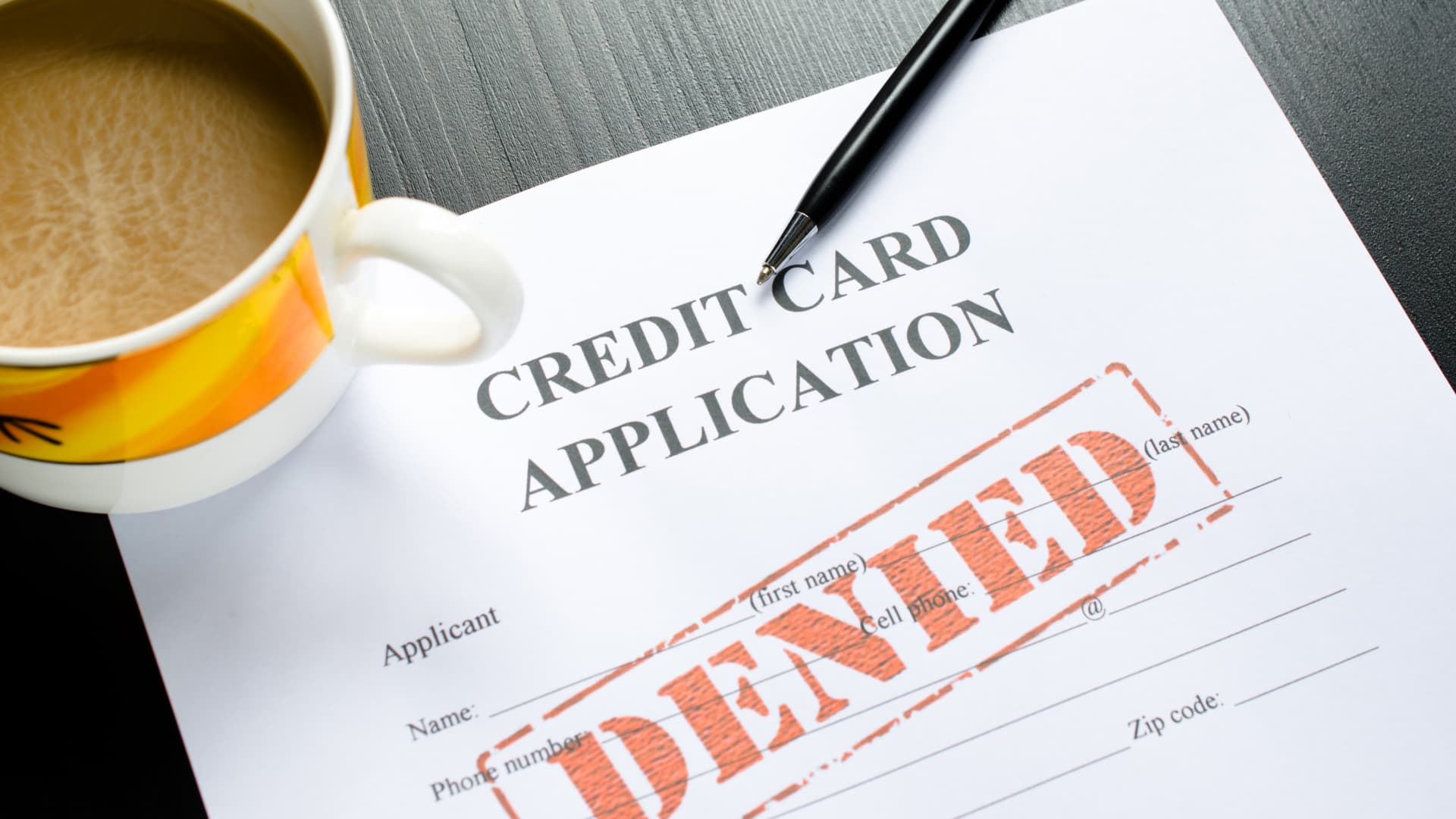
Received a message that said ‘credit card application rejected’ by your bank? The excitement of a new credit card, with its promise of rewards and convenience, can quickly turn into disappointment if your application gets rejected.
You might be wondering what went wrong. Despite your confidence in accurately completing the application and submitting all necessary documents, the bank still denied your request. There are several potential reasons for this outcome.
Let’s explore the top reasons why credit card applications get rejected and how you can address them with simple steps.
Poor credit score
Your credit score reflects your creditworthiness based on your past borrowing, repayment patterns, and credit utilisation. A low credit score raises red flags for banks and makes them hesitant to approve credit cards. This low score could be due to late payments, a high credit utilisation ratio, and loan defaults.
To improve your approval chances, focus on:
- Timely payments of existing loans and credit card bills
- Reducing outstanding balances
- Avoiding new debt if it is beyond your repayment capacity
Low income
Credit card issuers analyse your ability to repay the borrowed amount, which largely depends on your income. If your income does not meet the issuer’s criteria, your application may face rejection. While banks are allowed to set specific income criteria for different types of credit cards, premium ones with exclusive features usually have higher income requirements.
To mitigate this, apply for a credit card that has low income requirements or consider increasing your income sources before applying. Be ready to show proof of income, such as salary slips or Income Tax Returns (ITR), to prove your financial stability.
Unstable work history
Changing jobs is not a bad thing. However, if you do that frequently, say every six months, it can raise concerns about your career stability. Banks might assume that you may struggle to keep up with the monthly repayment schedule if there is sudden unemployment or insufficient income.
Multiple applications for credit cards
Even though you can apply for a credit card for free online, it’s wise not to submit multiple applications simultaneously. Applying for multiple cards in a short period can negatively impact your credit score due to multiple hard inquiries. This action raises concerns and leads to the assumption that you are desperate for credit and may be facing financial problems.
Instead of applying for several cards at once, research to find the one that best fits your needs, and then apply only for that. You can consider the IndusInd Bank Platinum RuPay Credit Card, which offers the convenience of a 100% paperless application process and instant approval in three easy steps.
It comes with many benefits and valuable features that make it a worthwhile addition to your financial toolkit, such as:
| Make payments via Unified Payments Interface (UPI) | Pay easily at millions of merchants with this UPI-enabled credit card. |
| Exclusive reward points | Earn 2 reward points for every ₹100 spent through UPI and 1 reward point for every ₹100 spent on non-UPI transactions. |
| Fuel surcharge waiver | Enjoy a 1% waiver on fuel surcharges and make your fuel purchases more economical. |
| Simplified Know Your Customer (KYC) | Avoid the complications of traditional KYC with a video KYC verification process. |
Apply for a credit card online and get started with IndusInd Bank today!
KYC issues
KYC compliance is important in the credit card application process. If there is a mismatch between your documents and the details you provided, or if your KYC isn’t complete, your application might be rejected. This is because banks require valid proof of identity, address, and income as part of the KYC process.
So, make sure all your documents are accurate, up-to-date, and consistent to avoid KYC issues and rejection of your credit card application.
Key takeaways
Now you know why a credit card application gets denied by banks. This could be due to a bad credit score, low income, insufficient credit history, unstable work history, errors in the application form, multiple credit inquiries, and KYC issues.
If your credit card application is denied, don’t panic. Simply monitor your credit report for any discrepancies and resolve them on time. Focus on improving your credit habits by paying bills on time, reducing outstanding debt, and avoiding multiple credit inquiries. Over time, these actions may help you boost your creditworthiness and increase the chances of future approvals. With these corrective steps, you can confidently apply for a credit card again in the future.
