

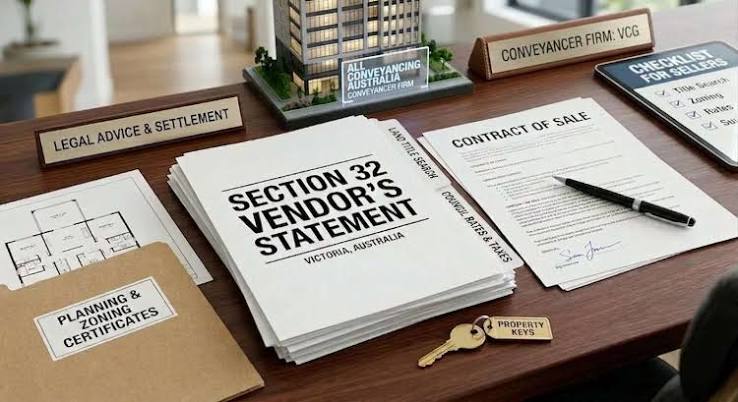
Selling a property in Victoria involves much more than choosing an agent, arranging photographs and accepting an offer. Before a buyer signs a contract, the seller must prepare the legal documents required for the transaction and disclose specified information about the property. Errors, omissions or delays during this stage can affect negotiations, postpone the sale or expose the seller to legal risk.
A well-managed sale usually begins before the property is advertised. The seller should gather title information, rates notices, planning documents, building records and details of any owners corporation affecting the land. The contract of sale and vendor statement can then be prepared so that interested buyers are able to review the legal position before making a binding commitment.
Understanding the main steps can help sellers avoid preventable problems and approach the transaction with realistic expectations.
Start preparing before the property is listed
Sellers often contact a conveyancer or property lawyer only after an agent has been appointed and a marketing campaign is ready to begin. This can create unnecessary pressure, particularly if documents are missing or an issue affecting the title must be investigated.
The better approach is to begin the legal preparation early. Depending on the property, the seller may need to provide or obtain:
- a current title search;
- a copy of the plan of subdivision;
- council and water information;
- owners corporation certificates;
- planning details;
- building permits;
- insurance information;
- lease documents;
- details of mortgages, covenants or easements; and
- information about services connected to the land.
Some of this material can be obtained through formal searches. Other information may need to be supplied by the seller, the owners corporation manager, the local council or another authority.
Beginning early gives the seller and their legal representative time to identify inconsistencies and decide how they should be addressed before the contract is given to potential buyers.
What is a Section 32 vendor statement?
A vendor statement is one of the central documents in a Victorian property sale. It is commonly called a Section 32 statement because the disclosure obligation arises under section 32 of the Sale of Land Act 1962.
The statement must be given to the buyer before the buyer signs the contract. It contains prescribed information about the property and the seller’s title. Sellers should understand the purpose and requirements of a Section 32 vendor statement in Victoria because an incomplete or inaccurate statement can have serious consequences.
The information required will depend on the property, but the statement may address matters such as:
- registered mortgages and other interests affecting the title;
- easements and restrictive covenants;
- planning controls;
- rates, taxes and other outgoings;
- owners corporation information;
- building permits issued within the relevant period;
- services that are or are not connected;
- road access;
- notices, orders or declarations affecting the land; and
- insurance details in particular circumstances.
The vendor statement is not simply a standard form that can be completed without reviewing the property’s actual legal position. Supporting documents must usually be attached, and the contents should be checked carefully before the seller signs it.
Why accuracy matters
A buyer relies on the vendor statement when deciding whether to purchase the property. The document may reveal restrictions affecting development, obligations imposed by an owners corporation, unresolved notices or significant outgoings.
If the statement is defective, the buyer may have rights that can disrupt or terminate the transaction. The precise consequences depend on the nature of the defect, whether the missing information is material and the circumstances of the sale.
For that reason, a seller should not guess at the answers or assume that a problem is too minor to disclose. Uncertainty should be raised with the conveyancer or lawyer preparing the documents.
It is also important to update the documents when circumstances change. A statement prepared several months before the sale may contain outdated rates information, an expired owners corporation certificate or superseded planning material. The contract package should be reviewed before it is issued to buyers or used at auction.
Check the title before marketing begins
The title search identifies the registered owner and reveals interests recorded against the land. These may include a mortgage, caveat, easement, covenant or other restriction.
The seller’s name should match the registered ownership details. Differences can arise because of a change of name, marriage, death, company restructuring or an earlier transfer that was never completed. These issues may require supporting documents or further legal work before settlement can proceed.
A mortgage will normally need to be discharged at settlement. The seller should contact the lender early enough to satisfy the bank’s discharge requirements. Waiting until the final days before settlement can create delays.
A caveat requires particular attention. The seller may not be able to transfer clear title unless the caveat is withdrawn, lapses or is removed through an appropriate legal process. A dispute about a caveat should be addressed as soon as possible.
Review planning restrictions, easements and covenants
Planning controls and title restrictions may affect how the property can be used or developed. Buyers are often particularly interested in renovation, subdivision, construction or commercial-use potential.
An easement may give an authority or neighbouring property rights over part of the land. A restrictive covenant may limit building materials, the number of dwellings or another aspect of development. Heritage controls, overlays and zoning rules may also affect future plans.
The seller is not required to guarantee that a buyer’s intended project will be approved. However, the prescribed information must be disclosed, and sellers should avoid making unsupported statements about development potential.
Marketing claims should be reviewed carefully. Descriptions such as “ready to subdivide,” “approved for development” or “ideal for commercial use” can create problems if they are inaccurate or omit important qualifications.
Owners corporation properties require additional preparation
Apartments, townhouses and some other developments are affected by an owners corporation. The seller may need to obtain an owners corporation certificate and provide relevant rules, financial information, insurance details and records of fees.
Prospective buyers may want to know whether there are:
- outstanding owners corporation fees;
- special levies;
- planned major works;
- building defects;
- legal disputes;
- insurance claims;
- restrictions on renovations;
- short-stay accommodation rules;
- pet restrictions; or
- maintenance obligations.
The seller should disclose the required information and answer additional enquiries accurately. Minutes of recent meetings and correspondence about major projects may become important during the buyer’s due diligence.
Where there is an unpaid levy or an unresolved dispute, the contract may need to address responsibility for the amount at settlement.
Prepare the contract of sale carefully
The contract records the legal terms of the transaction. It usually identifies the parties, property, purchase price, deposit, settlement date, inclusions and any special conditions.
Special conditions may deal with matters such as:
- the state of the property;
- planning permits;
- building approvals;
- deposit payments;
- finance;
- settlement delays;
- electronic conveyancing;
- foreign resident capital gains withholding;
- goods sold with the property;
- tenancies;
- vacant possession; and
- adjustments of rates and outgoings.
The seller’s contract should not contain unnecessary or excessively aggressive conditions. Clauses that are confusing, one-sided or inconsistent may discourage buyers or lead to negotiation immediately before an auction.
At the same time, the contract must protect the seller’s legitimate interests. The appropriate wording will depend on the property and the intended method of sale.
Be clear about fixtures and inclusions
Disputes frequently arise over items that one party believes are included and the other considers removable.
Potential areas of disagreement include:
- dishwashers and other appliances;
- light fittings;
- curtains and blinds;
- wall-mounted televisions;
- security systems;
- garden sheds;
- outdoor furniture;
- solar panels and batteries;
- water tanks;
- pool equipment; and
- smart-home devices.
The contract should identify important inclusions and exclusions. If the seller intends to remove an item that might ordinarily be regarded as a fixture, that should be stated clearly before the buyer signs.
The property should remain in substantially the same condition between the contract date and settlement, subject to fair wear and tear and the terms of the agreement.
Selling a tenanted property
A seller must decide whether the property will be sold with vacant possession or subject to an existing tenancy.
If a tenant remains in occupation, the buyer may acquire the property subject to the lease. The contract and vendor statement should accurately describe the tenancy arrangements, including the rent, bond and lease term.
Where vacant possession is promised, the seller must ensure that any required notices are valid and that the tenant will leave before settlement. Residential tenancy laws impose specific requirements, and sellers should not assume that a tenant can be required to vacate immediately simply because the property has been sold.
Coordination between the seller, managing agent and legal representative is important throughout the campaign.
Consider tax and financial matters early
A sale can have taxation consequences, particularly where the property is an investment, business asset, development site or former principal residence.
Capital gains tax, goods and services tax and withholding requirements may need to be considered. Sellers should obtain accounting or taxation advice where appropriate rather than relying only on the conveyancing process.
The seller should also estimate the costs of the transaction, including:
- agent’s commission;
- advertising expenses;
- legal or conveyancing fees;
- mortgage discharge fees;
- owners corporation charges;
- adjustments at settlement;
- removal costs; and
- any tax liabilities.
Understanding the likely net sale proceeds can help the seller plan a related purchase, debt repayment or investment.
From contract signing to settlement
Once the contract is signed, the transaction enters the settlement phase. The seller’s legal representative will prepare the transfer documents, communicate with the buyer’s representative, arrange mortgage discharge and calculate adjustments.
The seller may need to complete identity verification, sign authorities and provide information about bank accounts or taxation status.
Rates, water charges, owners corporation fees and other outgoings are generally adjusted so that each party bears the appropriate amount for their period of ownership.
The buyer will usually conduct a final inspection shortly before settlement. The seller should ensure the property is accessible, agreed inclusions remain in place and rubbish or unwanted belongings have been removed.
A detailed Victorian property-selling conveyancing checklist can help sellers keep track of the documents, deadlines and practical steps that arise from preparation through to completion.
Avoid common causes of delay
Many settlement problems arise from issues that could have been addressed earlier. Common examples include:
- late mortgage-discharge requests;
- missing identity documents;
- unresolved caveats;
- incomplete owners corporation records;
- discrepancies in the registered owner’s name;
- uncertainty about vacant possession;
- unapproved building work;
- incorrect bank details;
- outstanding council requirements; and
- last-minute disagreements over inclusions.
Sellers should respond promptly to requests from their conveyancer or lawyer. Delays in supplying documents can affect the preparation of the vendor statement, the issue of the contract or settlement itself.
It is also important to protect against email fraud. Bank details should be verified through a trusted method, particularly where substantial settlement proceeds are involved.
Preparation supports a smoother sale
A successful property sale depends on accurate documents, timely disclosure and careful coordination between the seller, agent, lender and legal representative.
Preparing the vendor statement and contract before marketing begins allows legal issues to be identified without the pressure of an immediate buyer deadline. Clear information also gives buyers greater confidence and reduces the likelihood of disputes during negotiations.
Selling property will always involve practical and financial decisions, but the legal process should not be treated as an afterthought. Early preparation, accurate disclosure and attention to settlement requirements can help the transaction proceed more efficiently from listing to completion.
