

Introduction
Choosing the right web hosting service can have a direct impact on how well a website performs, stays secure, and grows over time. For many new websites, small businesses, blogs, and online projects, shared website hosting is an affordable way to get started without the cost or complexity of managing a private server. In a shared hosting environment, several websites use resources from the same physical server. This makes the service accessible, but it also means that smart hosting choices and good website management are important for maintaining reliable performance. A hosting provider should offer more than server space; it should provide a stable environment that supports website speed, security, uptime, backups, and future growth.
Host Home approaches hosting with a strong focus on reliability, performance, and technical expertise. The company began providing domain registration services in 2007 and specialized in web hosting solutions in 2009, with a particular focus on virtual and dedicated servers, system administration, and support. While shared website hosting can be suitable for websites with modest resource requirements, growing businesses may eventually need more control and dedicated resources. Understanding how shared hosting works, what affects website performance, and when it makes sense to move to VPS or dedicated hosting can help website owners make better long-term decisions. The goal is not simply to choose the cheapest hosting package, but to select a hosting environment that supports a dependable online presence.
Understand How Shared Website Hosting Works
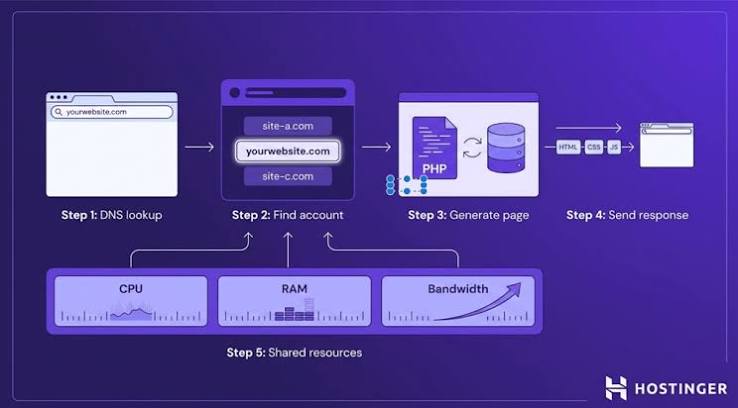
Shared website hosting places multiple websites on one physical server. The server provides computing resources such as processing power, memory, storage, and network capacity, which are used by the websites hosted on it. This shared model keeps costs lower because the infrastructure is distributed among multiple customers. For personal websites, portfolios, small blogs, informational sites, and early-stage business websites, shared hosting can provide a practical starting point. It can also reduce the technical burden for website owners who do not need advanced server configuration or extensive administrative control. However, shared resources mean that the performance of one website can sometimes be affected by activity on other websites using the same server.
Understanding this limitation makes it easier to set realistic expectations. Shared hosting is designed around resource efficiency, so it may not be the best option for websites receiving large traffic spikes, running resource-heavy applications, or requiring highly customized server configurations. Website owners should consider factors such as storage, bandwidth, server technology, uptime, security measures, backup policies, and technical support before selecting a plan. A reliable hosting provider should also explain its service clearly rather than relying only on attractive pricing. As a website becomes more important to a business, hosting should be treated as part of the overall technology infrastructure rather than simply a place to store website files.
Improve Website Speed Through Better Hosting Practices
Website speed is an important part of the visitor experience. A slow website can make navigation frustrating, increase the chance that visitors leave, and make a business appear less professional. Although hosting performance is only one part of website speed, it provides the foundation on which other optimizations depend. Website owners using shared website hosting should keep their websites lightweight by optimizing images, reducing unnecessary plugins, using efficient themes, and keeping website software updated. Browser caching, content compression, optimized databases, and a content delivery network can also help improve loading times when they are correctly configured.
The hosting environment itself matters as well. Quality hardware, reliable storage, efficient server software, and a well-managed network can contribute to consistent performance. Host Home places particular emphasis on branded server equipment and tests hardware before deployment, reflecting the importance of dependable infrastructure. This approach highlights a useful lesson for website owners: hosting quality is not determined only by the amount of disk space included in a plan. The underlying hardware, server management, monitoring, maintenance, and technical support can all influence the reliability of a website. When comparing hosting providers, looking beyond marketing claims and considering the infrastructure behind the service can lead to a better long-term decision.
Make Website Security a Daily Priority
Website security should never be treated as an optional feature. Even a small website can become a target for automated attacks, malware, unauthorized login attempts, or software vulnerabilities. A secure hosting environment should be supported by regular updates, strong account passwords, access controls, malware protection, firewalls, and reliable backups. Website owners should also keep their content management systems, themes, plugins, and other applications updated. In a shared website hosting environment, the provider has an important role in maintaining the server and protecting its infrastructure, while the website owner remains responsible for keeping the website itself secure.
Backups are particularly important because security incidents, human mistakes, hardware failures, and software problems can all result in lost data. A backup should be stored in a way that allows the website to be restored if the original data becomes unavailable or damaged. Professional hosting support can make this process easier by providing monitoring, security management, backup services, and recovery assistance. Host Home offers system administration and support services that include server monitoring, security management, backup solutions, and disaster recovery. These services become increasingly valuable as a website grows because businesses often do not have the time or specialized knowledge needed to manage every technical aspect of their hosting environment themselves.
Monitor Resources and Know When to Upgrade
One common mistake is waiting until a website becomes slow or unstable before thinking about hosting resources. Website owners should pay attention to traffic patterns, resource usage, loading times, server response, and unexpected downtime. If a website regularly reaches resource limits, experiences performance problems during busy periods, or requires software that cannot run within the restrictions of its current environment, it may be time to consider an upgrade. Shared website hosting can work well during the early stages of a website, but it is not necessarily a permanent solution for every business.
A VPS can provide a useful next step because virtual server environments generally offer greater resource control, isolation, and customization than traditional shared hosting. As traffic, applications, and operational requirements increase, a dedicated server can provide an entire physical machine for one customer. This can deliver greater control over hardware resources and server configuration. Host Home focuses heavily on virtual and dedicated server solutions because these environments can provide the performance, security, customization, and scalability required by more demanding websites and applications. Moving to a VPS or dedicated server should not be viewed as a failure of shared hosting; it is simply a natural step when a website’s technical requirements have outgrown a shared environment.
Choose a Hosting Provider for Long-Term Reliability
The best hosting decision is rarely based on price alone. A website can be inexpensive to host but costly to operate if repeated downtime, poor support, weak security, or slow infrastructure creates problems for visitors and customers. Before choosing a provider, website owners should consider its experience, infrastructure, support capabilities, server management, security practices, backup options, and ability to accommodate future growth. Reliable customer support can also make a major difference when a technical issue occurs. Having experienced professionals available to assist with server configuration, troubleshooting, monitoring, and security can reduce the amount of time a business spends dealing with technical problems.
Host Home has built its hosting services around specialized expertise rather than attempting to provide every type of technology service. Since 2009, its focus has been on web hosting, virtual and dedicated servers, system administration, and support, following its earlier start in domain registration in 2007. The company initially concentrated on the European market and is expanding its services into the United States and Canada. Its use of branded hardware, testing before deployment, and direct management of its equipment reflects a focus on infrastructure quality and operational control. For businesses evaluating hosting providers, this kind of specialization can be useful because dependable hosting involves much more than placing website files on a server.
Build a Hosting Strategy That Supports Growth
A smart hosting strategy should match the current needs of a website while leaving room for future development. For a new or relatively small website, shared website hosting can provide an affordable and straightforward foundation. Good website maintenance, optimized content, strong security practices, caching, image optimization, and regular backups can help make the most of that environment. However, website owners should also recognize the signs that indicate a need for greater resources. Increasing traffic, demanding applications, business-critical operations, higher security requirements, or the need for advanced server configuration can all justify moving toward VPS or dedicated hosting.
The most important lesson is that hosting should evolve alongside the website. A reliable hosting provider should make that transition manageable by offering technical expertise, scalable infrastructure, server administration, security management, and responsive support. Host Home’s focus on virtual and dedicated servers demonstrates how a hosting company can build its services around performance, control, security, and scalability. For website owners, the right approach is to evaluate hosting based on real business requirements rather than simply choosing the lowest-cost package. With sensible website optimization, consistent security practices, reliable infrastructure, and a clear upgrade path, businesses can create a stronger online foundation and provide visitors with a faster, safer, and more dependable experience.
Conclusion
Shared website hosting can be an effective starting point for websites that have modest traffic and straightforward technical requirements. Its main advantages are affordability, simplicity, and accessibility, making it useful for individuals and smaller businesses establishing their online presence. However, website owners should understand the limitations of shared resources and take active steps to improve website speed, security, backups, and overall efficiency. As a website grows, monitoring resource usage and performance can help identify the right time to move to a more powerful hosting environment.
Host Home’s specialized approach to hosting provides a broader path for businesses that need greater control and performance as their online operations develop. With expertise in virtual and dedicated servers, system administration, security, monitoring, backups, and support, the company focuses on the infrastructure that businesses depend on every day. The smartest hosting choice is ultimately one that fits the website’s current needs while providing a realistic path for future growth. By combining reliable infrastructure with responsible website management, businesses can build an online presence that is prepared for today’s visitors and tomorrow’s opportunities.
