

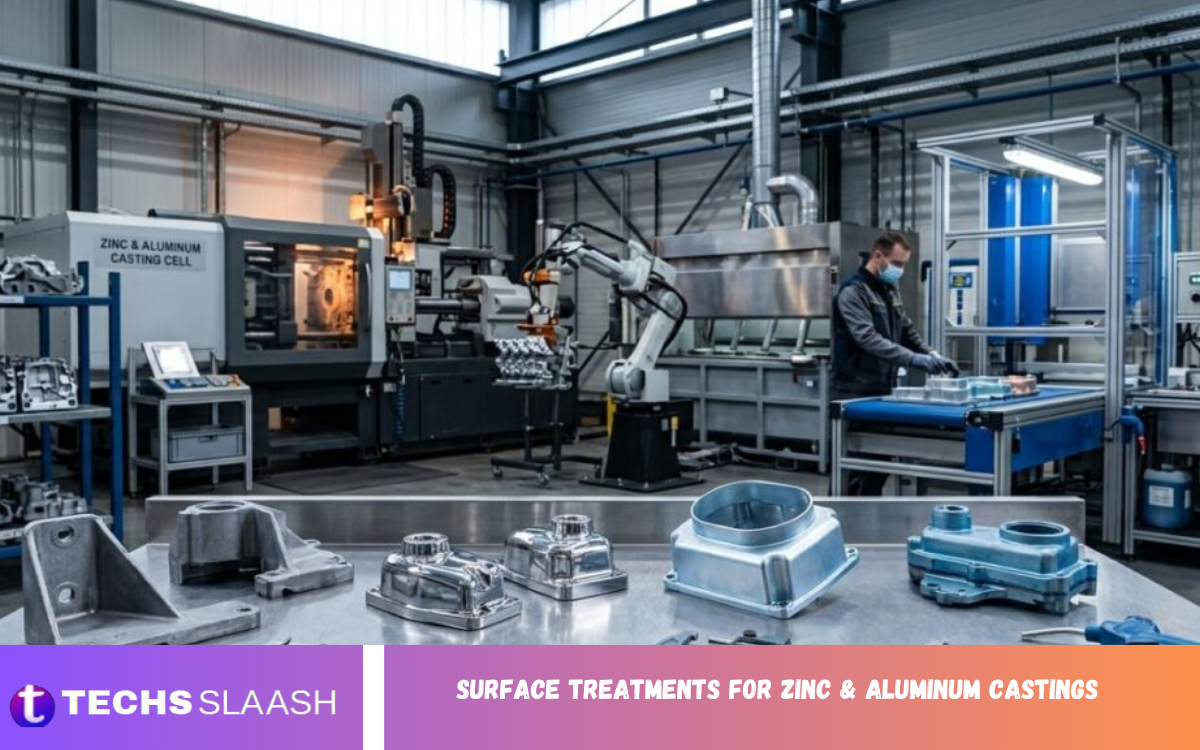
Surface treatments for zinc & aluminum castings play a vital role in improving the performance, appearance, and lifespan of metal components. These treatments protect castings against corrosion, wear, oxidation, and environmental damage while enhancing their visual appeal. Whether used in automotive, aerospace, electronics, construction, or consumer products, properly treated castings deliver greater durability and reliability.
Manufacturers select surface finishing techniques based on the alloy type, product application, environmental conditions, and required appearance. From anodizing and powder coating to electroplating and passivation, each method offers unique advantages. Understanding these processes helps businesses choose the most suitable treatment for their production needs while ensuring consistent product quality.
Why Surface Treatments Matter?
Surface treatments are more than decorative finishes. They provide a protective barrier that shields zinc and aluminum castings from moisture, chemicals, UV exposure, and mechanical wear. This protection significantly extends the service life of manufactured parts.
In addition to durability, surface treatments improve adhesion for paints and coatings, reduce friction, and increase resistance to scratches. These improvements help manufacturers deliver products that meet industry standards and customer expectations.
Understanding Zinc & Aluminum Castings
Zinc and aluminum are among the most widely used casting materials because of their lightweight properties, strength, and excellent castability. Zinc is ideal for precision die casting, while aluminum is preferred for lightweight structural components.
Although these metals naturally offer certain levels of corrosion resistance, untreated surfaces may still deteriorate over time. Proper finishing enhances their protective characteristics while improving overall product performance.
Benefits of Surface Treatments for Zinc & Aluminum Castings
Surface treatments provide multiple benefits beyond corrosion protection. Improved hardness, better wear resistance, enhanced conductivity, and attractive finishes make components suitable for demanding industrial applications.
These treatments also reduce maintenance costs by preventing premature failures. Manufacturers benefit from fewer warranty claims, longer product life cycles, and improved customer satisfaction through reliable finished components.
Cleaning Before Surface Treatment
Every successful finishing process begins with proper cleaning. Oils, grease, dust, oxidation, and casting residues must be removed to ensure strong coating adhesion and consistent results.
Cleaning methods include alkaline cleaning, ultrasonic cleaning, solvent cleaning, acid pickling, and mechanical blasting. The chosen method depends on the casting material and contamination level.
Mechanical Surface Finishing
Mechanical finishing prepares castings by removing burrs, rough edges, and imperfections created during the casting process. This stage creates a smoother and more uniform surface.
Processes such as grinding, polishing, sanding, vibratory finishing, and shot blasting improve both functionality and appearance. These techniques often serve as preparation for additional coating applications.
Shot Blasting
Shot blasting uses steel shots or abrasive media to remove oxidation, scale, and surface contaminants from castings. It creates a clean and textured surface that improves coating adhesion.
The process also strengthens the outer layer through compressive stress, increasing fatigue resistance. Many automotive and industrial manufacturers rely on shot blasting before painting or powder coating.
Sand Blasting
Sand blasting propels abrasive particles onto the casting surface to remove rust, old coatings, and imperfections. It produces a matte finish suitable for subsequent treatments.
Different abrasive materials provide varying levels of surface roughness. Proper media selection prevents damage while achieving the desired finish quality.
Polishing
Polishing creates smooth, reflective surfaces by removing microscopic scratches and irregularities. It is commonly used for decorative aluminum and zinc products requiring premium aesthetics.
Mechanical polishing can be combined with chemical polishing for enhanced brightness. High-quality polished finishes improve both product value and customer perception.
Powder Coating
Powder coating is one of the most popular Surface Treatments for zinc and aluminum castings because it provides excellent durability and attractive finishes. Dry powder is electrostatically applied before curing in an oven.
The cured coating offers outstanding resistance against corrosion, chemicals, impact, and UV exposure. Powder-coated castings require minimal maintenance and maintain their appearance for years.
Liquid Painting
Liquid painting remains a versatile finishing option for complex casting designs. Modern industrial paints provide color consistency and effective environmental protection.
Different paint systems, including epoxy, acrylic, and polyurethane coatings, are selected according to application requirements. Proper surface preparation ensures long-lasting adhesion.
Electroplating
Electroplating deposits a thin metal layer over zinc or aluminum castings using electrical current. Common plating materials include nickel, chrome, copper, silver, and zinc.
Electroplated surfaces improve corrosion resistance, wear resistance, electrical conductivity, and decorative appearance. The process is widely used in automotive, electronics, and consumer products.
Nickel Plating
Nickel plating provides excellent corrosion protection while creating a bright metallic finish. It also increases surface hardness and wear resistance.
Engineered components exposed to harsh environments often use nickel plating because of its durability and attractive appearance. It serves both decorative and functional purposes.
Read Also: Seekde AI Platform Guide
Chrome Plating
Chrome plating creates highly reflective surfaces with outstanding scratch resistance. It is commonly applied to automotive trim, hardware, and decorative components.
Besides visual appeal, chrome coatings improve durability and reduce friction. Proper preparation ensures strong adhesion and consistent finish quality.
Zinc Plating
Zinc plating offers sacrificial corrosion protection for metal components operating in humid environments. Even if scratches occur, zinc continues protecting the underlying material.
This economical treatment extends product lifespan while maintaining attractive appearance. Many industrial fasteners and mechanical components utilize zinc plating.
Anodizing Aluminum Castings
Anodizing is one of the most effective finishing processes for aluminum castings. It creates a thick oxide layer that significantly improves corrosion resistance and surface hardness.
Anodized aluminum also accepts dyes, allowing manufacturers to produce colored finishes without sacrificing durability. The resulting coating becomes an integral part of the metal rather than sitting on the surface.
Chemical Conversion Coating
Chemical conversion coatings create protective chemical layers without adding significant thickness. Aluminum frequently receives chromate or environmentally friendly conversion coatings.
These treatments improve corrosion resistance while serving as excellent bases for paint and adhesive applications. Aerospace and defense industries commonly specify conversion coatings.
Passivation
Passivation enhances corrosion resistance by removing contaminants and encouraging protective oxide formation. Although more common for stainless steel, specialized passivation processes also benefit certain aluminum alloys.
The treatment improves long-term performance without altering dimensions. Manufacturers use passivation when maintaining precise tolerances is essential.
E-Coating
Electrophoretic coating, commonly called E-coating, applies paint through electrical current. The process creates highly uniform coatings, even on complex casting geometries.
E-coated components demonstrate outstanding corrosion resistance and consistent coverage. Automotive manufacturers frequently use this technology for structural castings.
Ceramic Coatings
Ceramic coatings protect castings exposed to high temperatures, chemicals, and abrasive environments. These advanced coatings create extremely durable protective layers.
Industrial machinery, aerospace components, and performance automotive parts often utilize ceramic coatings to improve thermal resistance and extend service life.
Choosing the Right Surface Treatment
Selecting the ideal finishing method depends on operating conditions, budget, material type, and desired appearance. Environmental exposure significantly influences treatment selection.
Manufacturers also consider production volume, maintenance requirements, regulatory standards, and customer expectations. Careful evaluation ensures the chosen finish delivers optimal long-term value.
Quality Control in Surface Finishing
Quality inspection ensures every treated casting meets required specifications. Coating thickness, adhesion, corrosion resistance, and visual appearance are evaluated in detail.
Manufacturers employ salt spray testing, adhesion testing, hardness measurements, and microscopic inspections to verify performance. Strict quality control minimizes defects and improves customer confidence.
Environmental Considerations
Modern manufacturers increasingly adopt environmentally responsible finishing technologies. Low-VOC coatings, recyclable materials, and eco-friendly chemical treatments reduce environmental impact.
Sustainable production not only supports regulatory compliance but also enhances corporate reputation. Green finishing technologies continue evolving to balance performance with environmental responsibility.
Future Trends in Surface Treatments for Zinc & Aluminum Castings
Automation, robotics, and advanced coating technologies continue to transform the metal finishing industry. Smart manufacturing systems improve consistency while reducing production costs.
Nanocoatings, self-healing coatings, environmentally friendly chemicals, and AI-driven quality inspection represent the future of surface engineering. These innovations will deliver stronger, lighter, and longer-lasting cast components.
Frequently Asked Questions (FAQs)
What are surface treatments for zinc and aluminum castings?
Surface treatments are finishing processes that improve corrosion resistance, appearance, durability, and performance of metal castings.
Why is anodizing used only on aluminum?
Anodizing forms a thick oxide layer naturally on aluminum, providing superior corrosion resistance and hardness.
Which coating provides the best corrosion resistance?
Powder coating, anodizing, and high-quality nickel plating are among the best corrosion-resistant finishing options.
Is powder coating better than painting?
Powder coating generally offers greater durability, impact resistance, and longer service life than conventional liquid paint.
Why is cleaning important before coating?
Proper cleaning removes contaminants that could weaken coating adhesion and reduce finish quality.
Can zinc castings be anodized?
No. Traditional anodizing is designed for aluminum. Zinc typically uses plating, powder coating, painting, or conversion coatings.
What industries use surface-treated castings?
Automotive, aerospace, electronics, construction, medical equipment, telecommunications, and consumer product industries.
How long do surface treatments last?
The lifespan depends on the treatment type, environmental exposure, maintenance, and operating conditions. Many finishes last for years.
What is the most economical finishing method?
Painting and zinc plating are generally among the most cost-effective options for many industrial applications.
How do manufacturers choose the right treatment?
They evaluate corrosion requirements, appearance, operating environment, budget, production volume, and industry standards.
Conclusion
Surface Treatments for zinc and aluminum castings are essential for maximizing durability, corrosion resistance, appearance, and overall product performance. From mechanical finishing and polishing to anodizing, powder coating, electroplating, and advanced ceramic coatings, each treatment serves a specific purpose depending on the application.
Selecting the right finishing process not only extends component life but also reduces maintenance costs and improves customer satisfaction.
