

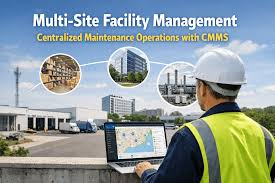
Facility directors and property managers across the United States are under consistent pressure to keep buildings operational, control maintenance costs, and demonstrate accountability to ownership groups and executive leadership. The challenge is not simply about fixing things when they break. It is about maintaining a level of operational reliability that prevents problems from compounding — and doing so across multiple assets, teams, and service categories simultaneously.
In 2025, the tools available for managing these responsibilities have matured significantly. What once required spreadsheets, paper work orders, and phone-based coordination can now be managed through purpose-built platforms. But the market has also become crowded, and the differences between systems are not always obvious from product pages alone. This guide is written for professionals who need to make a grounded, well-informed purchasing decision — not one based on feature checklists or vendor presentations.
What Facility Maintenance Software Actually Does in a Working Environment
At its core, facility maintenance software is an operational platform that centralizes work order management, asset tracking, preventive maintenance scheduling, and vendor coordination into a single system. Rather than relying on disconnected tools or manual processes, it gives facility teams a structured environment where tasks are assigned, tracked, and documented throughout their lifecycle. The decision to adopt facility maintenance software is often driven by a need for consistency — particularly in organizations where informal processes have begun to produce gaps in coverage, delayed repairs, or incomplete maintenance records.
The day-to-day impact of these platforms is most visible in how work requests are handled. Without a centralized system, requests often arrive through multiple channels — email, text, phone calls, verbal communication — and there is no reliable method for ensuring that every request is acknowledged, prioritized, and completed. A software platform standardizes that intake process and creates a record that can be reviewed, audited, and reported on.
The Role of Work Order Management in Daily Operations
Work order management is the foundation of any facility maintenance platform. It controls how tasks enter the system, how they are assigned, what information accompanies them, and how their completion is verified. When this process is disorganized, small problems tend to grow larger before anyone addresses them — not because teams are negligent, but because there is no mechanism to ensure visibility.
A well-structured work order system allows facility managers to see the full volume of active tasks at any given moment, identify where bottlenecks exist, and understand how long different types of work typically take. This visibility supports better staffing decisions, more accurate budget forecasting, and a clearer sense of which assets or areas of a property require the most ongoing attention.
Asset Tracking and Its Effect on Long-Term Cost Control
Every facility contains equipment and infrastructure with finite lifespans. HVAC systems, elevators, electrical panels, plumbing systems, and roof components all degrade over time, and the cost of replacing them is substantially higher than the cost of maintaining them properly. Asset tracking within a maintenance platform ties maintenance history directly to individual assets, allowing facility teams to see how often a piece of equipment has been serviced, what has been repaired, and whether its performance is declining.
This information becomes particularly valuable when organizations need to justify capital expenditure requests. A documented maintenance history that shows an asset has reached the end of its useful life is far more persuasive to leadership than a general claim that replacement is necessary.
Preventive Maintenance Scheduling and Why Reactive Models Fail
Reactive maintenance — addressing problems only after they occur — is more expensive, more disruptive, and more dangerous than a structured preventive approach. When facilities operate reactively, emergency repair costs are higher, equipment downtime is longer, and safety risks are more difficult to control. Preventive maintenance scheduling shifts the model so that routine inspections, filter changes, lubrication, calibration, and other upkeep tasks are completed on a defined schedule rather than in response to failure.
The difficulty with manual preventive maintenance programs is that they rely on individuals to remember, initiate, and document tasks consistently. As facilities grow more complex and teams remain stretched, this reliance on individual memory creates risk. A software platform automates the scheduling and notification process, which means that scheduled tasks are triggered by time intervals, usage metrics, or seasonal requirements without requiring someone to manually initiate them each time.
Compliance and Documentation as Operational Necessities
Many facility types in the United States — including commercial real estate, healthcare facilities, educational institutions, and manufacturing environments — operate under regulatory requirements that mandate specific maintenance activities. These requirements are enforced by bodies such as the Occupational Safety and Health Administration, as well as state and local authorities having jurisdiction. Facilities that cannot produce documentation of completed inspections and maintenance activities face financial penalties, operational restrictions, and in some cases, legal liability.
A maintenance software platform generates a timestamped, organized record of every completed task. When an inspection or audit occurs, that documentation can be retrieved quickly and presented in a structured format. This is significantly more reliable than trying to reconstruct records from email threads or paper logs after the fact.
Planned Maintenance vs. Deferred Maintenance
One of the clearest indicators of a facility management program under stress is a growing backlog of deferred maintenance. Deferred maintenance refers to tasks that have been identified but postponed, typically due to budget constraints, staffing shortages, or competing priorities. Over time, deferred maintenance does not disappear — it accumulates, and the cost of addressing it grows as problems worsen.
A software platform that tracks planned maintenance and measures completion rates gives facility directors the data they need to make the case for adequate resources. It also creates accountability within the team, since tasks that are not completed appear clearly in the system rather than quietly disappearing into a verbal or paper-based process.
Evaluating Software Platforms Before Purchasing
The range of platforms available to US property managers and facility directors in 2025 varies significantly in scope, cost structure, and target market. Some systems are designed for single-location operations with small internal teams. Others are built for enterprise environments managing dozens of properties across multiple states with a combination of in-house staff and contracted service providers. Understanding which category your organization falls into is the first step in narrowing the field.
Beyond scale, there are meaningful differences in how platforms approach specific functions. Some emphasize preventive maintenance and asset lifecycle tracking. Others focus on work order management and vendor coordination. A smaller number offer comprehensive functionality across all categories but require more configuration and training to implement effectively.
Integration with Existing Systems
Most facility management organizations already use other business systems — property management software, accounting platforms, procurement tools, or building automation systems. When a new maintenance software platform cannot exchange information with those existing systems, it creates duplicate data entry, inconsistent records, and additional administrative burden. Integration capability is not a technical luxury; it is a practical requirement for organizations that want their new platform to reduce workload rather than add to it.
Before committing to any platform, it is worth mapping out which systems currently hold relevant data and asking vendors specifically how their platform connects to those systems. General claims about integration capability should be followed by demonstrations with your actual systems, not generic examples.
Mobile Access and Field Usability
Facility maintenance work happens in mechanical rooms, on rooftops, in parking structures, and throughout buildings — not at desks. A platform that works well on a desktop but offers limited mobile functionality will see lower adoption among the technicians and vendors who need to interact with it most. Mobile access to work orders, asset records, and documentation capabilities is a functional requirement, not an optional feature.
Field usability also affects data quality. When technicians can enter notes, attach photographs, and close work orders from the field in real time, the records that accumulate in the system are more complete and more accurate than records entered hours later at the end of a shift.
Understanding Total Cost of Ownership
Software pricing in this category typically follows a subscription model based on the number of users, assets, or locations. However, the subscription fee alone does not represent the full cost of ownership. Implementation, data migration, training, and ongoing support are all costs that vary significantly between vendors and affect the overall value of the investment.
Some vendors include implementation and training in their standard pricing. Others treat these as separate professional services engagements that can add meaningful cost, particularly for larger organizations. Understanding the total investment before signing a contract prevents surprises that can strain both budgets and internal relationships.
Vendor Support and Long-Term Reliability
A platform is only as useful as it is accessible. If the system experiences downtime, if updates introduce problems that go unresolved, or if support response times are slow during critical operational periods, the organization bears the consequences. When evaluating vendors, the quality and responsiveness of their support structure deserves as much scrutiny as the features of the software itself.
References from existing clients in similar industries and of similar organizational scale are one of the most reliable ways to assess this. A vendor’s willingness to provide references — and the quality of the feedback those references offer — communicates a great deal about what the working relationship will actually look like after the contract is signed.
Conclusion: Making a Decision That Serves Long-Term Operations
Selecting a facility maintenance platform is not a one-time purchase. It is a decision that shapes how your team operates for years, and it affects everything from day-to-day task management to capital planning and regulatory compliance. The right platform should reduce administrative burden, improve visibility across maintenance activities, and give leadership reliable data for making operational and financial decisions.
The most common mistake in this process is allowing feature comparisons to drive the decision before operational requirements are clearly defined. Before reviewing any platform in detail, document the specific gaps in your current process — whether that is inconsistent preventive maintenance completion, poor documentation for audits, lack of asset history, or difficulty coordinating with outside contractors. Those gaps define your requirements, and your requirements should drive your evaluation.
Take time to involve the people who will actually use the system daily. Their input on usability, workflow fit, and mobile functionality will surface practical concerns that do not appear in vendor demonstrations. And treat implementation planning as seriously as platform selection — even the most capable system produces poor results when deployed without adequate preparation, training, and internal ownership.
The goal is not simply to have a software system. The goal is to have a maintenance operation that runs with greater consistency, lower risk, and clearer accountability than it does today. A well-chosen platform supports that goal. A poorly chosen one adds complexity without delivering the reliability that motivated the investment in the first place.
