

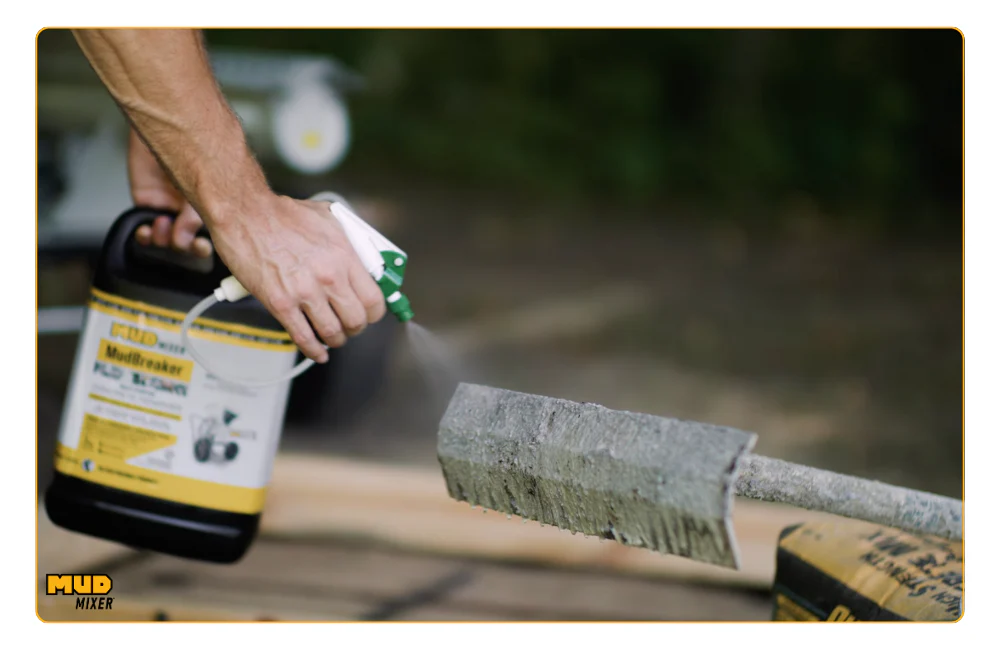
In the heavy-duty world of construction, civil engineering, and masonry, the accumulation of hardened concrete on tools, vehicles, and surfaces is an inevitable challenge. For decades, the industry relied on mechanical force—hammers, chisels, and abrasive grinding—or hazardous mineral acids like hydrochloric (muriatic) acid to manage this buildup. However, as we progress through 2026, the priority has shifted toward methods that preserve the integrity of expensive equipment and adhere to stringent environmental standards. The emergence of specialized concrete dissolver uk solutions has revolutionized this sector, offering a high-performance alternative that balances aggressive cleaning power with material safety and ecological responsibility.
The Chemistry of Concrete Removal: Breaking the Ionic Bond
To understand how a modern dissolver operates, one must first look at the chemical composition of cured concrete. The strength of concrete is derived from a hydration reaction between water and Portland cement, which forms calcium-silicate-hydrate (C-S-H) and calcium hydroxide. This process creates a rigid, crystalline matrix that binds aggregate and sand into a stone-like substance. Traditional acids attack this matrix by causing a violent, exothermic reaction that releases calcium ions, but often at the cost of the underlying surface.
Modern dissolvers, particularly those formulated with organic acids or “acid-alternative” compounds, take a more targeted approach. These solutions work by breaking the ionic bonds that hold the cement paste together. Instead of burning through the material, the chemical penetrates the pores of the concrete and converts the calcium compounds into a soft, water-soluble “mud.” Because these formulas are specifically calibrated to react with the alkaline nature of cement, they remain largely inert when they come into contact with metal, paint, rubber, or glass. This precision ensures that a mixer or a pump truck can be cleaned thoroughly without the risk of corrosion or pitting.
Protecting Capital Assets: The Economic Case for Gentle Dissolution
In the construction industry, tools and machinery represent a significant capital investment. The mechanical removal of concrete—commonly known as “chipping”—often leads to microscopic fractures and surface abrasions on steel and aluminum. Over time, these small damages accumulate, leading to structural weakness and a significant decrease in the asset’s resale value. Furthermore, the use of harsh mineral acids can strip away protective coatings and lead to flash rusting on carbon steel.
By utilizing a high-quality concrete dissolver uk, fleet managers and site supervisors can significantly extend the lifespan of their equipment. These solutions are safe for use on the most delicate parts of a vehicle, including hydraulic lines, chrome fittings, and wiring harnesses. When equipment is maintained with a non-corrosive dissolver, it retains its structural integrity and aesthetic appeal, projecting a professional image for the company. The shift from “destruction-based cleaning” to “chemical dissolution” is not just a technical upgrade; it is a strategic financial move that reduces long-term maintenance costs and tool replacement frequency.
Environmental Stewardship and Site Safety in the Modern Era
The regulatory landscape in the UK has become increasingly focused on the environmental impact of construction runoff. Traditional acid washing creates highly acidic wastewater that can disrupt the pH balance of local soil and watercourses, potentially killing aquatic life and damaging the ecosystem. Dealing with this runoff requires expensive neutralization and disposal protocols to comply with UK environmental regulations.
Advanced concrete dissolvers are typically biodegradable and non-fuming. This means they do not release the choking, acidic vapors associated with muriatic acid, making them much safer for workers in enclosed spaces or underground projects. Moreover, because many of these products are derived from organic sources—such as those utilizing the active ingredients found in molasses or citrus—the runoff is much easier to manage. Utilizing a biodegradable solution aligns a construction firm with modern ESG (Environmental, Social, and Governance) goals, demonstrating a commitment to sustainability that is increasingly required for large-scale public and private tenders.
Versatile Applications: From Shuttering to Paving
While the cleaning of heavy machinery like pump trucks and mixers is the most common use, the versatility of a concrete dissolver extends to almost every corner of the job site. In formwork and shuttering, the buildup of concrete can prevent a perfect seal in future pours, leading to “honeycombing” and other structural defects. A quick application of a dissolver ensures that the shuttering surfaces remain smooth and ready for reuse.
In the world of landscaping and paving, accidental overspray or “slurry tracking” can ruin a high-end stone patio or brick wall. Traditional cleaning methods risk damaging the face of the natural stone or the mortar joints. A liquid dissolver can be applied specifically to the stray concrete, softening it until it can be safely rinsed away with a low-pressure wash. This precision allows for the restoration of finished surfaces that would otherwise have to be replaced at a significant cost.
Best Practices for Maximum Effectiveness
To achieve the best results with a concrete dissolver, the application technique is just as important as the chemical itself. Unlike mechanical removal, which is instantaneous, chemical dissolution is a time-dependent process. The surface must be thoroughly saturated with the product and kept wet for a specified period—usually between 20 and 45 minutes—to allow the active ingredients to penetrate the depth of the concrete layer.
On thick accumulations, it is often more effective to apply the product in layers. Once the top layer has softened into a mud-like consistency, it can be rinsed off, and a second application can be made to the remaining concrete. For vertical surfaces, many modern dissolvers are available in gel or foam formats, which cling to the surface rather than running off, ensuring maximum dwell time. Following these professional protocols ensures that even the most stubborn, aged concrete can be removed without the need for a single hammer blow.
Conclusion: The Future of Construction Hygiene
The construction industry in the United Kingdom continues to evolve toward a future where efficiency, safety, and environmental responsibility are inextricably linked. The days of accepting equipment damage and hazardous fumes as the “price of doing business” are coming to an end. The adoption of specialized concrete dissolver technology represents a maturing of the industry, where we respect the strength of the materials we build with while mastering the science of their removal.
By integrating these advanced solutions into their regular maintenance cycles, companies can protect their staff, their equipment, and the environment. Whether you are maintaining a single van or a massive fleet of mixers, the move to a chemical dissolver is a step toward a more professional, sustainable, and profitable operation. As we look toward the infrastructure challenges of 2026 and beyond, the tools we use to maintain our world will be just as important as the materials we use to build it. Precision, performance, and protection are the new standards of the digital and physical worksite.
