

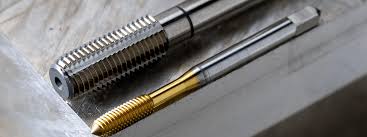
You can buy the best tap money can get, run it on a high-end machine, and still end up with threads that don’t measure right. The cause hides in plain sight – the holder.
People don’t think much about it because it doesn’t cut. But in threading, what holds the tap decides how that tap performs.
Most machinists focus on feeds, speeds, coatings, and cutting fluids. Fair enough, those things matter. But if your holder is not aligned or stable, all those numbers fall apart. It’s like putting racing tires on a car with a bent axle.
Read on to find out the impact of proper tap holders on thread quality.
When geometry gets distorted
A pipe tap holder does more than grip metal. It defines how the tap meets the hole. Any wobble or axial drift changes the way threads form. Imagine trying to cut a spiral groove by hand while the tap keeps pulling at an angle. It’ll still cut, but each pitch will vary slightly. That’s what happens with excessive runout.
Floating holders help when your feed synchronization is not perfect. They let the tap follow its own lead slightly, which helps prevent pitch errors. But in high-precision jobs, especially when the feed is electronically controlled, a rigid holder delivers tighter thread geometry. There’s no single answer here; it depends on how consistent your setup is.
Stability decides life
A dull tap can be the result of a shaking holder. If the tap twists unevenly because of poor grip or vibration, one flute does most of the cutting while the others scrape along. This side dulls faster, and soon you’re replacing tools faster than you should.
A stable holder spreads that load evenly. It absorbs small shocks, keeps torque consistent, and lets the tap last its full life. When your holder is loose or worn, tool life drops quietly. It doesn’t fail dramatically but fades out faster with every part.
The silent role of torque control
Torque is one of those things nobody talks about until something breaks. But it’s the first place things go wrong when you’re tapping tough material. If the holder transmits torque unevenly, you’ll feel that jump like the spindle jerks mid-cut.
Modern holders can regulate torque with clutch systems or adjustable slip points. This bit of engineering prevents sudden spikes, which saves both tap and thread. It’s not a flashy feature; in fact, it gives smooth operation.
Coolant and chip flow are important, too
Chip evacuation is one of those hidden influencers on thread finish. Holders that block coolant paths or trap chips can make even a perfect tap cut like garbage. Especially with blind holes, chips pile up fast and jam the flutes.
Some holders are built with internal coolant delivery that hits the flutes directly. This alone can change the finish from rough to mirror-clean. The difference shows up not just in appearance but in how easily the gauge goes through.
When alignment is imperfect
Every machine shop has alignment issues, even if nobody admits it. Maybe the spindle’s slightly off, or maybe the workholding isn’t perfectly true. Whatever the reason, a good tap holder can quietly compensate for that error.
Tension–compression or self-aligning holders give the tap just enough freedom to follow the hole. Without that, the tap bends slightly as it enters, producing threads that wander off-center. The part still looks fine, but the micrometer tells a different story.
And the worst part is, misalignment also stresses the tap unevenly. It might not break today, but it’s wearing in strange places.
Looking beyond runout
Runout is the number everyone measures, but it’s not the whole story. You can have a holder with perfect concentricity and still get poor threads because torque transmission or axial float might be inconsistent.
If the tapping sound fluctuates or the torque meter jumps, something’s off in the holder’s balance. It’s worth checking before you blame the tap.
Keep the holder healthy
Holders wear down, and not always in ways you can see. Dirt, oil residue, and micro scratches on the gripping surface all add up. After a while, the precise fit loosens. At this point, clean them, check them. And replace worn parts before they start affecting the cut.
Skipping maintenance saves time for a week and costs money for months. Threads will start coming out a bit rougher, tolerances will shift slightly, and now you’re chasing issues that look random but aren’t.
Conclusion
Thread quality has always been blamed on the tap, the coolant, or the operator. But sometimes, it’s the holder that quietly decides the outcome. It’s where geometry, torque, and alignment all meet.
A proper holder keeps the entire threading process balanced. If you get that right, you stop fighting surprises. You get clean, repeatable threads that pass inspection without drama, and that’s what good machining really feels like.
