

A sudden breakdown of your garage door can instantly disrupt your day, leaving your vehicle trapped inside or your home exposed to security risks. For most homeowners, the garage door is the primary entry point to the home, making any operational failure a significant inconvenience. Understanding the common reasons behind an malfunctioning door helps you determine whether a simple fix will resolve the issue or if it is time to seek assistance from trained technicians.
When your door refuses to move, identifying the root cause quickly is crucial for maintaining both convenience and household safety. Many issues stem from everyday wear and tear, electrical disruptions, or mechanical misalignment. Partnering with a reliable professional for garage door repair ensures that complex components are handled safely and restored to peak operating condition. Titan Garage Doors provides comprehensive solutions designed to address these urgent issues efficiently and effectively.
Power Supply and Remote Control Issues
Before assuming the worst about your garage door system, it is wise to start with the simplest explanations. A surprisingly large percentage of service calls involve basic electrical disruptions or minor remote control glitches.
First, check the power outlet to which your garage door opener is connected. A tripped circuit breaker, a blown fuse, or an accidentally unplugged cord will prevent the opener motor from receiving power. Inspect your home’s main electrical panel and check any Ground Fault Circuit Interrupter outlets in the garage that may have tripped.
If the opener unit itself has power, but the remote control fails to activate the door, the issue often lies within the remote or keypad. Dead batteries are the most frequent culprit, but signal interference or a corrupted code between the remote and receiver can also disrupt communication. Try operating the door using the wall-mounted switch inside the garage. If the wall switch works seamlessly, replacing the remote batteries or reprogramming the remote will likely resolve the issue.
Photo-Eye Sensor Misalignment
Modern automated garage doors are equipped with photo-eye safety sensors positioned on either side of the door opening, usually a few inches above the floor. These sensors project an invisible infrared beam across the entrance to prevent the door from closing on people, pets, or vehicles.
If these sensors become misaligned, dirty, or blocked by debris, the garage door opener will refuse to close the door and may cause it to reverse immediately after starting to lower. Look closely at the small indicator lights on each sensor. If one light is flickering or completely off, the sensors are out of alignment or obstructing objects are present.
Cleaning the lenses with a soft cloth and gently adjusting the brackets until both indicator lights shine steadily can resolve the problem. However, if the wiring connecting the sensors to the main opener unit is damaged, standard DIY adjustments may not suffice, requiring professional assessment from Titan Garage Doors to ensure your safety system functions properly.
Broken Torsion or Extension Springs
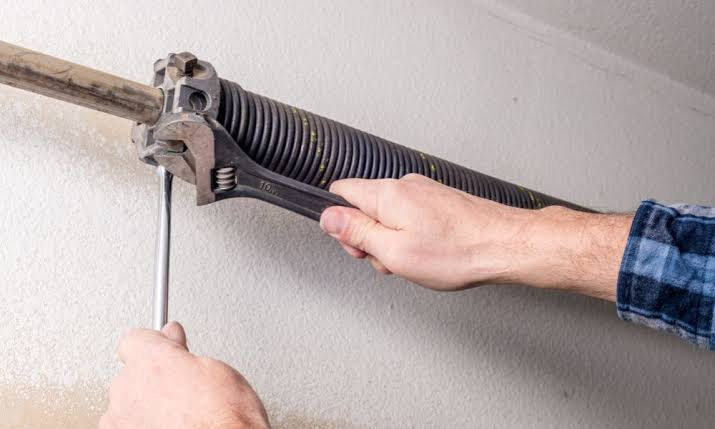
The springs are arguably the most critical and heavily taxed components of your entire garage door assembly. Contrary to popular belief, it is the springs, not the electric motor, that do the heavy lifting when raising the door. Garage door springs are rated for a specific number of cycles, typically ranging between 10,000 and 20,000 operations, after which metal fatigue inevitably causes them to snap.
When a torsion spring breaks, you may hear a loud bang resembling a firecracker or gunshot coming from your garage. If you attempt to open the door with a broken spring, the opener motor will strain, whine, or fail entirely because it cannot lift the full weight of the heavy door. Inspect the spring mounted horizontally above the top of the door frame or the extension springs running alongside the upper tracks. If you see a visible gap in the coils, the spring is broken.
Attempting to repair or replace garage door springs without proper training and specialized equipment is extremely dangerous. These components store immense mechanical tension and can cause severe physical injury if released incorrectly. Homeowners should immediately contract expert garage door repair to replace broken springs safely and restore balanced operation.
Snapped or Off-Track Lifting Cables
Working alongside the high-tension springs are the garage door lifting cables. These heavy-duty steel cables attach to the bottom brackets of the door panel and wrap around drums at the top corners, transferring the spring force necessary to raise and lower the assembly smoothly.
Over time, constant friction, moisture exposure, and general wear can cause lifting cables to fray, rust, or snap entirely. If a cable breaks or slips off its drum, the door will lose balance immediately. Attempting to operate a door with a snapped cable can cause the entire structure to jam diagonally in the tracks, bending the panels and damaging the track mechanism.
If you observe slack cables dangling near the sides of your door frame or notice that the door is hanging unevenly, refrain from using the automatic opener. Continuing to operate a compromised door increases the likelihood of catastrophic failure, risking structural damage and injury. The experienced team at Titan Garage Doors can rapidly realign cables, replace worn lines, and balance the weight distribution of your system.
Track Misalignment and Roller Obstructions
For your garage door to travel up and down effortlessly, the rollers attached to the panels must glide smoothly within the vertical and horizontal steel tracks. If the tracks become bent, dented, or misaligned, the rollers will bind, preventing the door from opening or closing completely.
Track issues often arise from accidental impacts, such as a vehicle gently bumping the track, or from loose mounting brackets holding the tracks to the wall framing. Over time, household debris, dirt, and dried grease can accumulate inside the tracks, creating physical obstructions that stall the rollers mid-travel.
Regular maintenance, such as wiping down the interior of the tracks and lubricating worn steel or nylon rollers, helps prevent bind-ups. However, if the tracks themselves are noticeably bent or out of plumb, forcing the door to operate can derail the rollers entirely. Professional technicians utilize precise alignment tools to straighten tracks and ensure secure attachment to structural studs.
Stripped Opener Gears or Motor Failure
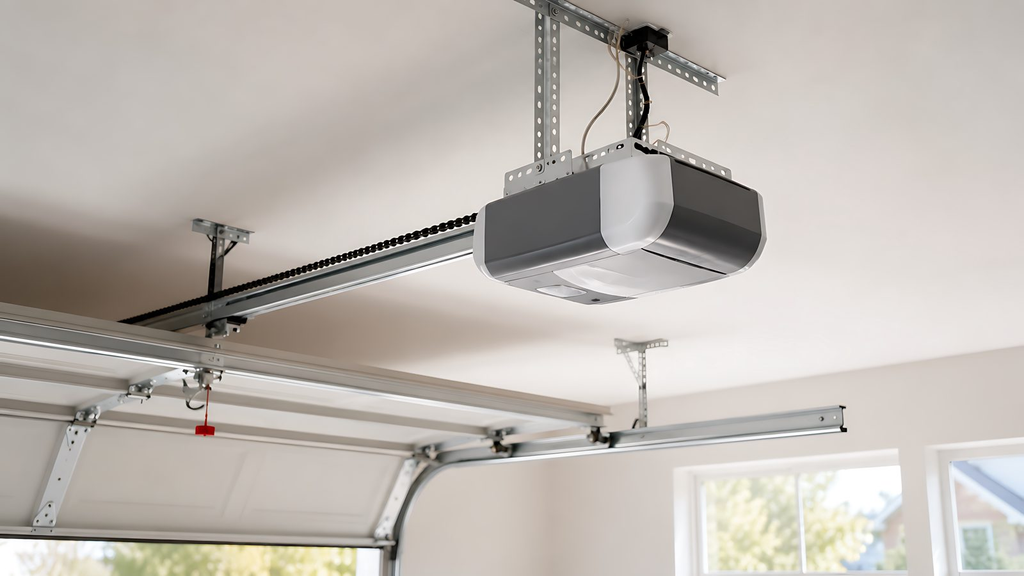
When the motor runs and hums loudly but the garage door remains stationary, the internal drive mechanism inside the opener unit may be damaged. Most residential openers rely on plastic drive gears to transfer power from the electric motor to the chain, belt, or screw drive.
Over years of continuous use, or when forced to lift an unbalanced door with failing springs, these internal gears can strip, ground down, or crack. When this occurs, the motor will spin freely without moving the drive assembly, resulting in a distinct whirring sound without any corresponding door movement.
In addition to gear wear, electric motors can suffer from burned-out circuit boards, failed capacitor units, or internal thermal overload failures. If your opener unit is older or has suffered severe mechanical stress, investing in comprehensive garage door repair or upgrading to a modern, energy-efficient model with modern safety features is the best path forward. Titan Garage Doors evaluates opener health to recommend cost-effective repairs or modern replacement options tailored to your needs.
Emergency Release Cord Engaged
Every automated garage door system features an emergency manual release mechanism, typically indicated by a red cord dangling from the opener carriage on the central track. Pulling this cord disconnects the garage door from the motor drive carriage, allowing the door to be opened and closed manually during power outages or emergencies.
Occasionally, the release cord is pulled accidentally by someone snagging a ladder, moving storage boxes, or bumping the cord. When the emergency release is engaged, the opener motor will run normally when activated by remote or wall switch, but the door will stay parked in place on the floor.
To reconnect the door to the automatic drive, manually lift or lower the door panel until the trolley mechanism snaps back into engagement with the opener carriage. Once re-latched, operating the opener will resume normal automated opening and closing cycles.
Partnering with Titan Garage Doors
While basic troubleshooting steps like swapping batteries or removing track obstructions can be performed independently, the vast majority of garage door operational failures involve high-tension hardware and complex electrical systems. Attempting extensive DIY repairs without proper expertise poses considerable safety risks and often leads to more costly structural damages down the line.
Titan Garage Doors is dedicated to providing prompt, professional, and reliable garage door solutions for homeowners and commercial property owners alike. From urgent spring replacements and cable realignments to complete opener system overhauls, our qualified technicians diagnose issues accurately and restore smooth operation safely. Regular preventative maintenance performed by trained professionals extends the lifespan of your equipment, improves home security, and keeps your garage door operating reliably year-round.
Frequently Asked Questions
Why is my garage door making a grinding noise when I try to open it?
A loud grinding noise usually indicates stripped drive gears inside the opener unit, dry or worn-out rollers, or unlubricated springs. Titan Garage Doors recommends inspecting these parts immediately, as continuing to run the motor can cause permanent opener damage.
Can I open my garage door manually if the power goes out?
Yes, you can pull the red emergency release cord attached to the opener carriage to disconnect the door from the motor. Titan Garage Doors advises ensuring the door is fully closed before pulling the release cord to prevent an unbalanced door from falling rapidly.
How do I know if my garage door spring is broken?
A broken spring often makes a loud bang when it snaps and leaves a visible gap in the coils above or beside the door. Titan Garage Doors warns against attempting to operate or repair a door with a broken spring due to extreme weight and safety risks.
Why does my garage door start to open and then immediately stop?
This behavior is frequently caused by misaligned photo-eye safety sensors, excessive track friction, or incorrect travel limit settings on the opener. Titan Garage Doors can realign sensors and adjust operational settings to ensure uninterrupted opening cycles.
How often should I schedule professional maintenance for my garage door?
It is best practice to schedule professional inspection and maintenance at least once a year. Titan Garage Doors provides thorough checks on spring tension, cable integrity, roller wear, and safety systems to prevent unexpected operational failures.
