

Introduction:
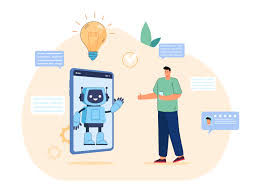
Voice-activated AI chatbots are revolutionizing the way we interact with technology. They offer a seamless, hands-free experience that is transforming customer service, personal assistance, and many other sectors. However, while the potential is vast, there are significant challenges to be addressed. This blog explores the potential and challenges of voice-activated AI chatbots, providing a comprehensive overview of their impact and future prospects.
The Rise of Voice-Activated AI Chatbots:
Voice-activated AI chatbots have seen rapid adoption in recent years, driven by advancements in natural language processing (NLP) and machine learning. Devices like Amazon’s Alexa, Google Assistant, and Apple’s Siri have become household names, providing users with a convenient way to perform tasks, access information, and control smart home devices. This rise can be attributed to several factors:
User Convenience: “Voice commands offer a more natural and intuitive way to interact with technology, especially for tasks that require multitasking or hands-free operation”. Says Scott Trachtenberg, CEO of ADA Site Compliance
Technological Advancements: Improvements in speech recognition and NLP have made voice-activated chatbots more accurate and responsive, enhancing user experience.
Integration with IoT: “Voice-activated chatbots are increasingly integrated with Internet of Things (IoT) devices, allowing users to control their environment with simple voice commands”. Says Jay Barton, Founder and CEO at ASRV
Potential Applications of Voice-Activated AI Chatbots:
Voice-activated AI chatbots have a wide range of applications across various industries. Here are some of the most promising areas:
Customer Service: “Voice-activated chatbots can handle customer inquiries, provide support, and assist with troubleshooting. They can operate 24/7, offering immediate responses and reducing the need for human intervention”. Says, Maxime Bouillon, Co-founder of Archie.
Healthcare: In the healthcare sector, voice-activated chatbots can assist patients by providing medical information, scheduling appointments, and even offering remote monitoring for chronic conditions.
E-commerce: “E-commerce platforms can leverage voice-activated chatbots to enhance the shopping experience. Customers can search for products, place orders, and track deliveries using voice commands”. Says, Dave Koval, chief operating officer (COO) of Synergy Sobriety Solutions
Education: Voice-activated chatbots can act as personal tutors, helping students with their studies, answering questions, and providing educational content.
Smart Homes: “Voice-activated chatbots are central to smart home ecosystems, enabling users to control lighting, temperature, security systems, and other devices through voice commands”. Says, Kartik, Marketing Manager, portaparty
Workplace Productivity: In professional settings, voice-activated chatbots can schedule meetings, set reminders, manage tasks, and provide real-time information, boosting productivity and efficiency.
The Technical Challenges:
While the potential of voice-activated AI chatbots is immense, several technical challenges need to be addressed to fully realize their capabilities:
Speech Recognition Accuracy: “Despite advancements, accurately recognizing and interpreting human speech remains a significant challenge. Accents, dialects, background noise, and speech impediments can affect the performance of voice-activated chatbots”. Says, Sam Arthur, Head of Marketing at Our PCB
Natural Language Understanding: Understanding the context and nuances of human language is complex. Voice-activated chatbots need to accurately interpret user intent and provide relevant responses, which requires sophisticated NLP algorithms.
Data Privacy and Security: “: Voice-activated chatbots often process sensitive information, raising concerns about data privacy and security. Ensuring that user data is protected and compliant with regulations is crucial”. Says George Smith, Marketing Manager at Infisim
Continuous Learning and Adaptation: Voice-activated chatbots must continuously learn from interactions to improve their performance. Implementing effective machine learning models that adapt to user preferences and behaviors is essential for providing a personalized experience.
The Human Element:
Integrating voice-activated AI chatbots into daily life involves more than just technical solutions. The human element plays a critical role in their acceptance and effectiveness:
User Trust and Adoption: “Building user trust is essential for widespread adoption. This involves ensuring that voice-activated chatbots are reliable, secure, and respectful of user privacy. Transparency about how data is used and stored can help build trust”. Says, Alain Abuafya, CEO at My Digital Planner
User Experience Design: Designing an intuitive and user-friendly interface is vital. Voice-activated chatbots should understand natural language, respond promptly, and handle errors gracefully to provide a positive user experience.
Cultural Sensitivity: “Voice-activated chatbots should be designed to understand and respect cultural differences. This includes recognizing diverse languages, dialects, and cultural norms to ensure inclusivity and accessibility”. Says, Rudy Bush, Founder at Wiringgerman
Ethical Considerations: Developers must consider the ethical implications of voice-activated AI chatbots, including issues related to bias, discrimination, and fairness. Ensuring that these technologies are developed and deployed ethically is critical for their long-term success.
The Future of Voice-Activated AI Chatbots:
Looking ahead, the future of voice-activated AI chatbots appears promising, with several trends and developments on the horizon:
Advanced Personalization: “Future voice-activated chatbots will offer more personalized experiences by learning from user interactions and preferences. This will enable them to provide tailored recommendations and responses”. Says, Jamie Frew CEO, of Carepatron
Multilingual Capabilities: As globalization continues, voice-activated chatbots will need to support multiple languages and dialects. Advanced NLP models will facilitate accurate translation and interpretation, breaking down language barriers.
Integration with Emerging Technologies: Voice-activated chatbots will increasingly integrate with emerging technologies such as augmented reality (AR), virtual reality (VR), and blockchain. This will open up new possibilities for immersive and secure interactions.
Enhanced Context Awareness: “Future voice-activated chatbots will have improved context awareness, enabling them to understand and respond to complex queries more effectively. This will involve advancements in machine learning and NLP algorithms”. Says, Gen Yan, Founder of HoneyChat.
Proactive Assistance: Instead of merely responding to commands, future voice-activated chatbots will proactively assist users by anticipating their needs and providing relevant information or actions.
Collaborative AI: Voice-activated chatbots will collaborate with other AI systems and digital assistants to provide a seamless and interconnected user experience. This will involve sharing information and coordinating actions across multiple platforms.
Conclusion:
Voice-activated AI chatbots represent a significant advancement in technology, offering numerous benefits across various industries. They have the potential to revolutionize customer service, healthcare, e-commerce, education, and more. However, several technical challenges and human factors need to be addressed to fully realize their potential. By focusing on improving speech recognition, natural language understanding, data privacy, and user experience, we can pave the way for a future where voice-activated AI chatbots are an integral part of our daily lives. As technology continues to evolve, the possibilities for these intelligent assistants are endless, promising a more convenient, efficient, and personalized future.
