

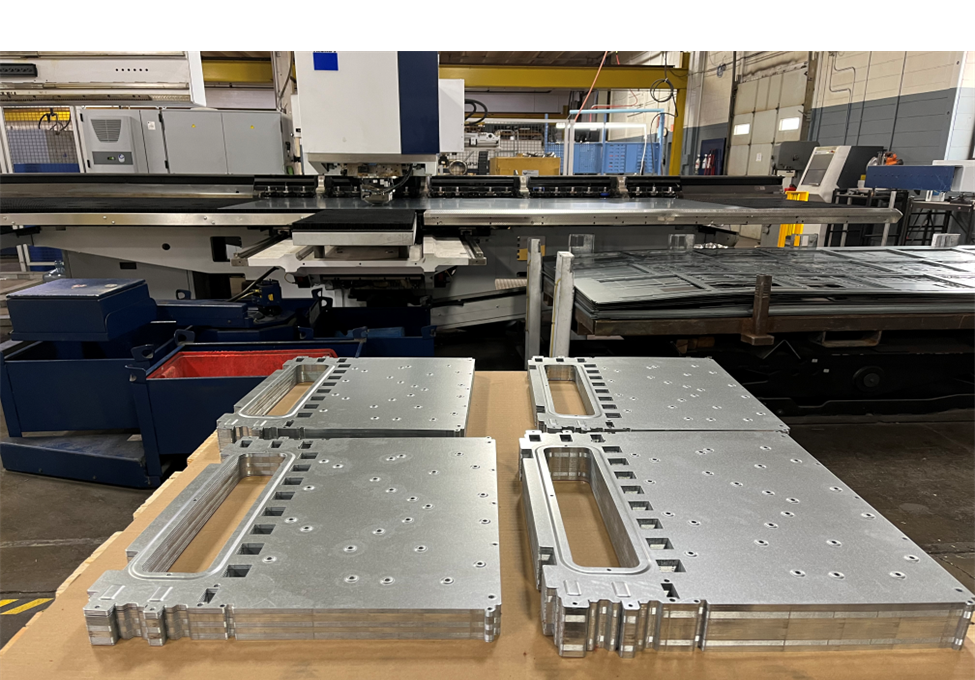
The industrial world is built on a foundation of shaped and joined metal. From the intricate brackets holding modern electronics together to the massive ventilation systems in commercial skyscrapers, the processes involved in transforming flat metal sheets into complex, functional components are both an art and a rigorous science. In the manufacturing sector of 2026, the demand for high-tolerance, durable, and aesthetically finished metalwork has never been greater. Navigating the journey from a raw material to a finished product requires a deep understanding of metallurgy, precision engineering, and logistical coordination. For businesses looking to bring a product to market, mastering the nuances of sheet metal fabrication and assembly is the difference between a successful launch and a costly engineering failure. This integrated approach to manufacturing ensures that every part is not only shaped to perfection but also seamlessly integrated into its final form, providing a “end-to-end” solution for modern industry.
The Architectural Phase: Design for Manufacturability
The success of any metal project begins long before the first spark of a laser or the strike of a punch press. It begins in the digital realm of Computer-Aided Design (CAD). Design for Manufacturability (DFM) is a philosophy that ensures a part is optimized for the fabrication process, reducing waste, lowering costs, and ensuring structural integrity. During this phase, engineers must account for “bend allowance”—the amount of metal that stretches when it is folded—and the specific properties of the chosen alloy. Whether it is the lightweight versatility of aluminum, the corrosion resistance of stainless steel, or the structural strength of mild steel, each material behaves differently under stress.
By utilizing advanced 3D modeling, designers can simulate the entire fabrication process, identifying potential “interference” issues where parts might collide during assembly or where a bend might be too sharp for the material to handle without cracking. This phase is critical because an error caught on a screen costs nothing, whereas an error caught on the factory floor can result in scrapped material and delayed timelines. A professional fabrication partner works closely with the client at this stage to refine the design, ensuring that the final physical component matches the digital vision with microscopic accuracy.
The Cutting Edge: Precision Material Removal
Once the design is finalized and the material is selected, the fabrication process begins with cutting. The goal is to transform a large, flat sheet into a series of precise “blanks” that will form the basis of the component. In the modern era, fiber laser cutting has become the dominant technology. Using a highly concentrated beam of light, these machines can cut through thick steel with a precision measured in microns, leaving behind a clean, burr-free edge that often requires no further finishing. This speed and accuracy allow for complex geometries and intricate patterns that would be impossible with traditional mechanical shearing.
For projects requiring high-volume production of simpler shapes, CNC punching remains a vital tool. A CNC punch press can not only cut shapes but also create features like dimples, louvers, and threads in a single operation. This “multi-tasking” capability reduces the number of times a part must be handled, which is a key factor in maintaining cost-efficiency. The choice between laser and punch often comes down to the complexity of the part and the volume of the production run, but both methods share a common goal: creating a perfect starting point for the subsequent bending and forming stages.
The Art of the Fold: CNC Folding and Press Braking
The transition from a flat 2D blank to a 3D structure occurs at the press brake. This is perhaps the most critical stage of the fabrication process, requiring a blend of mechanical power and operator expertise. CNC folding machines use a set of dies to apply thousands of pounds of pressure to the metal, bending it to specific angles with incredible repeatability. Modern press brakes are equipped with “angle-tracking” sensors that measure the bend in real-time, automatically adjusting the pressure to account for “spring-back”—the tendency of the metal to partially return to its original shape after the pressure is released.
The complexity of modern enclosures and chassis often requires a series of intricate bends in a specific sequence. If the sequence is wrong, the part may become “trapped” in the machine or the flange may collide with the tooling. This is where the digital simulation from the design phase pays dividends. By following a pre-visualized bending program, the operator can ensure that every fold is executed in the correct order, maintaining the dimensional accuracy required for the assembly phase. This stage is where the “form” of the product truly takes shape, turning a simple plate into a structural housing or a decorative panel.
Joining the Pieces: Welding and Mechanical Fastening
Fabrication is rarely the end of the story; most components are part of a larger system that requires joining. The choice of joining method depends on the required strength, the material type, and the desired aesthetic. Tungsten Inert Gas (TIG) welding is often the preferred choice for stainless steel and aluminum, offering a high level of control and a visually appealing “stacked coin” finish. For high-strength structural joints in mild steel, Metal Inert Gas (MIG) welding provides a faster, more robust solution.
In addition to welding, mechanical fastening plays a massive role in modern assembly. This includes the use of “self-clinching” fasteners, which are pressed into the metal to provide a permanent, high-torque thread. This allows for the easy assembly and disassembly of the product in the field—a vital feature for electronics enclosures or automotive components. Spot welding and structural adhesives are also increasingly common, particularly in the aerospace and electric vehicle sectors, where reducing weight while maintaining joint integrity is a primary engineering objective. The goal of the joining phase is to create a unified structure that can withstand the vibrations, stresses, and environmental conditions it will face during its service life.
The Final Flourish: Surface Finishing and Aesthetics
A metal component is not finished until it is protected. Raw metal is susceptible to oxidation, corrosion, and physical wear. Surface finishing is the final stage that provides both the protection and the aesthetic identity of the product. Powder coating is the industry standard for most commercial applications, providing a durable, thick layer of plastic-like finish that is resistant to chipping and scratching. The process involves applying a dry powder electrostatically and then “baking” it in an oven to create a hard, uniform skin.
For products destined for harsh environments, chemical finishes like galvanizing, anodizing, or passivating provide a molecular level of protection. Anodizing is particularly popular for aluminum, as it hardens the surface and allows for the introduction of vibrant colors that are “locked” into the metal itself. Beyond protection, finishing can also involve “graining” or polishing the metal to a mirror-like shine. This attention to detail is what separates a functional industrial part from a premium consumer product. The finishing stage ensures that the component remains as functional and attractive in ten years as it is on the day it leaves the factory.
The Logic of Integrated Assembly and Logistics
The true value of a modern manufacturing partnership lies in the integration of fabrication and final assembly. Instead of receiving a box of loose parts that must be organized and joined by an in-house team, many companies now opt for a “box-build” service. This means the fabrication partner handles the entire process: cutting, folding, welding, finishing, and the final assembly of sub-components, including the integration of gaskets, hinges, and even electrical wiring.
This “one-stop-shop” approach significantly reduces the complexity of the supply chain. It eliminates the “blame game” between different suppliers if a part doesn’t fit, as the single partner is responsible for the final outcome. It also reduces shipping costs and lead times, as the product moves seamlessly from one stage of production to the next within the same facility. In a world of “just-in-time” manufacturing, the ability to receive a completed assembly that is ready for the production line is a massive competitive advantage. It allows the client to focus on their core competencies—innovation and marketing—while the fabrication partner handles the “heavy lifting” of the physical build.
Conclusion: Engineering the Future of Industry
Sheet metal manufacturing is the backbone of our technological society. As we look toward a future defined by electric mobility, renewable energy infrastructure, and advanced robotics, the demand for precision-engineered metalwork will only continue to grow. The transition from a flat sheet to a complex, finished assembly is a journey of thousands of precise steps, each dependent on the success of the one before it.
By embracing advanced technology, sustainable practices, and an integrated approach to fabrication and assembly, manufacturers are ensuring that they can meet the challenges of 2026 and beyond. A high-quality metal component is more than just a piece of hardware; it is the result of collaborative design, technical mastery, and a commitment to excellence that spans the entire production cycle. Whether it is a single prototype or a high-volume production run, the core principles of precision and performance remain the same. The future of industry is being shaped, folded, and joined today, one sheet of metal at a time. Through the synergy of human expertise and machine accuracy, we are building a more resilient, efficient, and beautiful world.
