

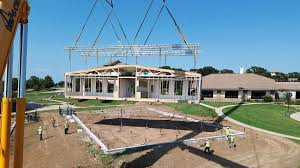
In the rapidly evolving landscape of modern education, the physical environment in which students learn has become as critical as the curriculum itself. As school populations continue to grow and educational requirements shift toward more flexible, collaborative learning spaces, traditional brick-and-mortar construction often struggles to keep pace. The challenges of lengthy construction timelines, significant site disruption, and skyrocketing costs have led educational authorities to seek more innovative solutions. Enter the modular school classroom, a sophisticated, high-performance alternative that is redefining how we think about school design and delivery in 2026. This method of off-site construction is no longer a temporary “stop-gap” measure but a permanent, sustainable, and technologically advanced solution that offers unprecedented benefits to students and educators alike.
The Evolution of Off Site Construction in Education
Historically, the concept of a portable or temporary classroom was often associated with poorly insulated, uninspiring “portacabins” that were tucked away at the edge of a school field. However, the modern modular industry has undergone a radical transformation. Today’s modular buildings are engineered to the same—and often higher—standards as traditional structures. By utilizing precision manufacturing techniques in a controlled factory environment, builders can achieve a level of airtightness, thermal efficiency, and structural integrity that is difficult to replicate on a traditional, exposed building site.
The transition to modularity represents a shift in philosophy. Instead of fitting a school’s needs into a rigid, permanent structure, the building is designed to adapt to the school. These classrooms are built as individual modules which are then transported to the site and assembled. This process allows for a level of quality control that is virtually unmatched, as every component is inspected under factory conditions before it ever leaves the facility. The result is a learning space that is not only robust and durable but also aesthetically indistinguishable from a traditionally built school, featuring modern finishes, expansive glazing, and integrated technology.
Minimising Disruption to the Learning Environment
One of the most significant advantages of choosing a modular approach is the dramatic reduction in on-site construction time. In a traditional build, a school might have to contend with heavy machinery, noise, dust, and restricted access for eighteen months or more. This is naturally detrimental to the concentration of students and the logistical flow of the school day. Modular construction solves this by moving approximately 80% to 90% of the building process into the factory.
While the modules are being manufactured, the on-site groundworks can be completed simultaneously. Once the site is ready, the delivery and installation of a modular school classroom can often be completed in a matter of weeks, or even days, often scheduled during half-terms or summer holidays to ensure zero impact on the students. This “rapid deployment” capability is a game-changer for schools facing sudden surges in pupil numbers or those needing to replace aging infrastructure quickly without the trauma of a live construction site.
Enhancing Student Well Being through Biophilic Design
Modern educational theory places a heavy emphasis on the “third teacher”—the environment. The design of a modular classroom today prioritizes factors such as natural light, acoustic performance, and indoor air quality. Large, high-performance windows are a standard feature, ensuring that learning spaces are flooded with daylight, which has been scientifically proven to improve focus and regulate the circadian rhythms of both children and teachers.
Furthermore, modular buildings excel in acoustic insulation. Because each module is constructed as a separate unit with its own structural frame, there is a natural break in sound transmission between rooms. This creates a quiet, calm atmosphere that is essential for students with sensory sensitivities and for the general reduction of stress in a busy school day. The use of non-toxic, sustainable materials also ensures a healthy indoor climate, free from the volatile organic compounds (VOCs) that can sometimes plague traditional new builds. By creating a space that feels natural and comfortable, schools can foster a sense of belonging and well-being that directly translates into better academic outcomes.
Flexibility and Scalability for a Growing Population
The demographic needs of a community are rarely static. A neighborhood that requires a two-form entry primary school today might need a four-form entry in five years. Traditional buildings are notoriously difficult and expensive to extend, often requiring disruptive “knock-throughs” and structural reinforcements. Modular classrooms, by their very nature, are designed for scalability.
Because the buildings are composed of standardized modules, adding a new wing or a second story is a relatively straightforward process. This flexibility allows school governors to plan for the future with confidence, knowing that their infrastructure can grow alongside their community. This “plug-and-play” capability also extends to the interior layout. Internal partitions can often be reconfigured to create larger open-plan collaborative spaces or smaller, focused intervention rooms as educational trends evolve. In an era of economic uncertainty, the ability to invest in a building that can change its function over time is a powerful financial and operational benefit.
Sustainability and the Path to Net Zero
The construction industry is one of the largest contributors to global carbon emissions and landfill waste. Traditional sites often result in significant material over-ordering and waste due to weather damage or on-site errors. Modular construction is inherently more sustainable. The precision of factory manufacturing means that material requirements are calculated to the millimeter, virtually eliminating waste. Any offcuts that do occur are easily recycled within the factory setting.
Moreover, the energy performance of modular classrooms is exceptional. They are designed with high-performance insulation and low-energy lighting and heating systems as standard. Many modular providers now offer “Net Zero Carbon” buildings that incorporate solar panels, air-source heat pumps, and advanced heat recovery ventilation systems. For schools, this doesn’t just mean a lower carbon footprint; it means significantly lower utility bills. At a time when school budgets are under constant pressure, the long-term operational savings of an energy-efficient modular building are as attractive as the initial speed of construction.
Cost Predictability and Financial Transparency
Traditional construction projects are famous for “scope creep” and unexpected costs. Ground conditions, weather delays, and labor shortages can all send a project over budget. Modular construction offers a much higher degree of financial certainty. Because the building is designed and priced in a controlled environment, the quotes provided are much more accurate and less prone to fluctuation.
For local authorities and academy trusts, this predictability is essential for effective capital planning. Knowing that a project will be delivered on time and on budget allows for better resource allocation across a whole portfolio of schools. When you combine the reduced preliminary costs of a shorter site presence with the lower long-term maintenance costs of high-quality factory finishes, the “total cost of ownership” for a modular building is often significantly lower than its traditional counterpart.
Conclusion: A Permanent Solution for Modern Education
The modular school classroom has moved past its reputation as a temporary fix and established itself as a premier choice for 21st-century educational infrastructure. By combining speed, quality, sustainability, and flexibility, it addresses the most pressing challenges facing the education sector today. These buildings provide a vibrant, healthy, and inspiring environment where children can thrive and teachers can deliver their best work.
As we look toward the future, the integration of smart-building technology and even more advanced sustainable materials will continue to push the boundaries of what modularity can achieve. For schools looking to expand or modernize, the question is no longer whether modular construction is a viable option, but rather how quickly they can harness its benefits to create the learning environments that the next generation deserves. The choice for modularity is a choice for resilience, efficiency, and, ultimately, the future of the students themselves. By investing in high-quality, permanent modular buildings, we are ensuring that our educational infrastructure is as dynamic and forward-thinking as the young minds it is designed to nurture.
