

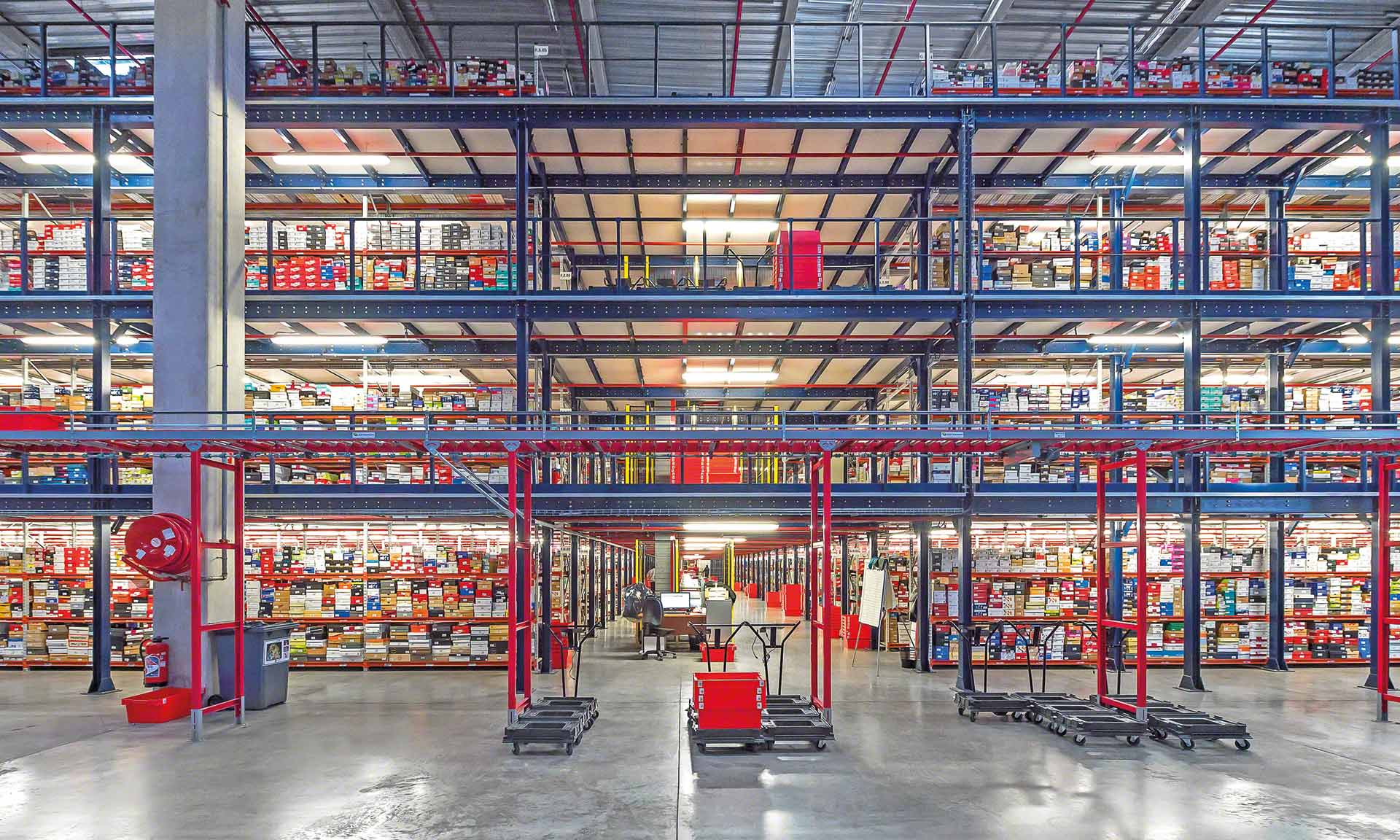
As industrial operations navigate the complexities of 2026, the demand for flexible, high-performance workspace solutions has reached a critical peak. Gone are the days when a warehouse was merely a static shell for storage; today, these facilities are multi-functional hubs where picking, packing, light assembly, and administrative tasks occur simultaneously under one roof. Central to this transformation is the strategic use of warehouse partitions, which have evolved from simple dividers into sophisticated tools for environmental control, safety, and logistical optimization. By moving away from permanent masonry in favor of modular and flexible partitioning, businesses can adapt to shifting market demands without the prohibitive costs of structural renovation.
The Shift Toward Modular and Flexible Layouts
A foundational requirement for industrial facilities in 2026 is adaptability. Market volatility and rapid SKU turnover mean that a warehouse layout that is efficient today may become a bottleneck by next quarter. Modern partitioning systems address this by offering “demountable” designs that allow operators to reconfigure work zones as their fulfillment strategies evolve. Unlike permanent walls, these modular solutions can be extended, retracted, or entirely relocated to accommodate new machinery, increased inventory, or seasonal labor surges.
This flexibility is particularly vital for manufacturers who are redefining automation. In 2026, the trend has shifted toward execution-level automation—integrating task engine distributors and mobile robotics with existing human workflows. Flexible partitioning allows for the creation of clearly defined “travel paths” for Autonomous Mobile Robots (AMRs) and safe “exclusion zones” for personnel, ensuring that technology and people can collaborate without physical or operational interference.
Environmental Control and Energy Efficiency
One of the most significant advantages of modern partitioning is the ability to create precise environmental zones within a large, open facility. For industries such as food processing, pharmaceuticals, and electronics, maintaining strict control over temperature and humidity is a regulatory and financial necessity. Warehouse partitions act as thermal and physical barriers that isolate sensitive stock from ambient fluctuations and cross-contamination.
By dividing a vast warehouse into smaller, climate-controlled “micro-zones,” businesses can significantly reduce their energy consumption. Targeted heating and cooling in occupied or sensitive areas are far more cost-effective than attempting to regulate the temperature of an entire high-bay facility. Furthermore, in the UK, new energy-intensive industry relief regulations introduced in April 2026 offer increased support for facilities that demonstrate high levels of energy efficiency, making partitioned environmental control a core component of both fiscal and ecological strategy.
Combatting Dust and Operational Contamination
Dust contamination—originating from material handling, vehicle movement, and packaging processes—is a persistent threat to both product integrity and worker health. Without physical separation, airborne particles can travel freely throughout a facility, damaging sensitive electronic components or contaminating food-grade storage. Modular partition systems provide an airtight or mesh-based solution to contain dust at the source.
In 2026, many partitioning systems are integrated with localized extraction and pressure differential systems. This combination ensures that dusty production areas remain under negative pressure, preventing contamination from escaping into clean packing or office zones. These systems are essential for meeting the stringent UK REACH chemical regulatory standards, which emphasize the restriction of dangerous substances and the maintenance of a safe working environment.
Workplace Safety and Regulatory Compliance
Health and safety officers now view partitioning as a primary tool for risk mitigation. Clearly defined physical boundaries separate high-traffic forklift lanes from pedestrian walkways, reducing the likelihood of collisions—a critical concern as facilities become more crowded and fast-paced. These partitions also provide acoustic insulation, protecting administrative staff and machine operators from the excessive noise pollution inherent in heavy industrial work.
Compliance with the latest safety playbooks, such as the 2026 Warehouse Rack Safety standards, requires more than just careful racking; it requires a holistic approach to site transport and manual handling. Partitioning helps enforce geofencing for restricted areas and ensures that emergency exits and escape routes remain unobstructed and clearly marked. By creating intentional zones, managers can ensure that “Visual Zoning” (for collaborative areas) and “Physical Separation” (for hazardous or sterile areas) are strictly maintained.
Choosing the Right Partitioning System
The choice of material for an industrial partition depends largely on the specific operational requirement. Modern facilities typically choose between several distinct types:
- Steel Mesh Partitions: Ideal for secure storage where visibility and airflow are essential. These are often used for high-value inventory that requires monitoring via CCTV while remaining accessible to the warehouse management system (WMS).
- Double Skin Steel Partitions: The best choice for creating quiet, professional-looking office or meeting spaces within the operational zone. These provide superior fire protection and acoustic dampening.
- PVC and Fabric Curtains: These represent a cost-effective and highly flexible alternative to rigid walls. Soft curtain walls can cost up to three times less than permanent structures and can be retracted to allow for the movement of oversized equipment or vehicles.
- Hygienic White Walls: Essential for food and pharmaceutical zones, these are designed for easy sterilization and meet the highest air quality and hygiene standards.
The Economic Impact of Intelligent Subdivision
Investing in high-quality partitioning is a long-term strategy for protecting real estate value. With industrial square footage at a premium, maximizing vertical and cubic space is the only way to scale without expanding the physical footprint. Partitions allow for the creation of mezzanines and high-density storage zones that utilize the full height of the facility.
Moreover, the speed of installation for modular systems prevents the massive downtime associated with traditional construction. A new clean room or secure dispatch area can often be erected in days rather than weeks, allowing the business to remain operational during transitions. This “practical automation” of the physical layout ensures that the warehouse remains visible, intelligent, and, most importantly, profitable.
Conclusion: Designing for Change
The warehouse of 2026 is defined by its ability to adapt. As supply chains become more volatile and technology continues to redefine the industrial floor, the physical structures that house these operations must be as agile as the data that drives them. Strategic partitioning is no longer an afterthought; it is a foundational element of modern industrial design that solves the twin challenges of environmental control and operational safety.
By implementing a tailored partitioning strategy, facility leaders can protect their inventory, their staff, and their bottom line. Whether the goal is to isolate a dusty production line, create a climate-controlled pharmaceutical zone, or simply organize a cluttered floor plan, the right partitioning system provides the structure needed for a modern, efficient, and compliant warehouse environment. Designing for change is the only way to ensure that a facility remains fit for purpose in an ever-evolving global market.
